...

By Robert Alexander
Senior Crime & Court Reporter
0
Share
Newsweek is a Trust Project member
See more of our trusted coverage when you search.Prefer Newsweek on Googleto see more of our trusted coverage when you search.
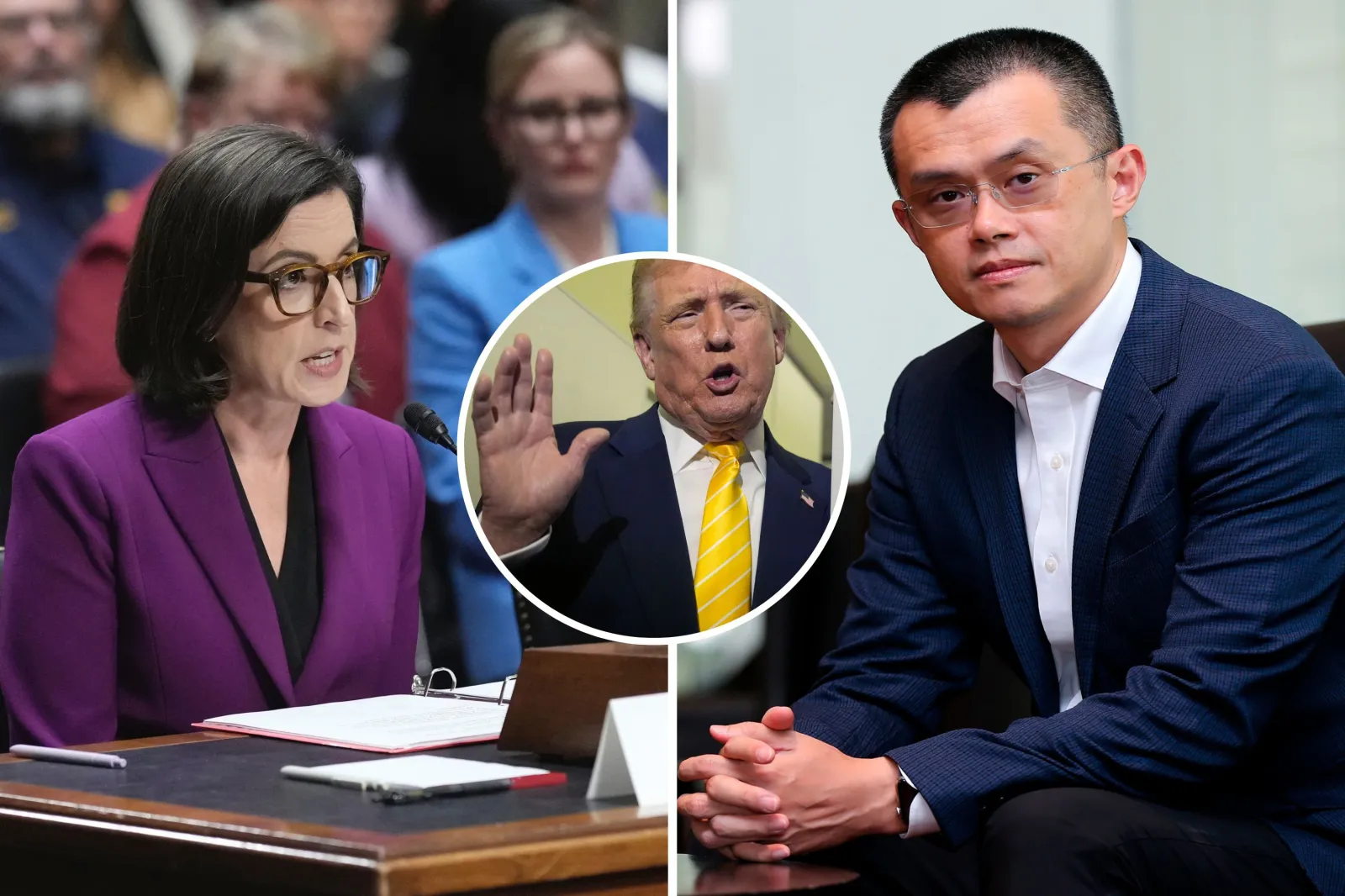
The recent pardon of Binance founder Changpeng Zhao has intensified scrutiny of President Donald Trump’s use of executive clemency, drawing sharp criticism from former U.S. Pardon Attorney Elizabeth G. Oyer and renewed questions about political influence over the Justice Department.
Why It Matters
At the center of the controversy is whether President Trump’s pardon of Binance founder Changpeng Zhao reflects a broader shift in how the White House wields one of its most powerful constitutional authorities.
Read More on U.S.
The case raises questions about conflicts of interest, the bypassing of traditional Justice Department safeguards, and the growing role of money and political access in decisions meant to serve the public good.
Former Pardon Attorney Elizabeth Oyer and legal experts warn that the intertwining of private financial benefit, foreign investment, and presidential clemency risks eroding the independence of the DOJ and blurring the line between public duty and personal interest—an issue with implications far beyond a single pardon.
...
What To Know
Who Is Changpeng Zhao?
Changpeng Zhao, known as "CZ," is the founder of Binance, the world’s largest cryptocurrency exchange. After pleading guilty in 2023 to failing to prevent money laundering on the platform and serving a four-month sentence, he received a presidential pardon in 2025 amid scrutiny over Binance’s financial ties to a Trump-linked crypto venture.
Who Is Elizabeth Oyer?
Elizabeth "Liz" Oyer is a former U.S. pardon attorney who served from 2022 to 2025. A Harvard-trained lawyer and former federal public defender, she oversaw thousands of clemency applications and pursued transparency reforms before being dismissed in March 2025.
She has since become a public critic of political influence over the Justice Department’s pardon process.
Zhao’s Pardon and the Financial Web Behind It
Zhao denies having any business relationship with the Trump family.
Zhao, who pleaded guilty in 2023 to failing to prevent money laundering at Binance, served a four-month sentence as part of a deal that included a $4 billion fine for the company.
In an interview with CBS News’ 60 Minutes, Oyer said Zhao "was essentially allowing his company to be used as a platform to finance criminal activity, to send money to terrorist organizations, Al-Qaeda, Hamas, ISIS and he was prosecuted criminally for that."
She argued that Zhao "wasn’t close to meeting Justice Department guidelines for a pardon."
Oyer said the financial circumstances surrounding the pardon were without precedent. "The influence that money played in securing this pardon is unprecedented," she told 60 Minutes.
"The self-dealing aspect of the pardon in terms of the benefit that it conferred on President Trump, and his family, and people in his inner circle is also unprecedented." She concluded bluntly: "This is absolutely not justice. This is corruption."
CBS News reported that Binance donated software to Trump family-linked World Liberty Financial, helping the firm launch a cryptocurrency.
A source familiar with the arrangements said that without Zhao’s involvement, "the technology doesn’t exist."
Months later, an Emirati fund made a $2 billion investment in Binance—paid entirely in World Liberty crypto—turning the previously obscure digital currency into a major player.
According to one source, "it wasn’t strange. It was nuts."
The White House has dismissed concerns about the circumstances surrounding the pardon.
Asked about the pardon at a Homeland Security roundtable, Trump said, "I don’t know him. I don’t believe I've ever met him," adding he had been told that Zhao "was persecuted by the Biden administration."
He also dismissed questions from a reporter by saying, "You don’t know much about crypto…You fake news."
In an emailed statement, White House Press Secretary Karoline Leavitt said, "Neither the President nor his family have ever engaged, or will ever engage, in conflicts of interest." while Eric Trump stated that his father "has nothing to do with our company."
Attorneys for Zhao and Binance denied providing technical support to World Liberty, though World Liberty’s lawyers acknowledged Binance supplied "freely available" software "simply to save WLF from wasting time."
Oyer’s Firing And Her Break With The Justice Department
Beyond the Zhao case, Oyer has become a prominent critic of changes within the Justice Department during Trump’s second term.
She has said she was fired in March 2025 after refusing to recommend restoring gun rights to actor Mel Gibson, who lost those rights following a 2011 domestic-violence conviction. Gibson had not submitted a traditional application, she said.
The Justice Department has denied that her termination was connected to the Gibson matter.
In congressional testimony, Oyer described receiving word that armed U.S. Marshals were being sent to her home to deliver a warning letter regarding her testimony. "I was in the car with my husband and my parents…when I got the news that the officers were on their way to my house where my teenage child was home alone," she told lawmakers, adding that deputies were called off only after she acknowledged receipt by email.
She said, "I will not be bullied into concealing the ongoing corruption and abuse of power at the Department of Justice."
Experts Warn Of Deepening Ethical Concerns
Harvard law professor Lawrence Lessig told 60 Minutes that the circumstances surrounding Zhao’s pardon raised profound ethical concerns. "The only reason it makes sense is to ingratiate with the president," he said.
He warned that financial entanglements between private actors and presidential interests had created "a private form of corruption going on inside of the executive branch."
Constitutional scholar Michael Gerhardt said the financial benefits flowing to Trump-linked businesses posed classic concerns.
"All those things benefit Trump and Trump family. They do not benefit the people of the United States," he said.
Oyer argues the stakes extend beyond any single pardon. "This president appears to be selling off pieces of our democracy," she told 60 Minutes.
She warned that many worthy clemency candidates "are now being overlooked in favor of the wealthy and well-connected."
Late on Monday, White House spokesperson Abigail Jackson said: "Liz Oyer’s statement demonstrates a fundamental misunderstanding of how the pardon process works – including the fact that the President of the United States makes the decision on whether to grant a pardon request. Perhaps she was the one making pardon decisions under the Autopen President, but under the Trump Administration, President Trump is the one who makes the decisions."
White House press secretary Karoline Leavitt told members of the media on November 4: "When it comes to pardons, the White House takes them with the utmost seriousness and the President understands the responsibility that he has as President to issue pardons to individuals who are seeking that. That’s why we have a very thorough review process here that moves with the Department of Justice and the White House Counsel’s office."
She continued: "There’s a whole team of qualified lawyers who look at every single pardon request that ultimately make their way up to the President of the United States. He’s the ultimate, final decision maker. And he was very clear when he came into office that he was most interested in looking at pardoning individuals who were abused and used by the Biden Department of Justice, and were over prosecuted by a weaponized DOJ."
What People Are Saying
U.S. President Donald Trump: "I can only tell you this. My sons are into it…I’m glad they are, because it’s probably a great industry, crypto. I think it’s good."
Binance founder and CEO Changpeng Zhao: "There’s no business relationships between me, Binance and World Liberty Financial."
Former Justice Department Attorney Elizabeth Oyer: "Historically and traditionally there has always been a non-political figure, the pardon attorney…advising the president about the exercise of his pardon power."
What Happens Next
Congressional scrutiny, litigation, and public debate are likely to intensify as questions mount over the Zhao pardon, alleged political interference in the Justice Department, and the circumstances surrounding Elizabeth Oyer’s dismissal.
Oyer’s lawsuits and congressional testimony could force the release of internal DOJ communications, while lawmakers may seek further hearings on clemency practices, conflicts of interest, and the reported hollowing out of key DOJ divisions.
At the same time, continued reporting on financial links between Binance, World Liberty Financial, and Trump family interests may extend the controversy.
How the White House responds—by providing documentation, dismissing the allegations, or remaining silent—will shape whether the issue escalates into a broader examination of presidential power and DOJ independence.
Update 11/17/2025, 3:32 p.m. ET: This article has been updated with comment from Jackson.
View 0 Comments
Submit Correction
View Editorial & AI Guidelines