...

By Micah McCartney
Reporter
0
Share
Newsweek is a Trust Project member
See more of our trusted coverage when you search.Prefer Newsweek on Googleto see more of our trusted coverage when you search.
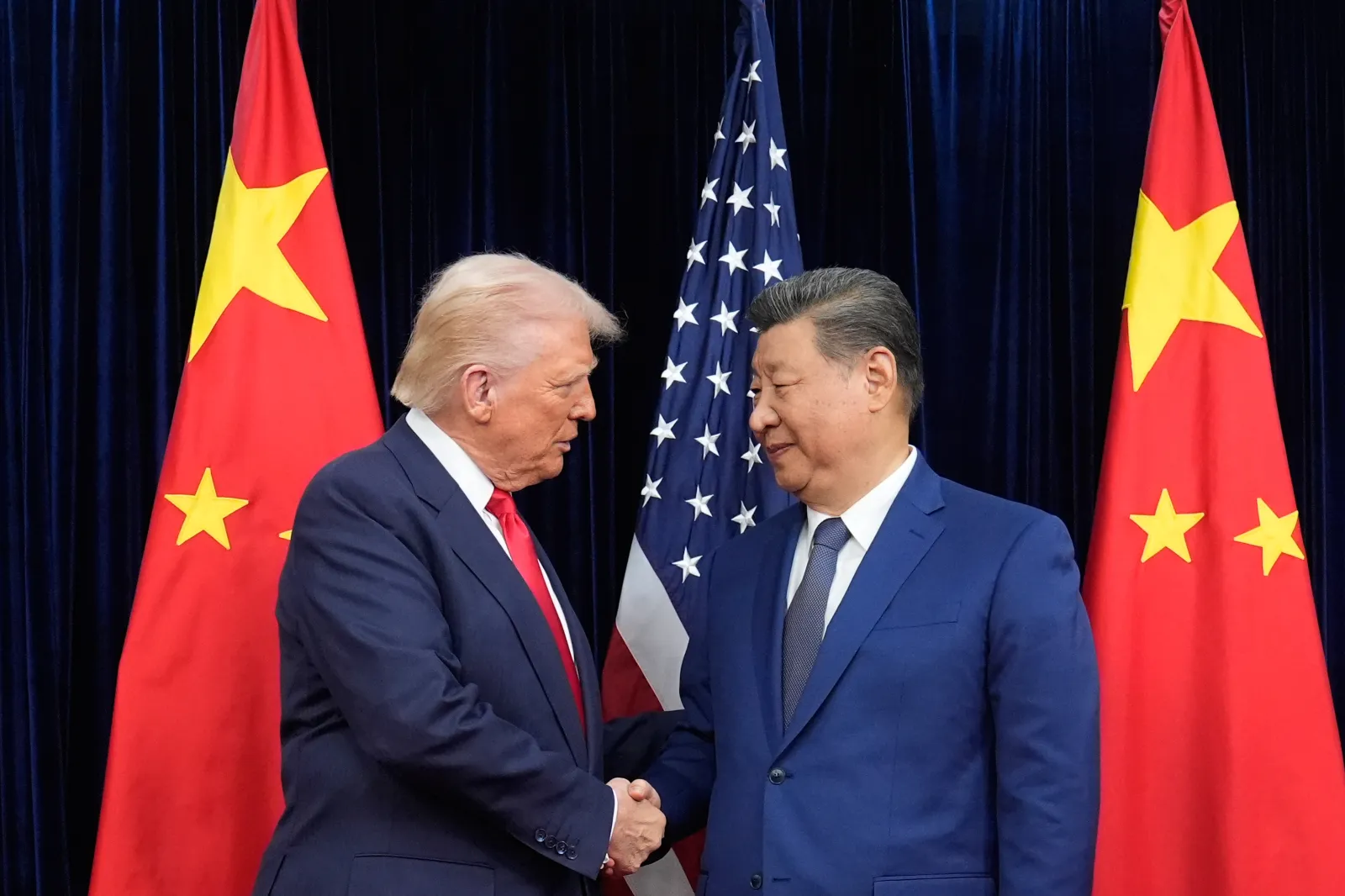
U.S. President Donald Trump has said he is in talks with his Chinese counterpart, Xi Jinping, about future arms sales to Taiwan.
Why It Matters
The U.S. is Taiwan's top source of arms, as stipulated by the 1979 Taiwan Relations Act, which calls for Washington to provide sufficient means to help the island "resist coercion" and preserve regional peace. China views Taiwan as its territory, and Xi has repeatedly said unification is inevitable.
Read More on World
Washington's long-held "Six Assurances" to Taiwan include not consulting with Beijing about arms sales to Taipei, meaning Trump may have infringed on the policy depending on the nature of his talks with Xi.
On a February 4 phone call with Trump, Xi stressed that Taiwan was the "most important issue in China-U.S. relations," according to a Chinese Foreign Ministry readout. The timing of Trump's statement is also sensitive, coming 10 days after reports that the administration was mulling a major arms package to follow the $11 billion deal approved in December—the largest to date for Taiwan.
The new potential deal, which remains "in flux," could be even larger and would include Patriot missiles, NASAMS surface-to-air missiles and two other weapons systems, the Financial Times wrote earlier this month, citing sources familiar with the matter.
...
U.S. 'Assurances'
"I've talked to him about it. We had a good conversation, and we'll make a determination pretty soon," Trump told reporters aboard Air Force One on Monday when asked to respond to Xi's warning about the arms sales.
"We have a very good relationship with President Xi," Trump continued, adding that he planned to visit China in April for talks widely expected to build on the trade truce agreed during their last in-person meeting in Busan, South Korea, in October.
It appears to be the first time a U.S. president has publicly disclosed that the future of arms sales was being discussed with Beijing, Bonnie Glaser, the managing director of the Indo-Pacific program at the German Marshall Fund, told The Japan Times.
That could amount to a breach of Washington's "Six Assurances" to Taiwan—a series of commitments hashed out by the Reagan administration in 1982. "It is unlikely, however, that he is negotiating with Xi on this issue," Glaser said.
The assurances, while nonbinding, underpin relations with the island alongside the Taiwan Relations Act—specifically the third assurance, not to consult with China in advance about decisions regarding arms sales to Taiwan.
"It's anybody's guess whether Trump really is 'talking to' Xi about U.S. arms sales to Taiwan," Paul Heer, a diplomatic historian and former senior official for East Asia at the U.S. Office of the Director of National Intelligence, wrote on X. "If he was, that would arguably be a violation of the 'Six Assurances' to Taiwan. But then Trump doesn't know or care about those assurances and won't be bound by them."
Other assurances include not setting an end date for arms sales, not altering the terms of the Taiwan Relations Act, not mediating between Taipei and Beijing and not formally recognizing Chinese sovereignty over Taiwan or pressuring Taipei to enter into negotiations, as the matter is to be decided peacefully by both parties.
Budget Deadlock
The future of the landmark December deal and others also hinges on Taiwan's legislature. Approval of a 23 percent higher defense budget for 2026 pursued by President Lai Ching-te has ground to a halt, with the opposition—Kuomintang and its junior partner the Taiwan People's Party—holding a majority.
Opposition lawmakers have said they support modest increases to the defense budget but have accused Lai of operating without transparency. Ahead of the legislature's ongoing Lunar New Year break, the TPP put forward a special defense budget of $12.7 billion, about 68 percent smaller than the $40 billion special defense budget that Lai called for, and which would exclude support for several major items in the potential sale the U.S. approved in December.
What People Are Saying
Democratic Senator Tammy Duckworth of Illinois told Newsweek: "Taiwan is a crucial strategic partner for the U.S. in the Indo-Pacific, and it's critical that they have the resources and funding to fully invest in their self-defense as they face escalating threats from the PRC [People’s Republic of China]."
"For years, my colleagues and I have worked across the aisle to aid Taiwan as it seeks to strengthen its security, and that bipartisan commitment remains strong. Our Congressional coalition will continue doing all we can to reiterate that the U.S. is committed to the future of Taiwan."
A spokesperson for Taiwan's de facto embassy in the U.S., the Taipei Economic and Cultural Representative Office (TECRO), told Newsweek: "We continue to monitor US-China interactions and maintain close communication with the U.S. Since taking office, the Trump administration has reiterated its support for Taiwan and the U.S long standing and consistent policy toward Taiwan.
"The recently signed Memorandum on Trade and Investment, Agreement on Reciprocal Trade, joint statement on the Pax Silica Declaration and U.S.-Taiwan Cooperation on Economic Security, all highlight the symbiotic evolution in our ever growing partnership."
What Happens Next
Xi has directed the People's Liberation Army to develop the capability to move against Taiwan by 2027, senior U.S. defense and intelligence officials have warned. They added that the timeline did not mean an invasion was planned for that year. An invasion of the island, the source of 90 percent of the world's advanced chips, would roil global supply chains and likely trigger an economic recession, a congressional commission warned in a November report.
The U.S. government follows a long-standing policy of "strategic ambiguity" on whether it would intervene militarily in the event of a cross-strait conflict, while opposing unilateral changes to the status quo in the Taiwan Strait.
Updated 2/20/26, 9:50 p.m. This article has been updated with further comment from TECRO.
In a polarized era, the center is dismissed as bland. At Newsweek, ours is different: The Courageous Center—it's not "both sides," it's sharp, challenging and alive with ideas. We follow facts, not factions. If that sounds like the kind of journalism you want to see thrive, we need you.
When you become a Newsweek Member, you support a mission to keep the center strong and vibrant. Members enjoy: Ad-free browsing, exclusive content and editor conversations. Help keep the center courageous. Join today.


View 0 Comments
Submit Correction
View Editorial & AI Guidelines