...

By Gabe Whisnant
News Editor
0
Share
Newsweek is a Trust Project member
See more of our trusted coverage when you search.Prefer Newsweek on Googleto see more of our trusted coverage when you search.
President Donald Trump urged Senate Republicans to remain in Washington, DC, over the Easter recess to force passage of the SAVE America Act alongside funding for the Department of Homeland Security (DHS), telling lawmakers to stay in the capital “for Jesus” rather than return home for the holiday.
Trump has said he wants the Senate to bundle the House‑passed SAVE America Act with DHS funding and has warned he will not sign other legislation until Congress acts on the voting bill. The measure would impose new proof‑of‑citizenship requirements for voter registration and mandate photo identification at the polls.
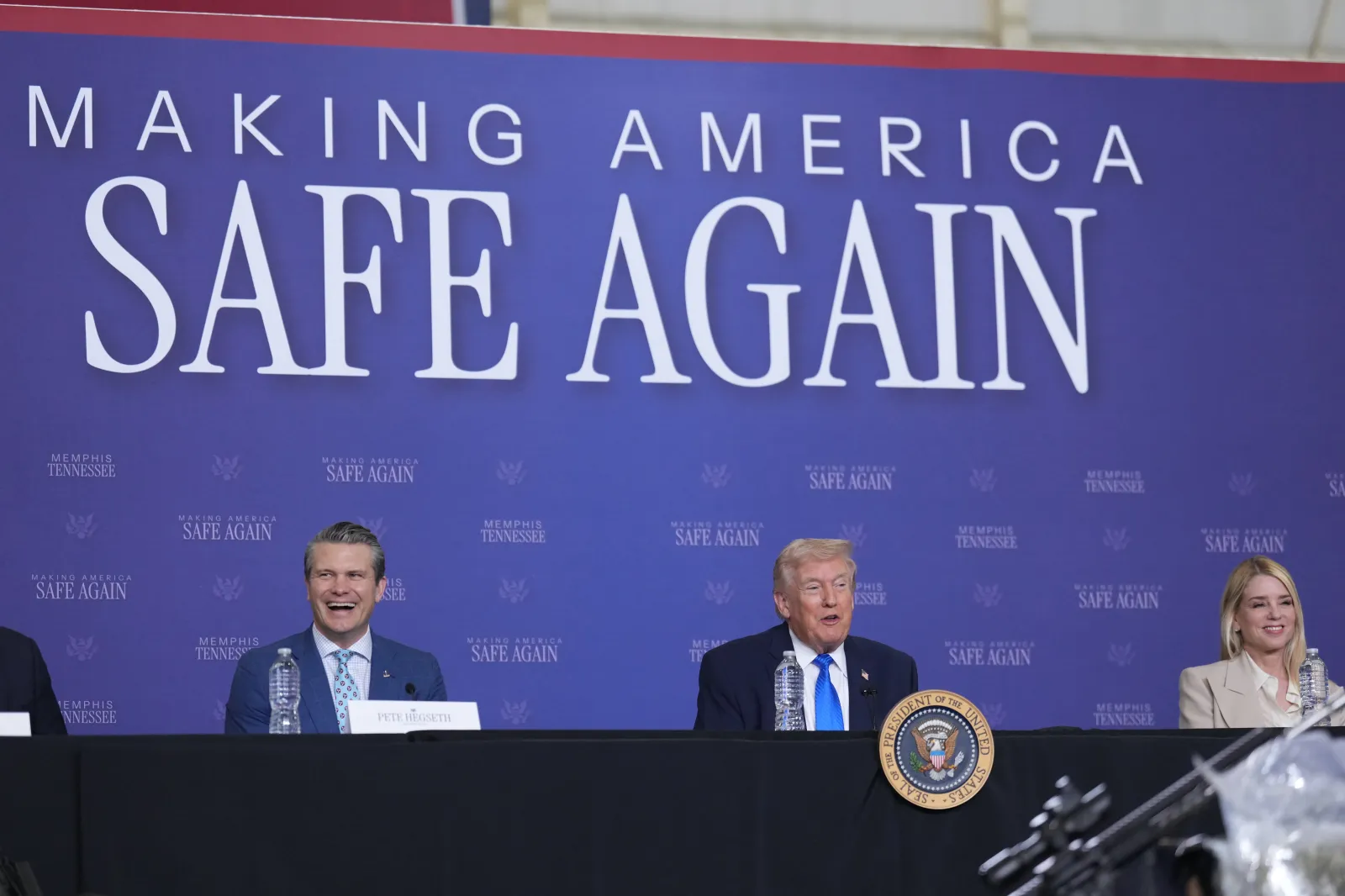
"Don't worry about Easter—going home. In fact, make this one for Jesus, okay? Make this one for Jesus, that's what I tell them. It would be a damn good thing," Trump said at a Make America Safe Again event in Memphis, Tennessee.
Read More on U.S.
What the SAVE America Act Would Do
The bill passed the House earlier this year and is now the centerpiece of a Senate debate expected to stretch on as Republicans look for ways to keep it alive despite the 60-vote threshold required to overcome a filibuster.
As described in the Senate debate and nonpartisan summaries, the legislation would require documentary proof of U.S. citizenship to register to vote in federal elections and would require photo identification to cast a ballot, including rules affecting mail voting.
Democrats say they support secure elections but argue the bill’s registration provisions, documentation requirements and administrative demands could prevent eligible citizens from voting—especially people who do not have quick access to passports or birth certificates, as well as voters who have changed their names.
Pressure Campaign Amid Senate Stalemate
Trump’s comments came as Senate Republicans continued a rare weekend session to debate the legislation, even as party leaders acknowledge they do not currently have the votes to overcome a Democratic filibuster. Republicans hold 53 seats in the 100‑member Senate, leaving them short of the 60 votes needed to advance the bill.
Senate Majority Leader John Thune of South Dakota has said the extended debate is intended to put lawmakers on the record and highlight Republican priorities, but he has stopped short of committing to any procedural move that would change Senate rules.
“What we are trying to do is ensure that we are having a fulsome debate,” Thune said, and put everyone on the record “one way or the other.”
Democrats are expected to block the legislation once Republicans attempt to move it forward, arguing the bill would make voting more difficult for large groups of Americans and could lead to voters being removed from registration rolls.
The new rules would be “a bureaucratic nightmare,” said Senate Minority Leader Chuck Schumer, a New York Democrat.
“They want to end vote by mail, end registering online, end registering on college campuses and in churches, and even end registering at the DMV, where of course you have to show ID,” Schumer said.

...
Unclear Endgame as Recess Approaches
The Senate is scheduled to leave Washington at the end of the week for a two‑week spring recess, raising questions about how long Republicans will keep the bill on the floor—and whether Trump will view prolonged debate as sufficient progress to ease his opposition to other legislation.
Republican senators have largely backed Thune’s approach, but several have said privately and publicly the timeline and outcome remain uncertain.
“I don’t know,” Senator John Kennedy of Louisiana said when asked how the debate would end. “I don’t think anybody does.”
Updates: 3/23/26, 6:40 p.m. ET: This article was updated with new information and remarks.
This article includes reporting by the Associated Press.
View 0 Comments
Submit Correction
View Editorial & AI Guidelines