...

By Newsweek Editors
0
Share
Newsweek is a Trust Project member
See more of our trusted coverage when you search.Prefer Newsweek on Googleto see more of our trusted coverage when you search.
President Donald Trump’s decision to launch coordinated U.S. strikes on Iran—alongside Israel—will define the Middle East for years to come.
Strikes hit near key government and military sites in Tehran, including areas close to Supreme Leader Ayatollah Ali Khamenei’s offices. Iran responded immediately, with retaliatory strikes against Israel and other U.S. allies in the region.
Trump announced the U.S. had begun "major combat operations," and called for regime change, telling Iranians: "When we are finished, take over your government."
Read More on Analysis
The question now is not whether the crisis deepens, but how. Will the Iranian people rise up and overthrow Khamenei's regime, and if so what would that look like? Or can the Islamic Republic that has ruled the country with an iron fist since 1979 cling on to power yet again?
Essential reading: Donald Trump Faces 'Epic Fury' From MAGA Over Iran
Here are five scenarios that could shape what comes next.
1. Iran Retaliation
Iran has already responded by launching missiles against Israel. Tehran also directed strikes on the UAE, Kuwait, Qatar, Bahrain and Saudi Arabia.
Iran retains a substantial arsenal of ballistic missiles, cruise missiles and drones, along with regional proxy forces capable of targeting U.S. troops in Iraq and Syria and hitting Israeli cities.
Attacks on U.S. bases, naval assets in the Gulf, or Israeli population centers would significantly widen the conflict and test Washington’s resolve for a lengthy all-out war. Iran could also disrupt Gulf shipping lanes, including the Strait of Hormuz, a move that would have severe consequences on oil prices and wider markets. Roughly a fifth of all global oil passes through the Strait of Hormuz.
The speed and scale of Iran’s response will determine whether this remains a limited campaign or spirals into a prolonged war.
Khamenei Unlikely To Be Captured Alive
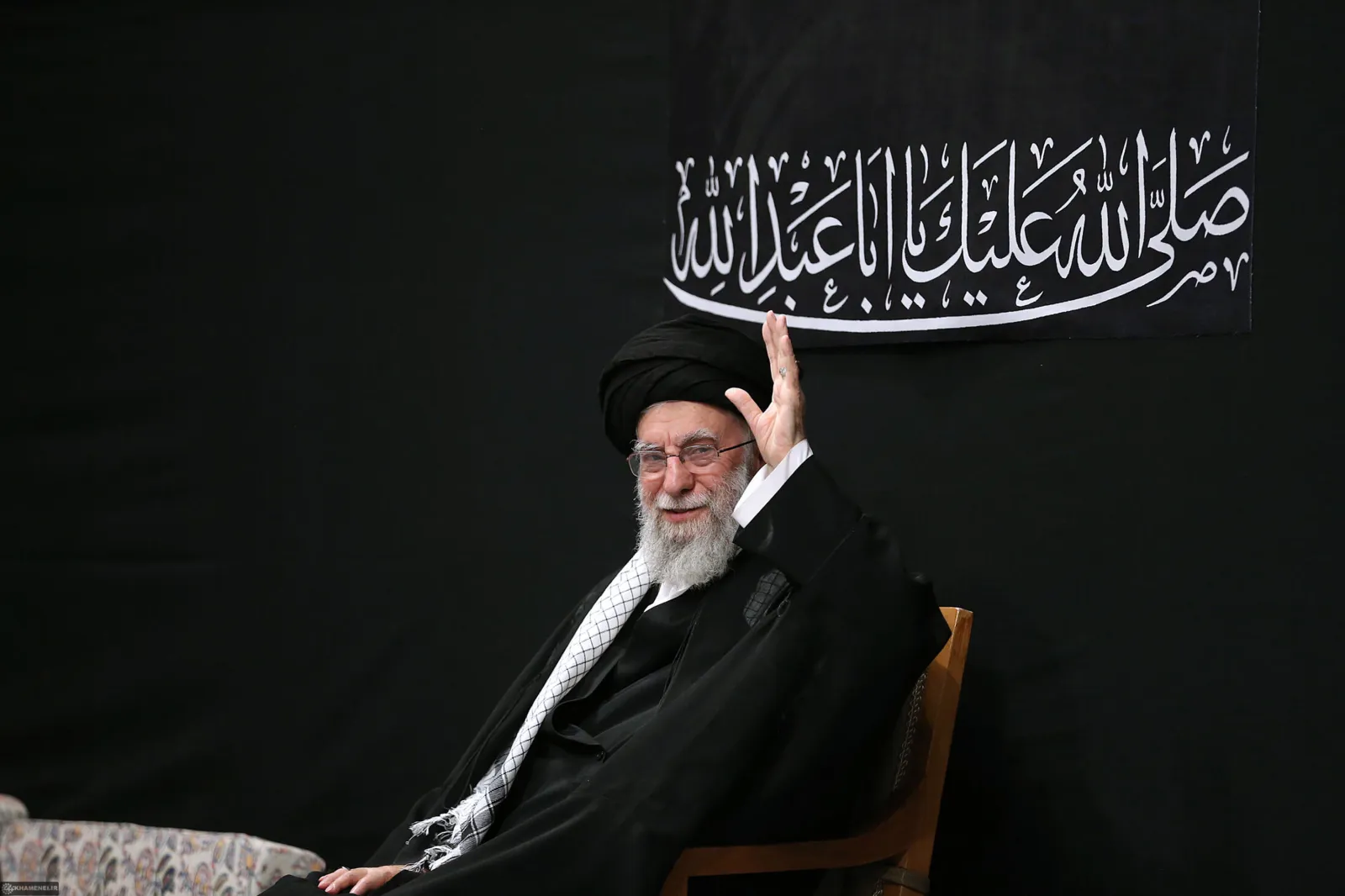
Khamenei is protected by an elite Islamic Revolutionary Guard Corps (IRGC) security unit and a hardened command structure built to prevent capture or decapitation. His whereabouts is currently unknown and in past crises, he has retreated to secure locations. At 86, and unlikely to surrender, any attempt to seize him would almost certainly trigger lethal resistance—or result in his death rather than detention—risking a martyrdom effect rather than regime collapse.
Iran Ready for War
Tehran has spent months preparing for escalation. Missile launchers have been repositioned, key facilities reinforced and forces placed on the highest alert.

...
2. Regional Escalation
Iran does not operate alone. Hezbollah in Lebanon, militias in Iraq, the Houthis in Yemen and other aligned groups form a network capable of opening multiple fronts.
If these actors join the fight, Israel could face attacks from the north and south simultaneously, while Gulf states hosting U.S. forces become targets from several different directions.
A multi-theater conflict would massively complicate U.S. strategy, potentially drawing in additional regional powers and raising the stakes far beyond the initial strikes.
3. Protests Catch Fire
Trump has openly called for regime change, appealing directly to the Iranian people to take over the government of the country "when we are finished."
Protests since the start of this year have led to violent repression from authorities. During his State of the Union address earlier this week, Trump claimed that 32,000 Iranians had been killed. Other groups estimate the death toll to be lower, but the scale of the protests and the brutality of the regime's crackdown against them are not in doubt.
U.S. strikes could embolden Iranians, especially young people, to take to the streets again. If security forces are stretched thin or distracted by conflict, demonstrations could grow quickly.
However, the regime has a long record of cracking down fast, hard and effectively, meaning any new unrest would likely face an immediate and forceful response.
Also, U.S. military action risks triggering nationalist backlash. And not just the hard-line Islamists. Many Iranians who oppose the government may still rail against outside intervention.
4. Return of the Crown Prince
One scenario involves exiled opposition figures, including Reza Pahlavi, the son of Iran’s last shah. Monarchist networks remain active in the diaspora and among some inside the country.
If regime authority fractures, opposition leaders abroad could attempt to position themselves as transitional figures. There would then be pressure on both Western and Middle East governments to decide if they recognize and support them.
However, Iran’s political landscape is completely fragmented. Pahlavi and the deposed royal family are hugely unpopular among many within the country. Any "return" scenario would be messy, contested, and unlikely to result in stability in the short term at least.
5. Regime Clings On
Perhaps the most likely outcome is that the regime clings onto the power it has guarded so effectively since 1979. The Islamic Republic has seen off war, sanctions and protests for decades. Its security apparatus—the Revolutionary Guard in particular—remains powerful and deeply embedded in the state.
The ruling structure is built to survive. Even if Khamenei were killed, the Islamic Republic is structured for continuity. Power is dispersed across clerical bodies, the IRGC and security institutions that have prepared for succession and disruption. Command chains have been layered, deputies predesignated and authority concentrated in tight circles to ensure the system functions under bombardment or assassination attempts. A single strike is unlikely to unravel the state.
The strikes could well also strengthen hard-liners and the regime could tighten controls and be even harsher in its crackdown on protests.
While this may be the most likely outcome, it is also the most dangerous: strikes will weaken Iran's capabilities, but could leave behind a hardened and more extreme regime.
Hey gang, Carlo Versano here. I hope you enjoyed this article. As Newsweek's Director of Politics and Culture and editor of the 1600 newsletter, I'm keen to hear what you think. Now, Newsweek is offering a new service to allow you to communicate directly with me in the form of a text message chat. You can sign up and get a direct line to me, as well as the reporters who work for me. You can shape our coverage.
As a Newsweek member, we're offering this service to you for free. You can sign up below, or read more about how it works here. Let's talk!
View 0 Comments
Submit Correction
View Editorial & AI Guidelines