10
Loading video...

By Billal Rahman
Immigration Reporter
0
Share
Newsweek is a Trust Project member
See more of our trusted coverage when you search.Prefer Newsweek on Googleto see more of our trusted coverage when you search.
President Donald Trump has threatened to slap a 100 percent tariff on all Canadian goods if the country pursues a trade deal with China.
"If Governor Carney thinks he is going to make Canada a 'Drop Off Port' for China to send goods and products into the United States, he is sorely mistaken. China will eat Canada alive, completely devour it, including the destruction of their businesses, social fabric, and general way of life," Trump wrote on Truth Social.
"If Canada makes a deal with China, it will immediately be hit with a 100% Tariff against all Canadian goods and products coming into the U.S.A.," he added.
Read More on News
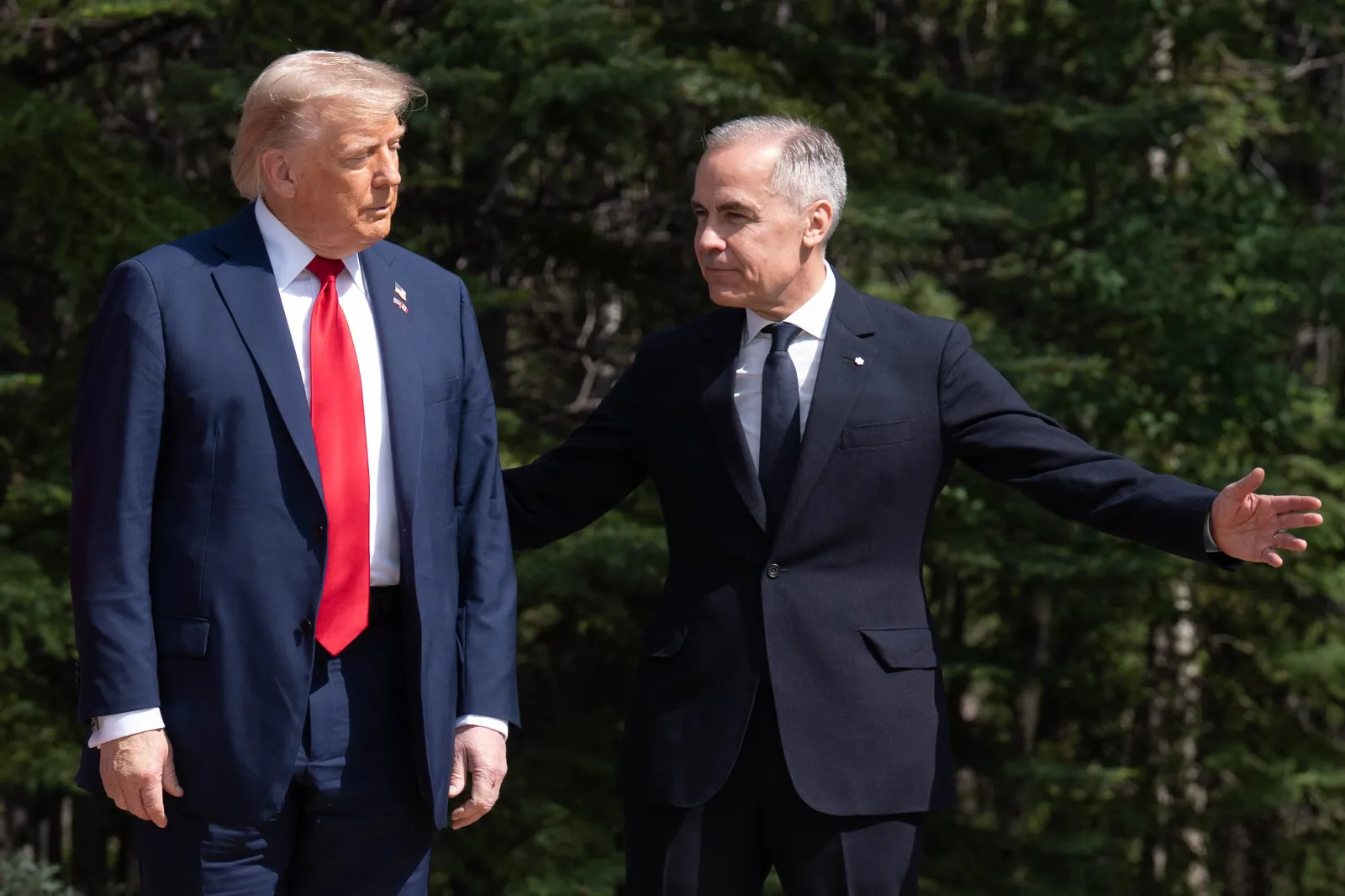
Trump has repeatedly referred to Canada’s prime minister Mark Carney as a “governor,” a characterization that aligns with his rhetoric suggesting Canada should become the 51st U.S. state. Canada has rebuffed the President's advances so far.
Carney recently returned from a trip to China, where he held talks with President Xi Jinping, the first such visit by a Canadian prime minister in eight years. Canadian officials said the visit was intended to ease tensions and rebuild relations after a prolonged period of strained ties, while also expanding Canada’s trade partnerships in response to increasing trade pressure and tariff threats from the United States.
Newsweek has contacted the White House and the office of Prime Minister Carney for comment.
Why It Matters
Since Trump returned to the White House, he has repeatedly threatened and implemented tariffs targeting Canadian goods. The latest warning, tied to a possible Canada-China deal, shows growing tensions between the two neighbors.
Canada’s move to engage China in a potential trade deal is seen as an effort to diversify its economic partnerships amid ongoing uncertainty with the U.S.
What To Know
Earlier this month, Prime Minister Mark Carney announced a new “strategic partnership” between Canada and China, aimed at boosting trade and investment while emphasizing sectors including agriculture, agri-food, energy, and finance.
Last week, the two countries finalized an agreement allowing 49,000 Chinese electric vehicles to enter the Canadian market at a reduced tariff of 6.1 percent, in exchange for China lowering tariffs on Canadian canola exports.
Trump had initially told reporters outside the White House that the agreement was something Carney "should be doing and it’s a good thing for him to sign a trade deal," before appearing to reverse his position on Saturday.
Aggressive tariff measures have become Trump’s signature economic policy during his time in office, frequently aimed at protecting U.S. industries and addressing what he described as unfair trade practices. These measures often targeted key trading partners, including Canada, China, and the European Union, and were part of his America First agenda.
What People Are Saying
Trump said at Davos: "Canada gets a lot of freebies from us, by the way. They should be grateful, also, but they’re not. I watched your prime minister yesterday. He wasn’t so grateful. Canada lives because of the United States. Remember that, Mark, next time you make your statements.”
Carney said at Davos: "Middle powers must act together because if you are not at the table, you are on the menu. Great powers can afford to go it alone. They have the market size, the military capacity, the leverage to dictate terms."
Eric Miller, a Washington DC based trade adviser, told BBC News: "The prime minister is saying, essentially, that Canada has agency too, and that it's not going to just sit and wait for the United States."
What Happens Next
It remains unclear if or when Trump’s threatened 100 percent tariffs on Canadian goods would be implemented.
This is a breaking news story. Updates to follow.
...
View 0 Comments
Submit Correction
View Editorial & AI Guidelines