...

By Joe Edwards
Reporter
0
Share
Newsweek is a Trust Project member
See more of our trusted coverage when you search.Prefer Newsweek on Googleto see more of our trusted coverage when you search.
A Harvard astrophysicist has told Newsweek the newly released UFO files amount to a “detective story” that could ultimately be solved with better data.
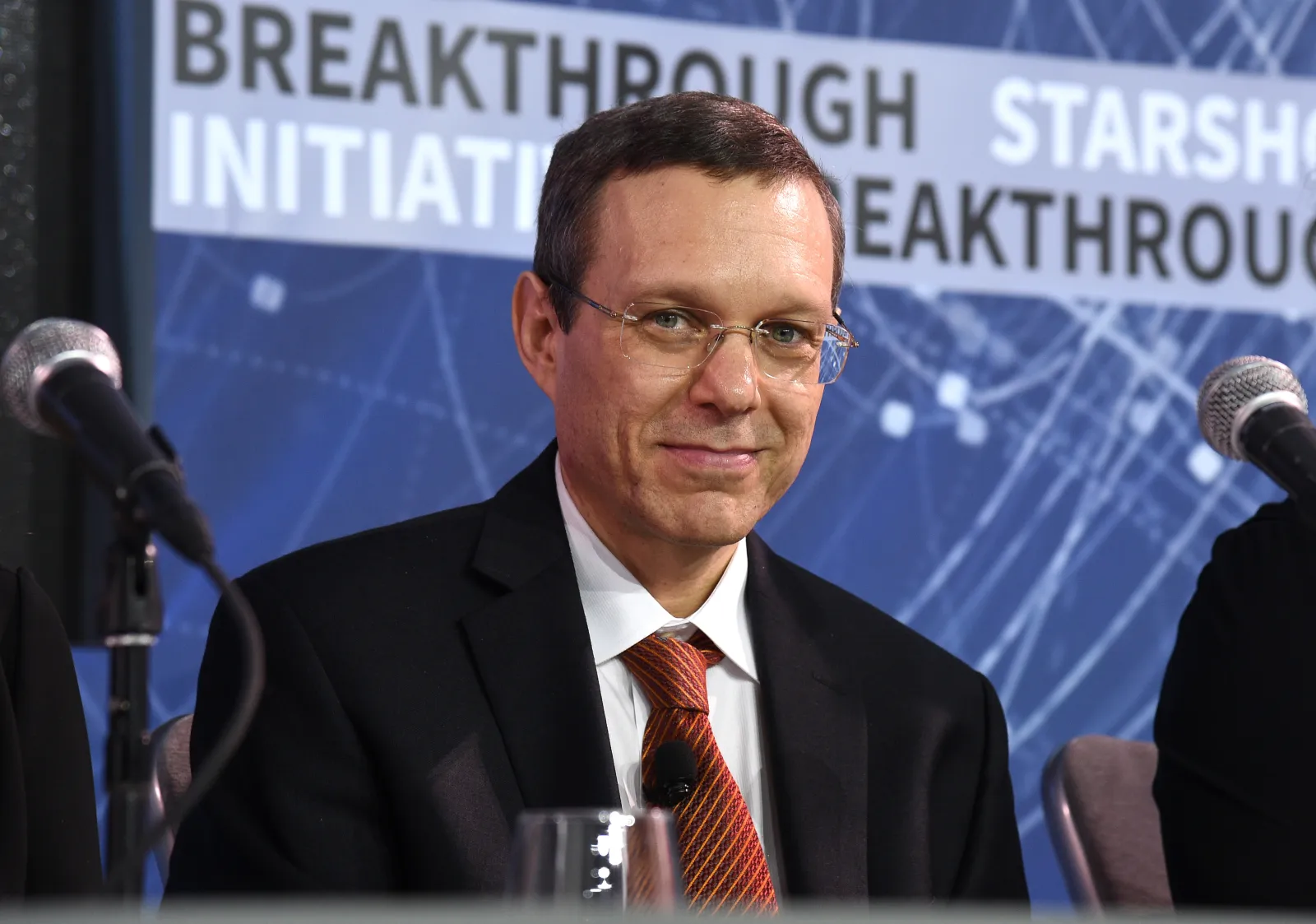
Avi Loeb, who was recently appointed to advise the Trump administration’s new UFO science council, made the remarks as officials continue a push for greater transparency around unexplained aerial phenomena.
The administration has released several waves of declassified files in recent weeks, detailing decades of sightings. But the disclosures also underline how many fundamental questions about the objects’ origins and capabilities remain unanswered.
Read More on News
UFO Files Are ‘Detective Story’
“So far, there were three batches of UAP files released on May 8, May 22, and June 12, 2026. The latest UAP file release includes the most intriguing report dated June 5, 2026, signed by [All-domain Anomaly Resolution Office Director] Jon Kosloski,” Loeb told Newsweek.
UAP stands for Unidentified Anomalous Phenomena, often used interchangeably with UFO.
“The report mentions that during two days in October 2023, law enforcement officials noticed anomalous phenomena, including an orange 'mother' orb launching smaller red orbs. About 40 percent of the reported phenomena lack a reasonable explanation and remain unresolved,” Loeb said.
“The civil duty of scientists like myself is to serve the U.S. government by interpreting existing data or recommending how to get new data that would resolve the nature of UAPs. This is a detective story that can be resolved with better data. All the data shared with the council will be unclassified.”

...
Who Is Avi Loeb?
Abraham “Avi” Loeb is a Harvard astrophysicist and theoretical cosmologist, currently the Frank B. Baird Jr. Professor of Science at the university. He previously served as chair of Harvard’s astronomy department from 2011 to 2020 and has published several books on topics including black holes, early galaxies and the search for extraterrestrial life.
In June, Loeb was appointed to advise the Trump administration’s newly created UFO governance structure, leading a science advisory council tasked with helping agencies analyze and interpret unexplained sightings.
Loeb is also known for advancing the idea that some interstellar objects may represent technological artifacts, a view that has brought him into scientific controversy. He has argued that ‘Oumuamua, the first detected interstellar object in 2017, could be a form of alien technology—a claim other experts say can be explained by natural processes such as outgassing.
More recently, he has suggested the interstellar object 3I/ATLAS might also be of artificial origin. That interpretation has been disputed by other scientists.
...
What We’ve Learned from the UFO Files
Among the incidents featured in the latest tranche were:
- Northeast orb sightings: Witnesses report red and yellow spheres, including one with a “white plasma” core, moving in tandem and multiplying before disappearing.
- October 2023 UAP sighting: A federal agent described a glowing “lava”-like orb that emitted multiple fast-moving red lights in changing formations.
- Colorado Springs 2022 sighting: A “potato” shaped, semi-translucent object with irregular, panel-like surfaces reportedly “cloaked” and vanished within seconds.
- 2008 Zimbabwe airport incident: A disc-shaped object with rotating lights and beam-like emissions hovered over Harare airport, triggering a high-alert response.
- 1949 Hoover correspondence: Earlier records described beams converging into an “explosion effect,” which then-FBI Director J. Edgar Hoover later passed to the Pentagon and the Atomic Energy Commission.
Documents from past releases included numerous reported UFO sightings, including accounts from several Apollo missions.
…And What We Haven’t
While the three releases provide valuable insight into UFO encounters, there are still questions to be answered.
“Detection by multiple sensors operating in different wavelength bands (optical, infrared, radio) can verify that we are dealing with real objects and enable us to triangulate the distance of the objects from the camera. This, in turn, allows us to infer the velocity and acceleration of the object and verify whether they lie outside the performance envelope of human-made technologies. Some data is missing because it was collected by classified sensors,” said Loeb.
For Loeb, one of the key outstanding questions for researchers and policymakers is whether all technological objects near Earth are human-made.
“If there is evidence for non-human-technology, how should the information be communicated to the public without triggering societal unrest or collapse of the financial markets?”
Contact Newsweek editors on this story: Ben Kelly and Sam Wilson.
View 0 Comments
Submit Correction
View Editorial & AI Guidelines