...

By Newsweek Editors
0
Share
Newsweek is a Trust Project member
See more of our trusted coverage when you search.Prefer Newsweek on Googleto see more of our trusted coverage when you search.
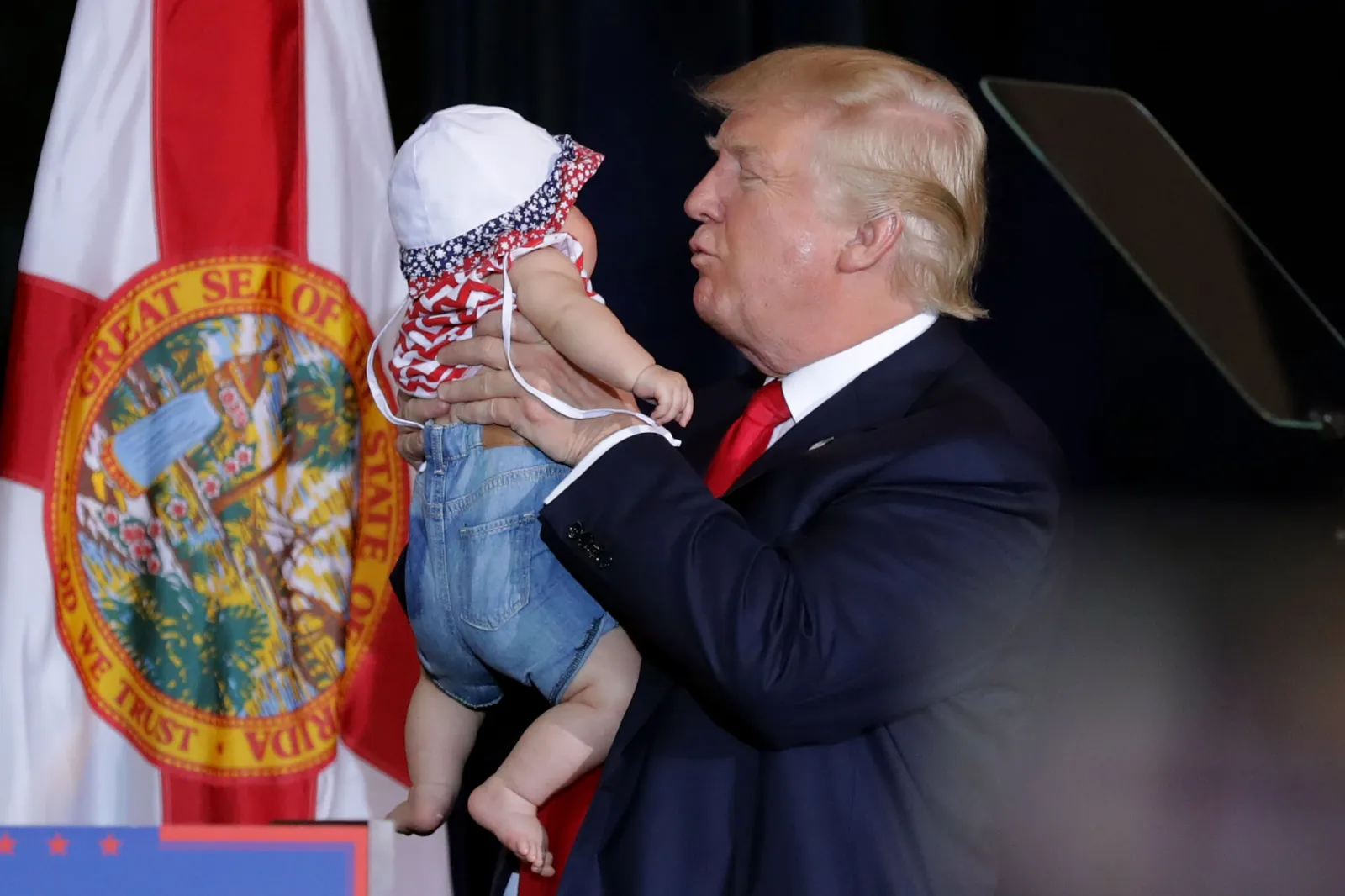
"We’ve dropped the infertility drugs to make lots of Trump babies, I’m hoping by the midterms." That was Mehmet Oz, the administration’s Medicare and Medicaid chief, selling the White House's pronatalist ambitions from the Oval Office last fall. It was part of a plan to slash prices on IVF medications and funnel buyers through a new federal marketplace called TrumpRx.
TrumpRx went live on Thursday and, tucked among acne gels and arthritis pills sit a handful of brand-name fertility drugs with, as promised, immense discounts. If those numbers hold, they shave hundreds of dollars off a typical cycle and usher the federal government into consumer-facing drug retail.
Nothing is ever that simple. IVF sits on a fault line inside the right. President Donald Trump calls himself "the father of IVF" and says he "strongly supports the availability of IVF," a position he adopted emphatically after Alabama’s Supreme Court briefly defined frozen embryos as "children," spurring clinic shutdowns. But some Republicans and conservative religious leaders argue IVF "destroys life," citing the routine creation of embryos that are never implanted.
Read More on News
They might all be missing the point. TrumpRx is more than the latest salvo in America's unending culture wars. It’s a policy gamble that lower drug prices can move the needle on a historic fertility slump, just as China tinkers with a very different approach, from a tax on condoms to humanoid robots.
Common Knowledge
On the right, support now comes from the top. Trump has said he "strongly support[s] the availability of IVF… We want to make it easier for mothers and fathers to have babies, not harder!"
Skeptics on the left call the whole drive performative. Senator Elizabeth Warren dismissed Trump’s IVF pledges as "smoke and mirrors," arguing that vague promises do nothing to stop state-level restrictions or to fund care. KFF Health News noted in a report that even discounted drugs don’t substitute for child care, housing and leave policies that actually determine family size.
Some conservatives recoil on moral grounds. Secretary of State Marco Rubio has previously called IVF’s central trade-off an "ethical dilemma… in order to create life, you have to destroy life because you’ll create embryos that are not going to be used." Montana Republican Matt Rosendale went further, saying, "the practice of IVF is morally wrong," while proposing to strip certain federal funding, because IVF "destroys twice as much life as Planned Parenthood yearly." The Southern Baptist Convention adopted a resolution lamenting the "continued freezing, stockpiling, and ultimate destruction of human embryos."
Democrats have also said TrumpRx risks blending public power with private ties that could "enrich the president’s friends" while ducking real cost controls.
Uncommon Knowledge
TrumpRx’s fertility shelf comprises Gonal-F, Cetrotide and Ovidrel—the building blocks of a standard cycle. Gonal-F is advertised on the page as "starting at $168” (down from $966), Cetrotide at $22.50 (down from $316.12), and Ovidrel at $84 (down from $251.84).
Does cheaper medication move births? So-called assisted reproductive technology produced 98,289 live-born infants in 2022, about 2.6 percent of all U.S. babies. Crucially, the CDC also reports that 184,423 of 435,426 cycles in 2022 were "banking" cycles—freezing eggs or embryos for later. It makes the math more complex: many cycles today are inventory for tomorrow.
So price likely matters at the margin. Birth data for 2024 shows the U.S. at historic-low fertility rates despite a slight uptick in total births, at about 1.6, well below the 2.1 replacement threshold. Analysts point to patchy employer coverage. KFF’s 2024 employer survey reported just 27 percent of large employers offer explicit IVF coverage. A few hundred dollars off stimulants won’t transform IVF decisions for everyone, but it could be the difference between trying now and saving later for some, in the absence of action on child care and housing costs.
China, meanwhile, is trying something different. Its revamp has folded a 13 percent tax onto condoms and some contraceptives, part of a broader push to nudge births; at the same time state media hype cheap humanoid robots, like Unitree’s sub-$6,000 R1, as a productivity patch for a shrinking workforce. The juxtaposition is stark: China taxes prevention and touts machines; America subsidizes conception drugs, hoping humans follow. Both are improvising around a demographic inflection point.
All of which makes TrumpRx both more modest and more interesting than its critics or supporters admit. The left is right that a coupon site won’t conjure a baby boom. The right is right that IVF raises hard questions about obligations to embryos, and about how far the state should go in licensing the creation of life. But the narrow, technocratic bet—that lowering cash prices on Gonal-F, Cetrotide, Ovidrel will tip some households across the threshold from postponement to action—is testable.
Oz’s "Trump babies" remark may one day read less like a quip and more like a statement of political realignment. One country taxes condoms and buys robots. The other negotiates pharma discounts and builds a federal drug bazaar. The clock is ticking on which approach will prevail.
If you’re enjoying Uncommon Knowledge, please share. If you have suggestions for future editions or feedback, email subscriber.feedback@newsweek.com. We want to hear your voice.
View 0 Comments
Submit Correction
View Editorial & AI Guidelines