10
Loading video...

By Alice Gibbs
Senior Reporter
0
Share
Newsweek is a Trust Project member
See more of our trusted coverage when you search.Prefer Newsweek on Googleto see more of our trusted coverage when you search.
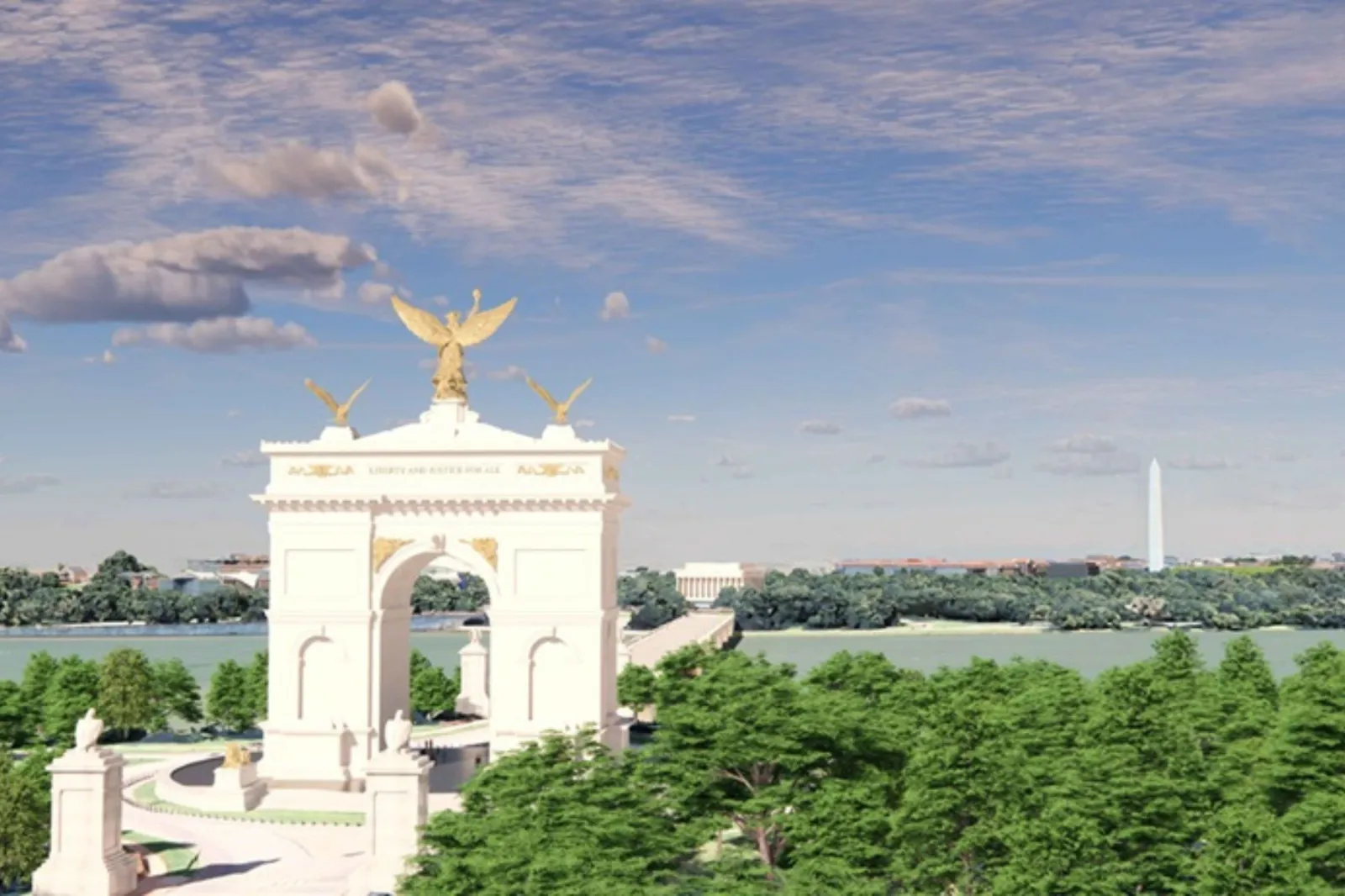
A temporary federal order blocking the Trump administration from breaking ground on the president’s 250-foot triumphal arch project is set to end this week.
A temporary restraining order was put in place by U.S. District Judge Tanya Chutkan following a hearing on November 5, preventing work on one President Donald Trump’s latest prominent Washington, D.C. projects.
Chutkan issued the order barring the government from undertaking construction-related activity for 14 days. The decision came less than two hours after the federal planning commission approved the project in an 8-4 vote.
Read More on U.S.
The temporary order prevents the administration from starting work amid legal challenges brought by the governments of Washington, D.C., and Virginia, along with a group of Vietnam War veterans and an architectural historian.
According to the timeline, November 19 would be day 14 of the order, forcing a decision over whether to impose a longer freeze or remove the project’s most immediate judicial obstacle.

...
Triumphal Arch Freeze: What Happens Next?
1. A Longer Injunction Replaces the Temporary Freeze
As the temporary freeze ends, Chutkan could issue a preliminary injunction, keeping construction halted while legal challenges against the arch continue.
2. The Freeze Expires and Construction Begins
If the temporary injunction expires without a replacement or extension, the current court-imposed barrier to construction would disappear.
This would allow work on Trump’s proposed arch to begin, assuming there are no other outstanding legal or administrative barriers.
3. The Dispute Moves to an Appeals Court
If either side loses the injunction fight, the other could seek emergency appellate relief.
For example, if Chutkan blocks construction, the administration could challenge that order; if she allows work to proceed, the challengers could ask a higher court to intervene.
Newsweek reached out to the Interior Department and the White House via email for comment.
Why the Judge Blocked Construction
Chutkan granted a request from the governments of Virginia and the District of Columbia to prevent construction while the court considers their claims.
In a 33-page opinion, the judge found that the local governments had demonstrated a likelihood of immediate harm from the project, including traffic disruption and related economic costs.
“The threatened harms will materialize as soon as construction begins, in part because the traffic disruptions will occur immediately,” Chutkan wrote.
A previous legal challenge to the arch called the project "flagrantly unlawful,” and argued its construction would “inflict irreparable harm” on the area, with plaintiffs claiming it defies at least five federal statutes.

...
The arch, which would stand twice as tall as the Lincoln Memorial, has been heavily criticized for obstructing views in the capital and its potential to overshadow the graves of service members buried at the nearby Arlington Cemetery.
In a lawsuit filed by the state of Virginia and the District of Columbia against the NPS, lawyers called the project “legally indefensible” and pointed out it had not yet been approved by Congress, while a separate lawsuit brought by three Vietnam War veterans and an architectural historian also argues that congressional approval is required before the government can construct a commemorative work at Memorial Circle.
Meanwhile in a court filing on November 10, members of the Kennedy family called President Donald Trump's plans for a 250-foot arch, close to the Arlington National Cemetery, a "permanent denigration" of their relatives' grave sites.
Why the Administration Wants to Build The Arch
The Trump administration has pitched the proposed 250-foot arch as a major national monument intended to honor American history and military veterans, rather than as a monument to Trump himself.
At the November 5 meeting of the National Capital Planning Commission, chairman Mark Paoletta said Trump believed major monuments were important to national identity, pointing to triumphal arches in cities including Paris, Rome and London. Commissioner Paul Ingrassia similarly described the project as being about “remembrance,” “celebrating our history” and “commemorating veterans.”
...
Administration officials have also argued that Congress authorized a memorial at the site roughly a century ago, meaning fresh congressional approval is unnecessary. Supporters of the project pointed to that history during the November 5 planning commission meeting.
The administration even launched a specific “Triumphal Arch” website, including video renderings of the completed project and explanations of why the project is so important.
“The Military Triumphal Arch will be an enduring symbol of American Freedom, American Strength, and American Unity. We will fulfill the aspirations of the Great American Patriots who came before us, and whose plans and visions will finally be realized with the start of construction in our 250th year,” the site read.
Contact Newsweek editors on this story: Rebecca Flood and Emma Lee-Sang
View 0 Comments
Submit Correction
View Editorial & AI Guidelines