
...

By Jesus Mesa
Reporter
0
Share
Newsweek is a Trust Project member
See more of our trusted coverage when you search.Prefer Newsweek on Googleto see more of our trusted coverage when you search.
The scenes out of Minneapolis — two Americans dead, protests in the streets, and ICE agents caught in a swirl of conflicting official statements and viral videos — have sent a chill through the Republican Party. What was once a cornerstone of the conservative agenda, immigration enforcement, now risks becoming a political landmine for GOP leaders looking toward 2026 and beyond.
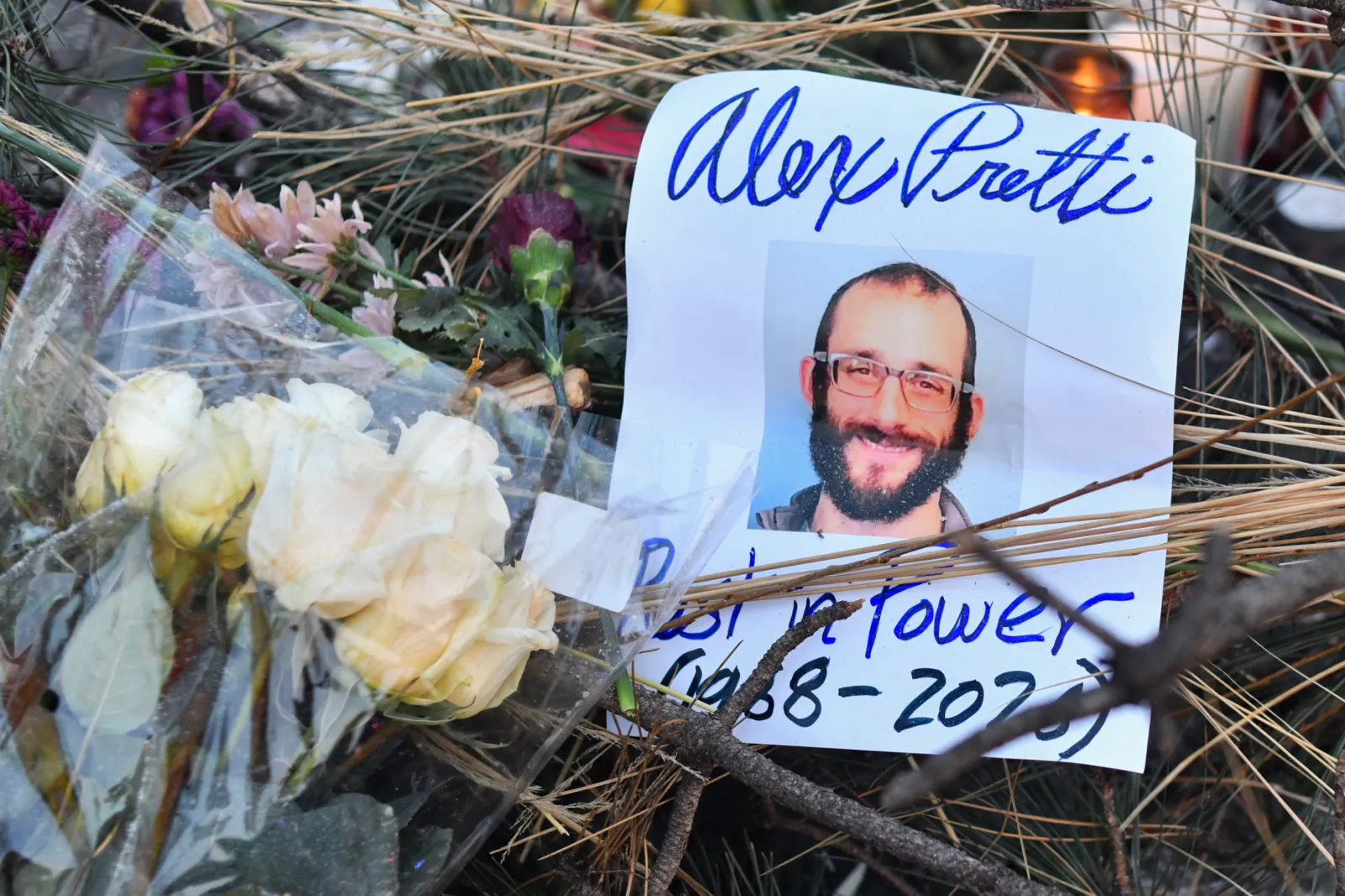
The deaths of Renee Good and Alex Pretti — one during an ICE raid and the other at a protest days later — drew national attention after both incidents were captured on video. The footage triggered widespread backlash, legal scrutiny, and calls for accountability not only from Democrats but also from within conservative ranks.
In Washington, reactions have been uneven. Some in Trump’s inner circle initially rushed to defend federal agents and criminalize Pretti in the aftermath of his death. Homeland Security Secretary Kristi Noem labeled the shooting an act of “domestic terrorism,” while Deputy White House chief of staff Stephen Miller described Pretti as an “assassin.” As the backlash grew, other Republicans began signaling discomfort.
Read More on Politics
...
Senator Bill Cassidy called the episodes “incredibly disturbing.” Representative Thomas Massie warned that “carrying a firearm is not a death sentence.” Senator Susan Collins urged a “full and independent review” of ICE operations, and House Homeland Security Chair Andrew Garbarino announced hearings to examine federal enforcement protocols.
That internal divide quickly surfaced in the conservative press. The Wall Street Journal editorial board, long a defender of immigration enforcement, warned that the Minneapolis raids risk undermining public trust. “Americans want enforcement, not escalation,” the board wrote. The New York Post went further, calling the administration’s response “a terrible miscalculation” and criticizing what it described as misleading rhetoric surrounding Pretti’s death.
“The hasty and misleading rhetoric coming out of the administration needs to stop,” the Post wrote. “Any reasonable person who has watched the videos clearly knows by now that Pretti was not waving his gun around.”
Cracks in GOP Support for ICE
What’s changed isn’t just the rhetoric. It’s the numbers.
A YouGov poll conducted hours after Pretti’s death found that, for the first time, more Americans support abolishing ICE (46 percent) than oppose it (41 percent). Support for eliminating ICE among Republicans rose to 19 percent, the highest level recorded in YouGov polling.
Other surveys point in the same direction. Fifty-seven percent of Americans disapprove of how ICE is handling its job, and 58 percent say its tactics are too forceful. Among those who watched video of Pretti’s shooting, nearly two-thirds said the killing was not justified.
Even Rasmussen Reports — a pollster often cited by Republicans and typically more favorable to hardline immigration enforcement — has shown erosion in public confidence, suggesting the backlash is reaching voters who have historically been more receptive to the administration’s approach.
That shift has not gone unnoticed inside the White House.
In a phone call with Minnesota Governor Tim Walz, President Donald Trump signaled openness to reducing the number of federal immigration agents operating in Minneapolis and to coordinating more closely with state officials on enforcement focused on violent criminals. Soon after, the administration named border czar Tom Homan as the main point of contact on the ground in Minneapolis, reporting directly to Trump.
The move sidelined Border Patrol Commander Gregory Bovino, who had become the public face of the crackdown and was widely interpreted by Republicans as an effort to regain control of both the operation and the political narrative.
At the same time, the White House softened its tone. Press secretary Karoline Leavitt distanced Trump from comments by Noem and Miller, stressing that the president wants investigators to “let the facts lead.” The shift marked a notable retreat from the administration’s initial messaging, even as it continued to defend immigration enforcement more broadly.
GOP Anxiety Builds
While some Republicans have spoken out, many GOP leaders have stayed publicly silent, as the party struggles to defend enforcement without owning the fallout. Republican strategists say that tension reflects growing concern inside the party.
“Closing the border and arresting criminal illegal aliens is popular with the American public,” GOP consultant Matt Klink told Newsweek. “What's not popular is the controversy in liberal Democrat-run cities. You'll likely see a Republican push to highlight the protests as "this is what Democrat leadership" looks like.
Klink cautioned that enforcement remains a priority issue for the GOP base. But others argue the political calculus is changing.
“Is immigration enforcement at risk of shifting from a Republican strength to a political liability? Short answer, yes,” said Republican strategist Alex Patton. “This is easy. Most Americans don't like a militarized forces killing citizens nor government sponsored snuff films.”

As images of federal agents flooding Minneapolis continue to dominate coverage, strategists warn the party’s once-reliable immigration message may now be turning into a liability heading into the 2026 midterms and the 2028 presidential race. Even Vice President JD Vance has urged officials to “turn down the temperature” in Minneapolis, a notable shift in tone from a White House that initially leaned into confrontation.
“Do current tactics make it harder for future GOP candidates to campaign on immigration enforcement without backlash? Yes,” Patton told Newsweek. “Trump will never lose his hardcore base, but he is losing non-MAGA Republicans and independents in droves.”
“Republicans on the ballot, especially in purple states, will certainly feel pressure from anti-immigration activists and other groups that tend to be the loudest,” Klink said. “But Republicans cannot run from immigration enforcement.”
The unease has reached Trump’s allies. Texas Governor Greg Abbott said the White House needs to “recalibrate” its approach in Minnesota, arguing enforcement can proceed without “causing the kinds of problems and fighting in communities” now playing out.
Senator Rand Paul has invited senior Homeland Security officials to testify about the Minneapolis operation, while House Republicans have called for parallel hearings. Several GOP lawmakers have endorsed a full investigation into Pretti’s killing, calling the loss of life tragic.
Update 1/26/26, 11:22 p.m. ET: This article has been corrected to reflect an earlier error in attribution.
View 0 Comments
Submit Correction
View Editorial & AI Guidelines