...

By Danish Manzoor Bhat
Editorial Director, Asia
0
Share
Newsweek is a Trust Project member
See more of our trusted coverage when you search.Prefer Newsweek on Googleto see more of our trusted coverage when you search.
Just weeks ago, U.S.–India ties looked stuck in a familiar rut: Washington warning that India’s Russian oil buys undercut Western pressure on Moscow, New Delhi bristling at lectures, and trade talks drifting amid tariff threats. Then, on February 2, the relationship snapped back; fast.

...
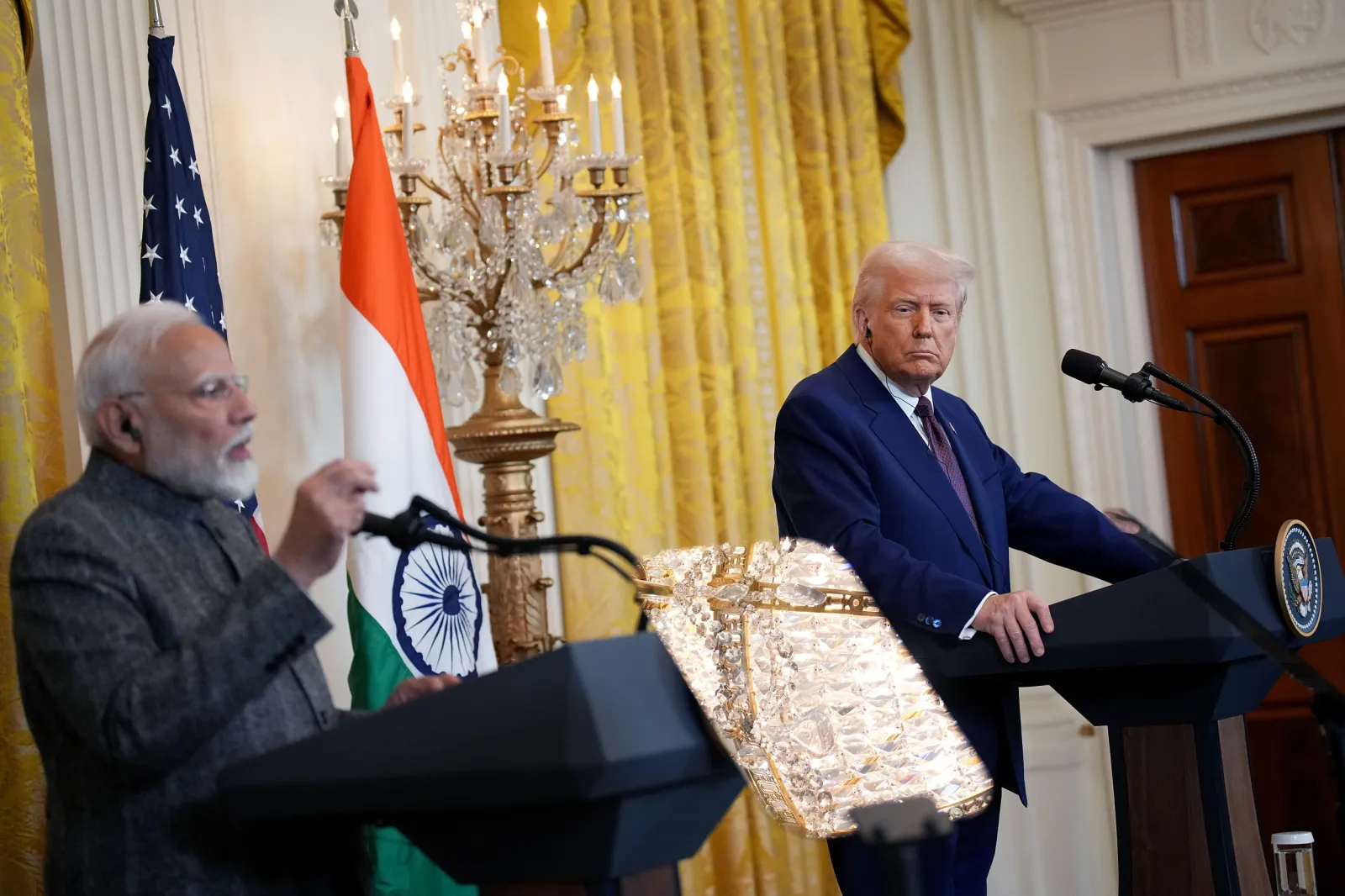
President Donald Trump announced a surprise trade deal cutting U.S. tariffs on Indian goods to 18% and, crucially, removing a separate 25% penalty tariff tied to India’s Russian oil purchases, after Trump said India agreed to stop buying Russian crude. Trump shared on Truth Social, writing: “We have agreed to a major trade deal with India. Tariffs on Indian goods will be reduced to 18%, and India has agreed to stop buying Russian oil. This is a tremendous win for American workers, American energy producers, and global security.”
Read More on World
- Essential Reading: The US Is in Beta as China Changes the Game
- How Trump’s Nuclear Brinkmanship Is Forcing Iran’s Hand
- Conventional Wisdom: Trump Kennedy Center Edition
Indian Prime Minister Narendra Modi moved quickly to frame it as a win for Indian exporters; without amplifying the Russia clause. “Delighted that Made in India products will now have a reduced tariff of 18%,” Modi posted on X, adding: “Big thanks to President Trump on behalf of the 1.4 billion people of India…”
The choreography mattered. Moments earlier, newly arrived U.S. Ambassador to India Sergio Gor appeared to tee up the announcement in a tightly worded tease: “President Trump just spoke with Prime Minister Modi. STAY TUNED…” That preview; followed by the deal, left diplomats and markets reading the message: the reset is intentional, and it’s being managed at the very top.
Why now? The EU deal was the pressure point. India had just concluded what Brussels called a “landmark” free-trade agreement, giving Delhi leverage, and Washington a fear of being outflanked. Modi himself had hailed the India–EU pact days earlier: “India and Europe have taken a major step forward today… opens new pathways for growth, investment and strategic cooperation.”
“We have agreed to a major trade deal with India. Tariffs on Indian goods will be reduced to 18%, and India has agreed to stop buying Russian oil.
President Donald Trump
For Americans, the stakes run through energy and geopolitics. The White House has signaled that the tariff relief is tied to choking off Kremlin revenue, an aim echoed by Treasury Secretary Scott Bessent, who said India’s Russian oil purchases had “collapsed” and suggested “a path to take [the tariffs] off.” AP framed the strategy bluntly: cutting Russia’s oil revenues to pressure an end to the Ukraine war with Trump also pointing to alternative flows like Venezuela; an energy chess move while keeping global prices from spiking. That matters even more as Washington juggles Iran risk, fresh reporting suggests Tehran fears a U.S. strike could destabilize the regime, a reminder that any Gulf tremor can ricochet through oil markets.
As the Iran backdrop raises the temperature, Reuters reported Iranian officials fear even limited U.S. strikes could destabilize the regime, while separate reporting pointed to renewed U.S.–Iran nuclear talks; both reminders that any Middle East escalation can whip oil markets and complicate coalition politics.
Politically, Trump gets a “peace-through-leverage” headline on Russia; Modi gets tariff relief and a cleaner runway for exports. But the deeper logic is strategic supply chains: Washington wants India anchored as a non-China manufacturing and defense partner, and Delhi wants proof that aligning with the U.S. pays; fast.
All this, delivered through a new ambassador who signaled publicly, that something big was coming.
In a polarized era, the center is dismissed as bland. At Newsweek, ours is different: The Courageous Center—it's not "both sides," it's sharp, challenging and alive with ideas. We follow facts, not factions. If that sounds like the kind of journalism you want to see thrive, we need you.
When you become a Newsweek Member, you support a mission to keep the center strong and vibrant. Members enjoy: Ad-free browsing, exclusive content and editor conversations. Help keep the center courageous. Join today.


View 0 Comments
Submit Correction
View Editorial & AI Guidelines