...

By Jenni Fink
Senior Editor
0
Share
Newsweek is a Trust Project member
See more of our trusted coverage when you search.Prefer Newsweek on Googleto see more of our trusted coverage when you search.
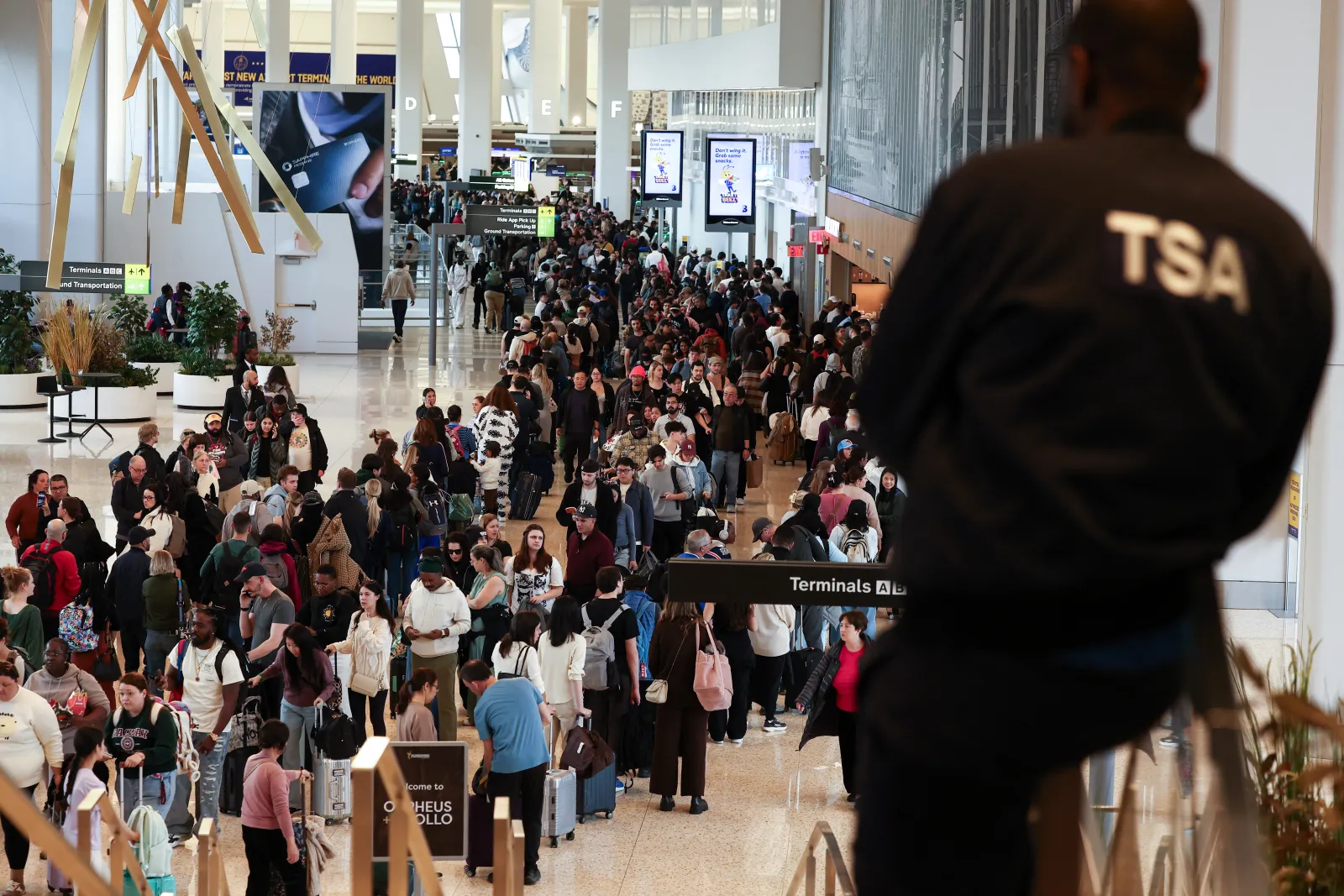
Hours‑long security lines have become a familiar sight at some of the nation’s busiest airports as the partial shutdown of the Department of Homeland Security (DHS) stretches on, and while there are no guarantees for getting through the airport faster, there may be ways to improve chances of a fast experience.
A partial government shutdown has left tens of thousands of Transportation Security Administration officers working without pay, triggering staffing shortages that have snarled airport security nationwide as spring travel ramps up. As call‑outs and resignations mount, some airports have closed screening lanes or consolidated checkpoints, leading to hours‑long waits for passengers, missed flights and mounting pressure on airlines and federal officials to restore DHS funding.
Expedited screening programs such as TSA PreCheck and CLEAR, airline status perks and assistance options like TSA Cares can still help, but their reliability has changed as the shutdown strains staffing and forces airports to make real‑time operational decisions.
Read More on News
...
Is TSA PreCheck Open?
TSA PreCheck offers dedicated screening lanes where approved travelers typically keep shoes, belts and light jackets on and leave laptops and liquids in their bags. Under normal circumstances, TSA says people can make it through security with PreCheck in a matter of minutes. However, the shutdown has fundamentally altered how reliable PreCheck is on a day‑to‑day basis.
TSA has made clear that PreCheck lane availability is now determined airport by airport, depending on staffing levels. At several major hubs—including Houston, Atlanta, New Orleans, Philadelphia and New York—PreCheck lanes have closed temporarily or merged into general screening when call‑out rates surged.
In some cases, PreCheck lanes have remained open but offered little time savings. At Atlanta’s Hartsfield‑Jackson International Airport, PreCheck wait times reportedly stretched into hours during peak periods, matching or exceeding standard lanes.
TSA PreCheck can still significantly reduce wait times at airports with adequate staffing, but it is no longer a guarantee until the shutdown ends. Travelers with PreCheck are advised to check airport‑specific updates and arrive earlier than usual, even if they normally rely on expedited screening.
Is CLEAR Open?
CLEAR operates separately from TSA as a private, paid identity‑verification service that uses biometric technology to escort members to the front of the security line, where they then complete physical screening with TSA officers.
Because CLEAR does not replace TSA screening, it has not been immune from shutdown disruptions.
At multiple airports, CLEAR lanes have closed or been limited during periods of extreme staffing shortages, including at Houston’s George Bush Intercontinental Airport and at terminals in Atlanta and New Orleans. A CLEAR spokesperson has said availability may be affected at “some locations” as airport conditions change rapidly.
Where CLEAR remains available, it has continued to offer meaningful time savings in certain airports—especially those where standard lines exceed 30 to 60 minutes—but only when TSA has enough officers on hand to process travelers after identity verification.
CLEAR has been providing updates on the impact to the expedited security screening on Facebook. On Tuesday, CLEAR identified airports with "extreme disruptions." In Atlanta, CLEAR+ lanes are open in domestic and international terminals, but in Houston, lanes were closed. It was an improvement for Atlanta passengers, who couldn't use CLEAR lanes on Monday because they were closed in the domestic terminal.
During the shutdown, CLEAR can still be effective, but travelers should not assume the service will be open. Availability can change by the hour during the shutdown. CLEAR is also not available at all airports.
Can You Get Priority Airport Screening With Airline Status?
Frequent flyers with elite status on major airlines—such as American, Delta, United and others—are often accustomed to priority security access, either through designated lanes or partnerships with TSA and CLEAR. But during the shutdown, these perks have become less consistent.
Delta travelers with Gold, Platinum and Diamond status can get access to exclusive security lines at select airports. United members with Silver through IK status and American Airlines advantage members with Gold, Platinum, Platinum Pro or Executive Platinum status can get access to exclusive security lanes.
Airports facing acute staffing shortages have suspended or restricted priority screening, folding elite travelers into general lines or limiting access to PreCheck lanes when available. Airlines have emphasized that these decisions are made by TSA, not carriers, and depend on real‑time staffing conditions.
Some airlines have also curtailed special escort services and discretionary assistance tied to security processing, citing limited resources during the shutdown.
Elite airline status may still help at airports with stable staffing, but it should no longer be treated as a reliable shortcut. Even top‑tier frequent flyers are being urged to arrive earlier than usual.
TSA Family Lanes: What To Know
TSA family lanes are part of the agency’s “Families on the Fly” initiative, which created dedicated security lanes designed to give parents traveling with young children more time and space at the checkpoint. The lanes are available to families traveling with children 12 and under and are meant to reduce stress—not eliminate screening. According to TSA, the family lanes operate the same as standard security lanes but are staffed by officers trained to work with families, strollers, car seats, diaper bags and other child‑related items, allowing travelers to move through the process at a slower pace without feeling rushed. All passengers and belongings are still screened, including X‑rays of strollers and baby gear, and the lanes do not provide the same expedited benefits as TSA PreCheck, such as keeping shoes on or leaving liquids in bags.
Availability of family lanes is not guaranteed and depends on airport participation and daily staffing levels. TSA has emphasized that family lanes are an operational offering rather than a formal, always‑open program, meaning they can be consolidated or closed during periods of heavy travel or staffing shortages, such as those caused by the shutdown. Families may still be directed into general screening lines if a dedicated lane is not operating at that moment. TSA encourages travelers to look for signage at checkpoints and notes that TSA Cares remains available to provide additional assistance for families who need help navigating security, though it does not guarantee faster screening.
Airports that have implemented family lanes include:
- Orlando International Airport (MCO)
- Charlotte Douglas International Airport (CLT)
- Daniel K. Inouye International Airport (HNL)
- John Wayne Airport, Orange County (SNA)
- Charleston International Airport (CHS)
- Jacksonville International Airport (JAX)
- Luis Muñoz Marín International Airport (SJU)
- Tampa International Airport (TPA)
- Rhode Island T.F. Green International Airport (PVD)
- Seattle‑Tacoma International Airport (SEA)
- Salt Lake City International Airport (SLC)
- John Glenn Columbus International Airport (CMH)
- Will Rogers World Airport, Oklahoma City (OKC)
Is TSA Cares Still Available?
TSA Cares is a lesser‑known but critical program designed to assist travelers who may need additional help navigating security, including people with disabilities, medical conditions, young children or sensory sensitivities. The program remains officially available during the shutdown. However, it's possible that people will have to wait longer for assistance, especially at airports that are experiencing high call-out rates.
Importantly, TSA Cares does not function as a general line‑skipping program. It provides guided assistance through screening, not guaranteed expedited processing. However, generally, people who use TSA Cares do not have to join the back of a security line.
Families and travelers who rely on TSA Cares should still use the program but should plan for delays and avoid assuming it will bypass long lines entirely during the shutdown.
Until the shutdown ends, travelers are advised to get to the airport with plenty of time before their flight regardless of their airline status, security clearances or ability to skip security lines on a normal basis.
In a polarized era, the center is dismissed as bland. At Newsweek, ours is different: The Courageous Center—it's not "both sides," it's sharp, challenging and alive with ideas. We follow facts, not factions. If that sounds like the kind of journalism you want to see thrive, we need you.
When you become a Newsweek Member, you support a mission to keep the center strong and vibrant. Members enjoy: Ad-free browsing, exclusive content and editor conversations. Help keep the center courageous. Join today.


View 0 Comments
Submit Correction
View Editorial & AI Guidelines