...

By Jenni Fink
Senior Editor
0
Share
Newsweek is a Trust Project member
See more of our trusted coverage when you search.Prefer Newsweek on Googleto see more of our trusted coverage when you search.
Staffing shortages amid a government shutdown are creating long wait times for plane passengers, but travelers do have a way of tracking how long airport security will take before they get to the airport.
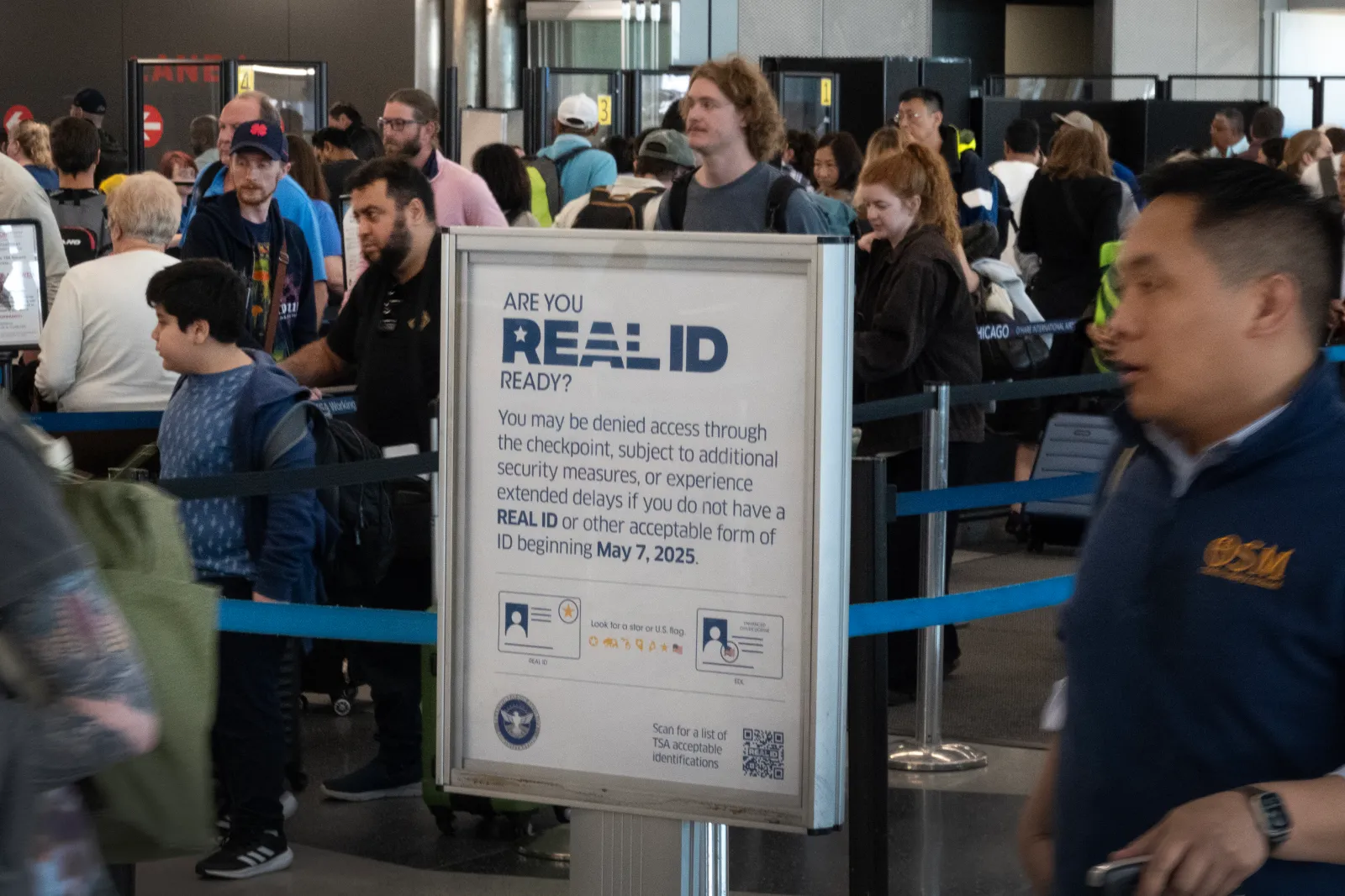
TSA wait times are climbing at airports across the country as a partial government shutdown disrupts staffing at security checkpoints, forcing thousands of Transportation Security Administration (TSA) officers to work without pay. Although TSA employees are considered essential and must continue screening passengers, unscheduled absences have risen sharply, leading to closed lanes, slower processing and lines with hourslong wait times at some major hubs just as the spring break travel season ramps up. Federal officials and airport operators have warned that the longer the shutdown drags on, the more uneven and unpredictable security wait times could become nationwide.
Travelers have more tools than ever to monitor TSA security lines in real time, from official airport websites to the TSA’s own mobile app. Major U.S. airports, including Atlanta, Orlando, Dallas–Fort Worth, JFK and Chicago O’Hare, now publish checkpoint updates designed to give passengers a clearer picture of what to expect before arriving.
Read More on News
TSA Wait Times: How to Check
The Transportation Security Administration does not publish a single nationwide wait-time dashboard, but it works with airports and third-party tools to provide real-time and estimated security line information.
One of the most reliable tools is the official MyTSA mobile app, which allows travelers to view current and historical wait times at many U.S. airports based on traveler reports and TSA data. The app also provides security tips, guidance on prohibited items, and alerts about disruptions that could affect screening times, such as weather or staffing issues.
Many airports also publish live checkpoint updates directly on their websites. These pages often break wait times down by terminal and checkpoint, making them particularly useful at large hub airports with multiple security entrances.
These tools can be helpful for comparison, but estimates can change quickly depending on passenger volume, staffing levels and unexpected disruptions.
The TSA consistently advises travelers to arrive at least two hours early for domestic flights and three hours early for international departures, even when wait times appear short, because security conditions can shift rapidly.
...
TSA PreCheck Wait Time: How to Check
Travelers enrolled in TSA PreCheck typically experience much shorter security lines than those using standard screening lanes. According to the TSA, the vast majority of PreCheck passengers wait less than 10 minutes at security checkpoints nationwide.
PreCheck wait times can often be viewed alongside standard lane times on airport websites that publish checkpoint data. Some airports clearly label which lanes are dedicated to TSA PreCheck, while others indicate when PreCheck screening is available within a standard checkpoint.
The TSA also maintains an online TSA PreCheck checkpoint schedule that shows when dedicated PreCheck lanes are open at specific airports and at what times of day. Availability can vary based on staffing and operational needs, meaning expedited screening is not guaranteed at every airport or during every time window.
Atlanta (ATL) TSA Wait Time
Hartsfield–Jackson Atlanta International Airport, the world’s busiest airport, is known for heavy passenger traffic, particularly during early mornings and late afternoons. It services over 108 million passengers each year.
Atlanta publishes minute-by-minute TSA wait times on its official website, allowing travelers to view current conditions at each checkpoint across domestic and international terminals. The airport breaks down wait times into ranges, making it easier to identify the fastest checkpoint options before entering security.
Because of the airport’s volume, wait times can fluctuate quickly, and officials strongly recommend arriving early, even when posted wait times appear manageable.
Baltimore–Washington (BWI) TSA Wait Time
BWI handles roughly 27 million travelers annually.
The airport publishes estimated TSA wait times by checkpoint,
Boston (BOS) TSA Wait Time
Boston Logan International Airport handles over 40 million travelers annually.
BOS provides estimated TSA wait times by checkpoint, available through airport‑supported tools and the MyTSA app.
Charlotte (CLT) TSA Wait Time
Charlotte Douglas International Airport serves more than 50 million passengers per year, largely as a domestic connecting hub.
CLT publishes checkpoint‑level TSA wait times on its official website, updated throughout the day.
Chicago O’Hare (ORD) TSA Wait Time
Chicago O’Hare International Airport serves as a major hub for both domestic and international flights, with TSA checkpoints spread across multiple terminals.
O’Hare wait times are available through airport information sites and TSA reporting tools, which show average screening times that can rise significantly during peak morning and evening travel windows.
Because O’Hare handles a high volume of connecting passengers, security congestion can build quickly. Airport officials recommend building extra buffer time into travel plans, especially during winter weather events that can disrupt flight schedules and staffing.
Dallas–Fort Worth (DFW) TSA Wait Time
Dallas–Fort Worth International Airport operates multiple security checkpoints across its five terminals, and the airport publishes live TSA wait times directly on its official website. Travelers can view estimated wait times by checkpoint and terminal before choosing where to enter security, which can be particularly useful at DFW due to its size and layout.
DFW also provides information about TSA PreCheck and other expedited screening options, helping travelers identify which checkpoints offer faster processing on the day of travel.
Denver (DEN) TSA Wait Time
Denver International Airport handles more than 82 million passengers annually, with heavy traffic tied to its role as a major domestic hub.
Denver has a wait time dashboard on its website that estimates how long it will take people to get through regular security, as well as TSAPre. Denver airport also allows people to reserve a spot in a security line through DEN Reserve, which can be booked on the airport's website.
Detroit (DTW) TSA Wait Time
Detroit Metropolitan Airport handles roughly 34 million travelers annually.
DTW provides estimated security wait times on its website and the MyTSA app.
Fort Lauderdale (FLL) TSA Wait Time
Fort Lauderdale–Hollywood International Airport serves over 35 million passengers a year.
FLL doesn't provide TSA wait times but passengers can track wait times with the MyTSA mobile app.
Houston Bush (IAH) TSA Wait Time
George Bush Intercontinental Airport serves around 45 million passengers per year.
IAH publishes TSA wait‑time estimates by terminal, with airport alerts issued during staffing shortages or weather disruptions.
Las Vegas (LAS) TSA Wait Time
Harry Reid International Airport sees nearly 60 million travelers annually.
LAS provides estimated TSA wait times by terminal, with particularly close monitoring during convention and holiday weekends.
Los Angeles (LAX) TSA Wait Time
Los Angeles International Airport processes about 74 million passengers annually, with traffic spread across nine terminals.
LAX publishes terminal‑level TSA wait times on its official website, showing separate estimates for general screening and TSA PreCheck lanes. The data is refreshed throughout the day and is among the most detailed of any U.S. airport.
Miami (MIA) TSA Wait Time
Miami International Airport handles more than 50 million passengers a year, with a high share of international traffic.
MIA publishes estimated TSA screening times on its airport website and advises travelers to check MyTSA during international departure surges.
Minneapolis–St. Paul (MSP) TSA Wait Time
MSP serves around 38 million passengers each year.
The airport publishes TSA wait‑time estimates by checkpoint and directs travelers to TSA tools for real‑time updates.
Newark (EWR) TSA Wait Time
Newark Liberty International Airport serves around 46 million passengers a year.
EWR provides terminal‑specific TSA wait‑time estimates, available through airport‑supported platforms and MyTSA. Newark airport also provides wait times for Customs screenings for international passengers.
New York John F. Kennedy (JFK) TSA Wait Time
John F. Kennedy International Airport in New York is one of the busiest international gateways in the United States, and wait times can vary widely depending on terminal, airline and time of day. The airport's website provides real-time updates on security wait times.
JFK does not operate as a single terminal, and TSA wait times differ significantly across its terminals. Third-party tools and airport information sites publish estimates showing that security lines tend to be longest during early-morning and late-afternoon departure waves, especially at terminals handling international traffic.
Travelers are encouraged to check terminal-specific information through JFK’s official airport website and airline guidance before arriving, particularly during peak travel seasons.
Orlando (MCO) TSA Wait Time
Orlando International Airport (MCO) serves millions of leisure travelers each year, particularly during school breaks and holiday periods, due to the area's theme parks. MCO provides current TSA wait times through third-party reporting tools and security information pages, which show estimated screening times by hour and terminal.
The airport also offers MCO Reserve, a free program that allows eligible travelers without TSA PreCheck to reserve a time slot for standard security screening. While availability is limited and subject to daily capacity, the program is designed to help reduce uncertainty for families and vacation travelers flying during peak times.
Philadelphia (PHL) TSA Wait Time
Philadelphia International Airport serves about 33 million passengers per year.
PHL publishes checkpoint‑level TSA wait times for both standard screenings and TSAPreCheck passengers.
San Diego (SAN) TSA Wait Time
San Diego International Airport handles approximately 25 million travelers annually.
SAN publishes estimated TSA screening times on its website and advises travelers to verify conditions using TSA tools during peak hours.
Tampa (TPA) TSA Wait Time
Tampa International Airport serves around 25 million passengers per year. The airport doesn't provide real-time security updates, but people can track through the MyTSA mobile app. While Tampa is experiencing a lot more traffic because of spring break, the airport said it's not experiencing "significant delays or backups."
The airport recommends passengers allow about 20 minutes to clear security during nonpeak times and 45 minutes during peak times.
Washington Dulles (IAD) TSA Wait Time
Dulles International Airport handles roughly 25 million travelers annually.
IAD publishes estimated TSA wait times by terminal and checkpoint, but it's not in real time. Travelers can put in when they're going to be arriving and see an estimated security wait time for that time period.
Washington Reagan National (DCA) TSA Wait Time
Reagan National Airport serves around 24 million passengers per year.
DCA provides checkpoint‑specific TSA wait times, breaking out the difference from general security checkpoints and TSAPreCheck security lines.
TSA PreCheck: How to Apply
TSA PreCheck is a trusted traveler program that allows approved passengers to use expedited security lanes at participating U.S. airports. Travelers in PreCheck lanes typically do not need to remove shoes, belts, light jackets, laptops or compliant liquids during screening.
To apply, travelers must complete an online application through the TSA or an authorized enrollment provider, schedule an in-person appointment, and submit fingerprints and identity documentation. Membership is valid for 5 years at a set fee, and approval times may vary depending on background check processing.
Once approved, travelers receive a Known Traveler Number (KTN), which must be added to airline reservations to access TSA PreCheck benefits.
TSA Global Entry: How to Apply
Global Entry is administered by U.S. Customs and Border Protection and is designed primarily for international travelers returning to the United States. Approved members can use automated kiosks to skip traditional customs lines. The membership includes TSA PreCheck benefits at no additional cost.
Applicants must create a Trusted Traveler Programs account, submit an online application, pay a non-refundable fee, and attend an in-person interview at a Global Entry enrollment center. Processing times can range from weeks to several months, depending on application volume and background review.
For frequent international travelers, Global Entry can significantly reduce both customs processing time and domestic TSA screening delays.
Checking TSA wait times before heading to the airport can help travelers avoid unnecessary stress and plan smarter departures, especially at large hubs where security conditions change rapidly. While no tool can guarantee a fast screening experience, official airport websites, the MyTSA app, and trusted traveler programs like TSA PreCheck and Global Entry offer some of the most reliable ways to minimize time spent in line.
Even with real-time data, the TSA continues to emphasize early arrival and flexibility as the best defenses against missed flights and travel disruptions.
In a polarized era, the center is dismissed as bland. At Newsweek, ours is different: The Courageous Center—it's not "both sides," it's sharp, challenging and alive with ideas. We follow facts, not factions. If that sounds like the kind of journalism you want to see thrive, we need you.
When you become a Newsweek Member, you support a mission to keep the center strong and vibrant. Members enjoy: Ad-free browsing, exclusive content and editor conversations. Help keep the center courageous. Join today.


View 0 Comments
Submit Correction
View Editorial & AI Guidelines