...

By Gabe Whisnant
News Editor
0
Share
Newsweek is a Trust Project member
See more of our trusted coverage when you search.Prefer Newsweek on Googleto see more of our trusted coverage when you search.
A powerful 7.4 magnitude earthquake struck offshore in the Molucca Sea near Indonesia late Wednesday, prompting a tsunami warning for parts of the region, according to the U.S. Geological Survey (USGS).
The quake occurred at a shallow depth and was centered west‑northwest of the city of Ternate, an area along the seismically active Pacific “Ring of Fire,” the USGS said. There were no immediate reports of casualties or damage.
The Pacific Tsunami Warning Center said hazardous tsunami waves were possible along coastlines within about 620 miles of the epicenter, including parts of Indonesia, the Philippines and Malaysia. Authorities urged coastal residents to monitor official alerts as damage assessments continued and warned that tsunami impacts can vary widely depending on local geography.
Read More on World
Several population centers in eastern Indonesia lie close to the epicenter in the Molucca Sea and are monitored for strong shaking and possible tsunami impacts. The nearest major city is Ternate, the largest urban center in North Maluku province, with a population of more than 200,000 on a small island west of Halmahera.
Farther south, Manado, the capital of North Sulawesi and home to more than 400,000 people, has several low‑lying coastal districts identified by local authorities as tsunami‑prone. Regional monitoring agencies also watch coastal areas of the southern Philippines, particularly parts of Mindanao, and sections of eastern Malaysia, where shorelines could be affected by tsunami waves generated by strong offshore earthquakes, depending on their size and direction.

...
Molucca Sea Earthquakes: What to Know
The earthquake struck in the Molucca Sea, a highly active seismic zone in eastern Indonesia where several tectonic plates converge beneath the sea floor. The Pacific "Ring of Fire" is a vast belt of fault lines and volcanic arcs that produces frequent earthquakes and some of the world’s most powerful seismic events. Earthquakes in the Molucca Sea are often offshore and shallow, conditions that can intensify shaking and increase the risk of tsunamis.
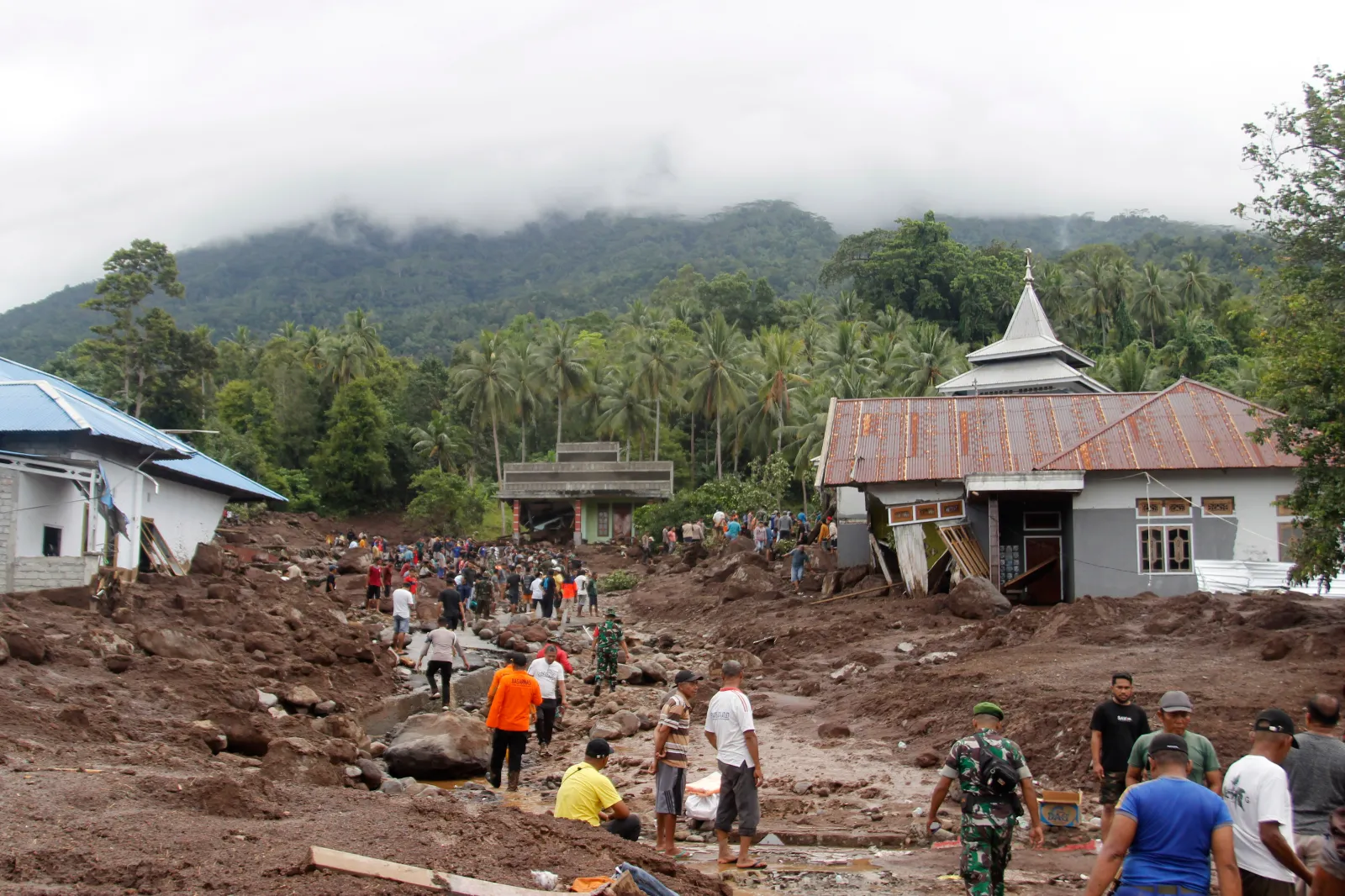
Eastern Indonesia is also prone to other natural disasters, including volcanic eruptions, landslides and flash floods, particularly during periods of heavy rainfall. In August 2024, flash flooding triggered by intense rain affected parts of eastern Indonesia, highlighting the region’s vulnerability to cascading natural hazards when steep terrain, saturated ground and extreme weather combine. Disaster officials say frequent earthquakes, rugged geography and seasonal downpours make the area especially susceptible to multiple types of emergencies occurring in close succession.
Updates: 4/1/26, 7:44 p.m. ET: This article was updated with new information.
View 0 Comments
Submit Correction
View Editorial & AI Guidelines