10
Loading video...

By Hollie Silverman
News Editor
0
Share
Newsweek is a Trust Project member
See more of our trusted coverage when you search.Prefer Newsweek on Googleto see more of our trusted coverage when you search.
The long-awaited murder trial of Duane "Keffe D" Davis opened Monday with prosecutors laying out a detailed account of what they say led to the fatal 1996 shooting of rap icon Tupac Shakur, arguing that Davis orchestrated a retaliatory attack after Shakur and members of his entourage assaulted Davis' nephew, Orlando Anderson, hours earlier on the Las Vegas Strip.
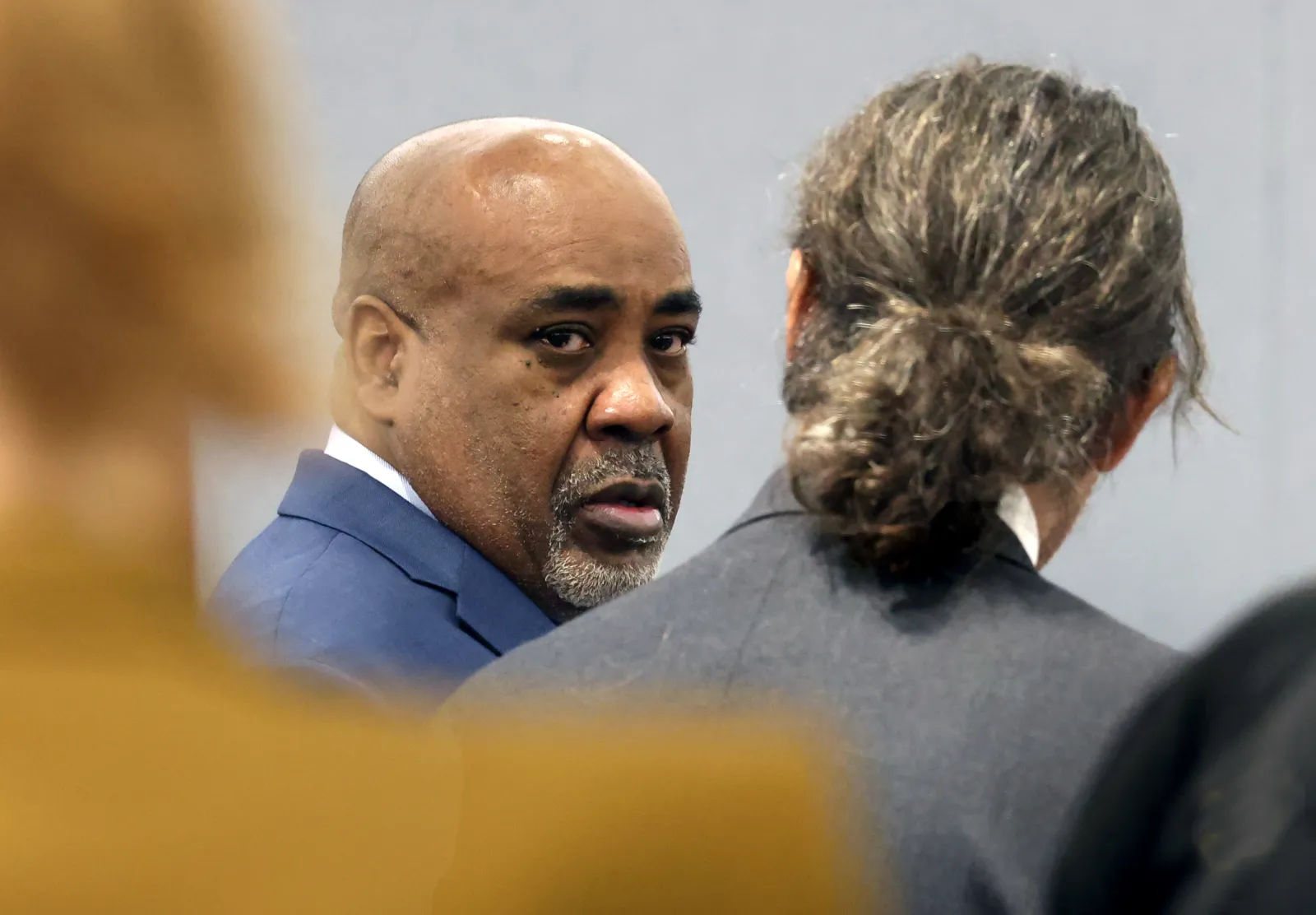
Davis entered the courtroom wearing a blue suit and tie and was not shackled. Throughout much of the proceedings, he sat with an expressionless look on his face as prosecutors outlined what they described as a chain of events that escalated from a gang rivalry into one of the most infamous unsolved killings in American history.
While prosecutors acknowledged that Davis did not pull the trigger, they argued that he played a central role in planning the retaliation and supplying the weapon used in the shooting.
Read More on News
Davis' attorney, Michael Sanft, responded to the allegations made by the prosecutor in his opening statement, questioning the validity of the claims made and saying, "There's no facts."

...
Shooting Was Allegedly in Retaliation for a Fight With the Suspect's Nephew
Prosecutor Marc Wall told jurors that the events leading to Shakur's death began long before the rapper was gunned down at a Las Vegas intersection.
According to the prosecution, tensions had been building between members of the Mob Piru gang, which was associated with Death Row Records, and the South Side Compton Crips led by Davis.
Jurors heard about an earlier confrontation at Lakewood Mall in California, where Mob Piru member Trevon Lane allegedly had a chain ripped from his neck during a dispute involving members of the South Side Crips, further escalating the rivalry.
Related Story
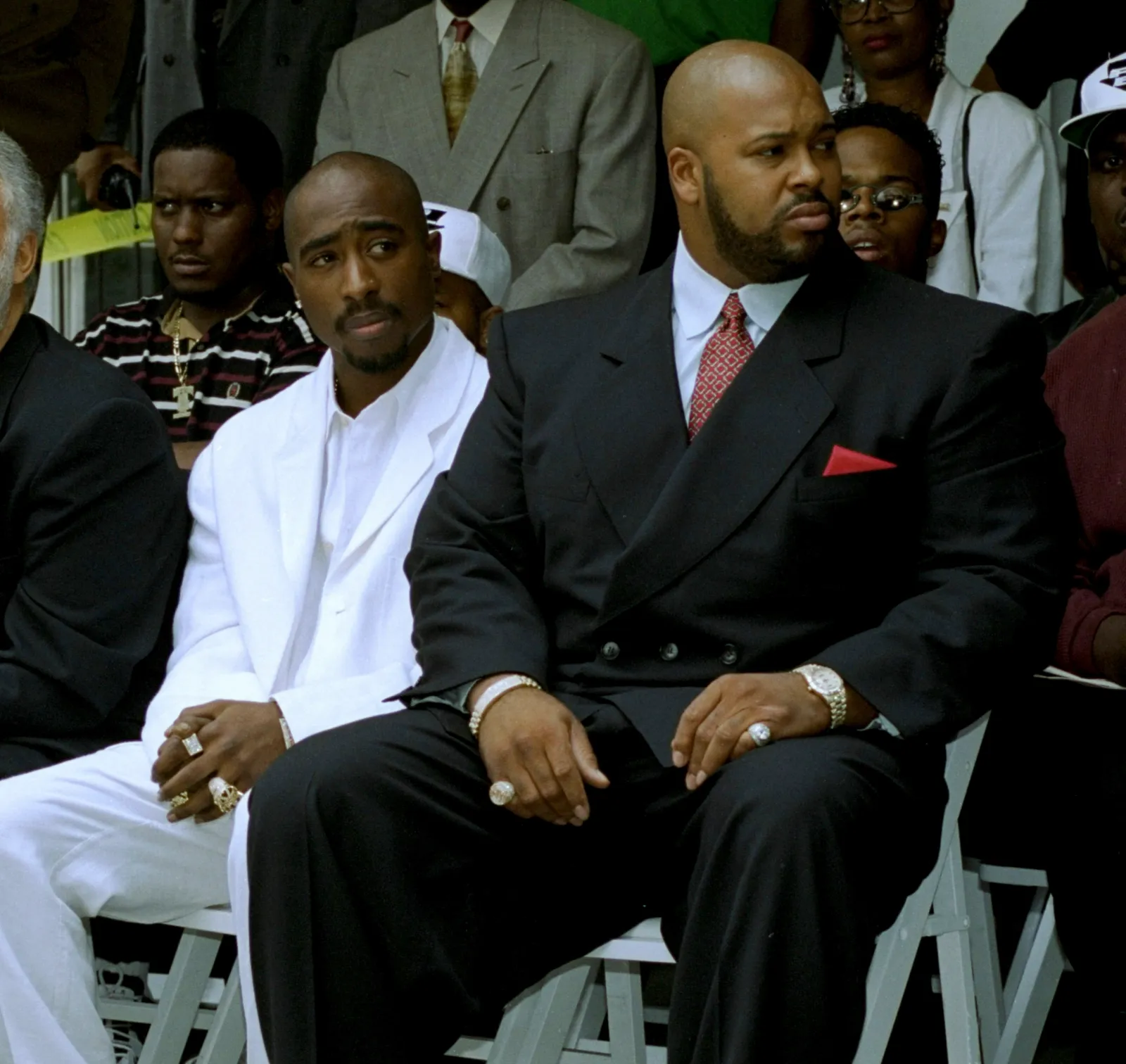
Tupac Murder: Full Witness List in Duane Davis Trial Includes Suge Knight
The conflict came to a head on September 7, 1996, when Shakur and members of his entourage attacked Orlando Anderson in the MGM Grand casino following a Mike Tyson fight. The beating was captured on surveillance video and has long been viewed as a pivotal moment in the case.
"There was no question that a response was required," prosecutors said, describing Davis' alleged reaction after seeing his nephew attacked.
Wall emphasized that Shakur "was not a gangster" but "an artist," while arguing that his association with Mob Piru members nonetheless placed him in the center of the gang dispute that night.
Prosecutors said Davis became enraged over the attack on Anderson and decided retaliation needed to happen.

...
Duane Davis Spoke With Investigators in Recorded Interview
A major part of the state's case centers on statements Davis allegedly made years after Shakur's killing while he was facing unrelated federal drug charges.
According to prosecutors, a federal task force approached Davis and his attorney after an undercover narcotics investigation led to charges against him.
Seeking information about a principal target of their investigation, authorities met with Davis, who reportedly told them he had no information about that individual but could provide details about Tupac Shakur's murder instead.
Jurors heard that Davis then gave a detailed account of the shooting during a secret proffer session with federal investigators. Prosecutors said the conversation was secretly recorded and later became public in 2009.
In that interview, Davis allegedly described his involvement in the events leading up to the shooting and identified key figures who were with him that night.
The state also told jurors that Davis went beyond simply recounting the events. According to prosecutors, he later traveled to New York in an effort to get Eric "Zip" Martin to implicate himself in the case, a move they argued demonstrated how extensively Davis cooperated with federal authorities.
Prosecutors said Davis' recorded statements, which they contend amount to a detailed description of the murder, will be among the most significant pieces of evidence presented during the trial.
Davis Said He Would Have Shot Them if the Car Was on His Side
In one of the most striking moments described during opening statements, prosecutors recounted Davis' alleged explanation of why he did not personally fire the shots.
According to the state, Davis told investigators that he was seated in the front passenger seat while Brown drove the Cadillac. When the vehicle pulled alongside Shakur and Knight, Davis claimed he passed the gun to the back seat, where DeAndre "Dre" Smith and Anderson were sitting.
Prosecutors said Davis explained multiple times during recorded interviews that if Shakur's vehicle had been on his side of the Cadillac, he would have fired the weapon himself.
Instead, according to the prosecution, Anderson was positioned to shoot and opened fire into Shakur's car.
The state argued the comments demonstrate not only Davis' involvement in the plot but also his intent, saying the group was "armed and ready" when the opportunity for retaliation presented itself.
Prosecutors contend the shooting was the culmination of gang tensions, personal revenge and a deliberate decision to respond to Anderson's beating. Defense attorneys are expected to challenge both the credibility of Davis' statements and the prosecution's interpretation of events as the trial continues.
...
Defense Says Case Lacks Corroborating Evidence
In his opening statement, Davis' attorney argued that prosecutors have built their case almost entirely around decades-old statements rather than verifiable evidence, repeatedly telling jurors there are "no facts" tying his client to the murder beyond what Davis and others allegedly said years later.
The defense acknowledged several undisputed facts: Tupac Shakur was shot multiple times on September 7, 1996, at about 11:17 p.m., and investigators recovered .40-caliber shell casings from the scene. Beyond those basic facts, however, the attorney argued prosecutors cannot independently prove key elements of their theory.
Sanft highlighted what he described as a troubled and fragmented investigation. Jurors were told that early leads went cold, witnesses became unavailable, memories faded over time and relations between law enforcement agencies were strained. The defense pointed to an incident in which investigators were allegedly told a firearm matched evidence from the case, only to later learn it was not the murder weapon.
A central theme of the defense's argument was that Davis' 2008 statements to a federal task force were never adequately corroborated.
The attorney noted that several agencies, including the FBI, LAPD and federal prosecutors, were aware of Davis' claims but did not bring charges at the time. He argued investigators failed to interview witnesses who could have confirmed or disproved parts of Davis' account and never developed independent evidence supporting the statements.
The defense also criticized former Las Vegas Metropolitan Police Department detective Jason Johansson, who revived the investigation years later.
According to Sanft, Moore's focus was on "closing" the case rather than solving it, relying heavily on Davis' own accounts and a later memoir. The attorney argued Moore failed to thoroughly investigate alternative theories, did not sufficiently verify information contained in the book and produced little contemporaneous documentation of his work before Davis was charged.
Ultimately, the defense told jurors that prosecutors would ask them to convict based largely on unverified statements from witnesses with credibility issues. "You have to corroborate everything I say in order for it to be true," the attorney argued, contending the state cannot prove beyond a reasonable doubt that Davis committed first-degree murder or orchestrated the killing of Shakur.
What Witnesses Said on the Stand
Two key witnesses offered jurors first-hand accounts of the events surrounding Tupac's shooting.
Garry Dale, a retired Las Vegas police officer, testified that he stopped a black BMW driven by Marion "Suge" Knight with Tupac in the passenger seat shortly before the shooting because the vehicle had no license plate.
The officer described the encounter as friendly, recalling a brief conversation with Tupac about the large gold chain he was wearing. The men told him they had removed the plate while filming a music video, and they were released with a warning.
Roughly 10 minutes later, the officer responded to reports of gunfire and encountered the same BMW stopped in a median. He said Knight, who was bleeding from a head wound, repeatedly urged officers to "take care of Tupac."
The officer later rode with Tupac in an ambulance and testified that when he pressed the rapper to identify his attackers, Tupac repeatedly replied, "No, we'll take care of it."
Jurors also heard from Ingrid Stokes, who testified that she was riding with three friends when they encountered Knight and Tupac on the Las Vegas Strip.
Stokes said one of her friends knew Knight, who invited the women to follow his car to Club 662. She recalled confusion over vehicles repeatedly maneuvering around their car as they followed the BMW.
At a red light near the intersection where the shooting occurred, Stokes said she was in the middle of switching seats with the driver when gunfire erupted.
"All hell broke loose," she testified, describing how she ducked down, grabbed the driver and fled the scene. Stokes said she briefly saw a white four-door car nearby but could not identify anyone inside. She later returned to the scene and spoke with police, telling jurors she was initially reluctant to cooperate because she feared being seen talking with law enforcement.
What Comes Next in the Tupac Trial
With opening statements now complete, jurors are expected to begin hearing testimony from witnesses who prosecutors say can help establish the events leading up to the shooting and Davis' alleged role in the retaliation plot. The state is not expected to argue that Davis was the gunman. Instead, prosecutors will attempt to convince jurors that he orchestrated the attack and supplied the weapon used in the fatal drive-by shooting, making him criminally liable under Nevada law.
The trial is expected to last several weeks.
Davis, 63, has pleaded not guilty. If convicted, he faces a potential life sentence in prison.
Contact Newsweek editors on this story: Samantha Beech and Gray R. Thomas
View 0 Comments
Submit Correction
View Editorial & AI Guidelines