
By Aristos Georgiou
Science and Health Reporter
0
Share
Newsweek is a Trust Project member
See more of our trusted coverage when you search.Prefer Newsweek on Googleto see more of our trusted coverage when you search.
Two large asteroids—one of which could measure more than 1,000 feet across—are set to have a close encounter with Earth next week.
The first of the two space rocks to make a close approach is known as 2016 CZ31. According to figures from NASA's Center for Near Earth Object Studies (CNEOS) database, this object will come no closer than around 1.7 million miles to our planet at 11:02 p.m. UTC, or 7:02 p.m. ET, on Friday, July 29.
While this may seem like a large distance, on the scale of the solar system, it is a relatively close shave. However, there is no chance that the object will strike the Earth during this approach. To put the close approach into context, the distance at which 2016 CZ31 will fly past us is around seven times the average distance between the Earth and the moon.
Read More
Full Buck Moon: Meaning Behind July’s Supermoon3 min read

‘Manhattanhenge’ Will See Sun Set in Perfect Alignment With New York Grid3 min read

When Is July’s Full Moon, the Biggest and Brightest Supermoon of the Year?3 min read

At the time of its close approach, the asteroid will be traveling at an incredible speed of roughly 34,500 miles per hour relative to Earth, the CNEOS database figures show. This is about 17 times faster than a rifle bullet and around one-fifth as fast as a bolt of lightning.
...
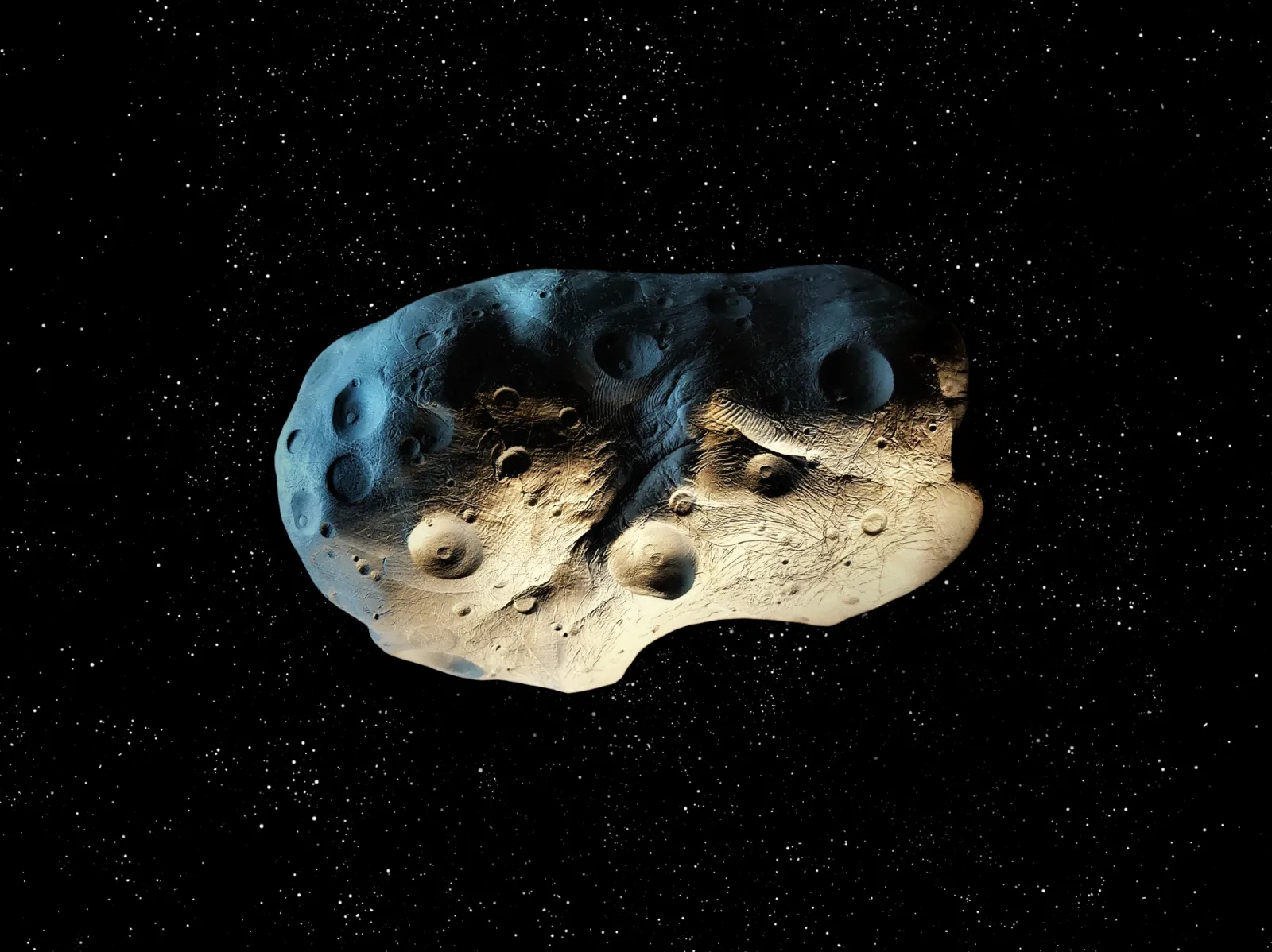
Based on its observable magnitude in the sky, the size of the space rock is estimated to be anywhere from around 318 feet to 722 feet across. At the upper end of this size estimated, the asteroid would be about as tall as the Golden Gate Bridge in San Francisco.
This space rock is one of more than 29,000 near-Earth objects, or NEOs, that scientists have detected to date. Some of these objects are also classified as potentially hazardous based on their estimated size and orbits.
But despite the name, none of the potentially hazardous objects that are known to scientists have any chance of colliding with the Earth in the next one hundred years or so, CNEOS director Paul Chodas told Newsweek.
The second of the two large asteroids to pass the Earth next week is called 2013 CU83 and this object is expected to make its closest approach one day later.
The asteroid will come within around 4.3 million miles from Earth at 11:37 p.m. UTC, or 7:37 p.m. ET on Saturday, July 30. This is more than double the distance at which 2016 CZ3 will fly past our planet.
2013 CU83, however, is likely larger than its counterpart, measuring anywhere between 459 feet and 1,050 feet across, according to the CNEOS. At the top of this range, the asteroid would stand about as tall as the iconic Eiffel Tower in Paris, France.
The asteroid will be traveling slower than 2016 CZ3, reaching speeds of around 13,100 miles per hour.
View 0 Comments
Submit Correction
View Editorial & AI Guidelines