


By Hannah Parry, Amanda Castro, and Shane Croucher
0
Share
Newsweek is a Trust Project member
See more of our trusted coverage when you search.Prefer Newsweek on Googleto see more of our trusted coverage when you search.
Typhoon Kalmaegi made landfall in central Vietnam on Thursday, unleashing destructive winds and torrential rain just days after devastating the Philippines. The storm has forced mass evacuations, airport closures, and raised fears of further flooding and agricultural damage across Southeast Asia.
What to Know:
- Survivors in Cebu are salvaging materials to feed and shelter their families amid widespread loss.
- Kalmaegi struck Vietnam with winds up to 149 kph (93 mph), toppling trees and power lines.
- Six airports were closed and over 260,000 people evacuated in Gia Lai province.
- More than 268,000 soldiers are on standby for search and rescue operations.
- The storm is Vietnam’s 13th this year and among the most powerful.
- Flood warnings remain in effect for low-lying areas and the Central Highlands coffee region.
- In the Philippines, Kalmaegi killed at least 114 people and left 127 missing, mostly in Cebu.
- Cebu residents returned to flattened homes and debris-choked streets; aid efforts are ongoing.
- A new storm east of Mindanao may strengthen into a typhoon early next week.
This live blog is now closed.
Nov 06, 2025 at 02:05 PM EST
Map shows Typhoon Kalmaeghi wind speeds of up to 115 mph as it moves inland through Vietnam

Nov 06, 2025 at 01:47 PM EST
Another typhoon could hit Philippines during Typhoon Kalmaegi recovery efforts
The Philippines is bracing for another potential typhoon, even as recovery and rescue efforts are still underway in the wake of Typhoon Kalmaegi.
Tropical Storm Fung-Wong, which is forecast to strengthen into a "very strong typhoon" has now formed in the west Pacific.
It is expected to make landfall in the Philippines sometime either later Sunday or Monday.
The second powerful storm is likely to delay and frustrate recovery efforts after Kalmaegi left a swathe of devastation in its wake.
Nov 06, 2025 at 01:10 PM EST
Malaysian prime minister offers condolences to Philippines in wake of devastating typhoon
Malaysian Prime Minister Anwar Ibrahim has offered his condolences to the Philippines after Typhoon Kalmaegi slammed into the country leaving more than a hundred people dead, and devastating damage in its wake.
"I am deeply saddened by the tragic loss of life and extensive devastation caused by Typhoon Kalmaegi in the Philippines. Reports of severe flooding, landslides and the destruction of homes and infrastructure are heartbreaking," he said in a post on X.
"On behalf of the Government and people of Malaysia, I extend our deepest condolences to the families of the victims and to all those affected by this tragedy. Our thoughts and prayers are with the people of the Philippines as they begin to rebuild their communities," he added.
Nov 06, 2025 at 12:59 PM EST
WATCH: Terrifying moment powerful waves hit Vietnam resident’s backyard
Footage, shared by Weather Monitor on X, captured the moment that huge waves from Typhoon Kalmaegi struck the backyard of a home in Tam Quan, in the Binh Dinh Province in Vietnam.
The video shows the water overflowing through the backyard gate and flooding the areas.
Local media reports that water levels in the area are the highest in a decade.
Nov 06, 2025 at 12:48 PM EST
Philippines has declared a State of Emergency
Philippines declared a State of Emergency on Thursday after Typhoon Kalmaegi swept through the country killing at least 114 people.
Hundreds remain missing after the typhoon cause floods and landslides across the country.
Nov 06, 2025 at 12:28 PM EST
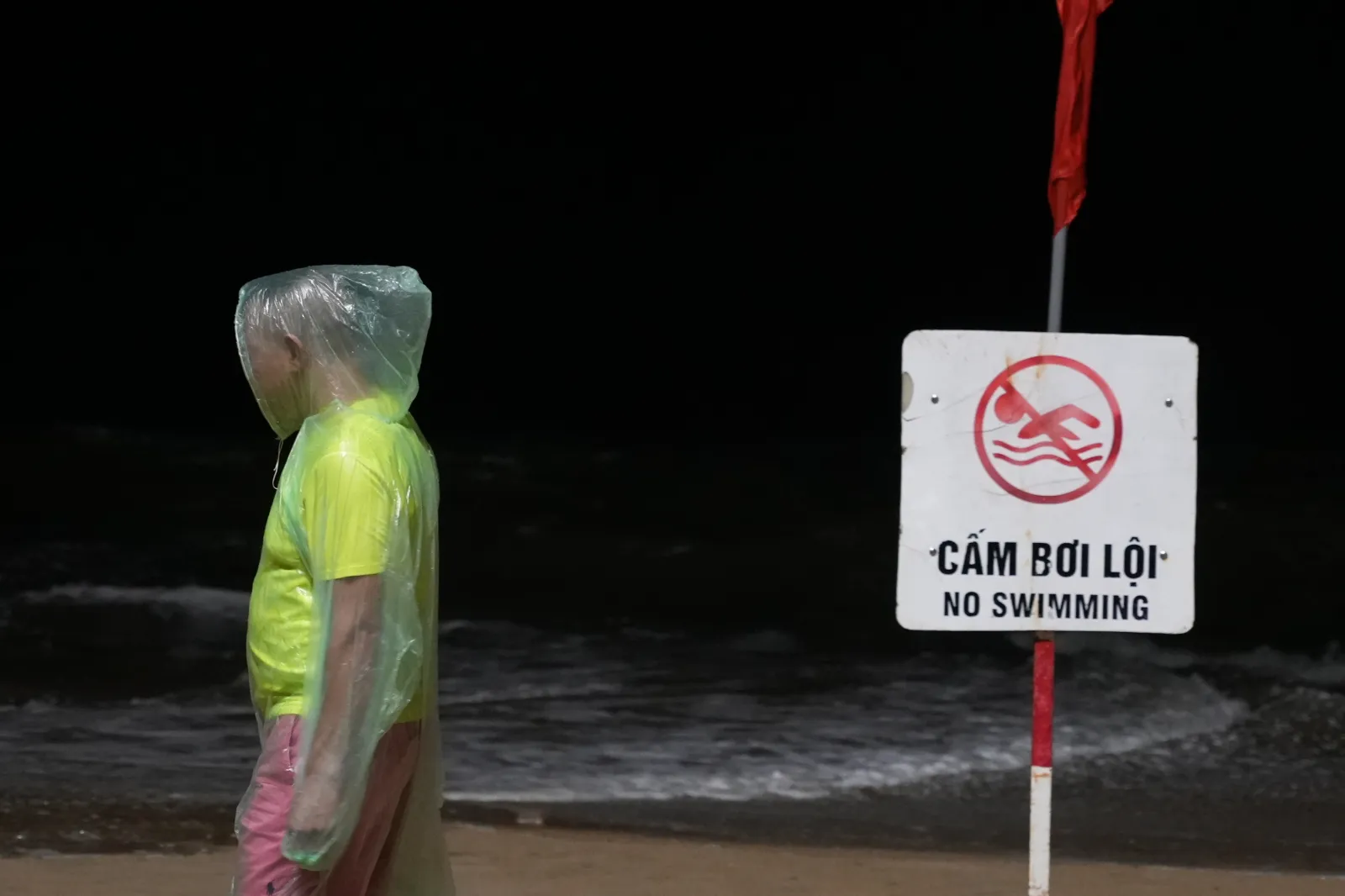
IN PICTURES: Typhoon Kalmaegi slams Vietnam

...

...
...
Nov 06, 2025 at 11:54 AM EST
Hurricanes, typhoons, and cyclones: What is the difference?
Tropical cyclones are powerful rotating storm systems fueled by heat from warm ocean waters. Despite regional naming differences, hurricanes, typhoons, and cyclones are structurally the same phenomenon.
The term “hurricane” is used for storms in the Atlantic and East Pacific, while “typhoon” refers to those forming in the West Pacific. In the Indian Ocean and near Australia, these systems are called “cyclones.”
Unlike synoptic cyclones, which draw energy from atmospheric fronts and jet streams, tropical cyclones rely solely on oceanic heat to generate their intense winds and rainfall. Though similar in size, their origins and energy sources set them apart from other storm types.
Nov 06, 2025 at 11:45 AM EST
Map shows path of devastating Typhoon Kalmaegi through Vietnam

Nov 06, 2025 at 11:41 AM EST
What is a typhoon?
Typhoons are intense tropical cyclones that form over the warm waters of the Northwest Pacific Ocean. Though structurally identical to hurricanes and cyclones, the term “typhoon” is region-specific and refers to storms west of the International Date Line.
These systems are known for their destructive force, combining sustained winds of at least 74 mph (119 km/h) with heavy rainfall and massive storm surges. The largest typhoons can span up to 500 miles (800 km) across, affecting millions across East Asia, including the Philippines, Japan, and coastal China.
Once a typhoon moves inland, it loses strength as it’s cut off from its oceanic energy source. However, the damage often continues in the form of flooding, landslides, and infrastructure collapse.
Globally, these storms are named based on their location:
- Typhoon: Northwest Pacific
- Hurricane: North Atlantic and parts of the Pacific
- Cyclone: South Pacific and Indian Ocean
As climate patterns shift, scientists warn that typhoons are becoming more frequent and more intense, posing growing risks to vulnerable coastal populations.
Nov 06, 2025 at 11:36 AM EST
Preparing for Typhoon Kalmaegi
As Vietnam braces for the typhoon, locals in flood-prone and coastal areas have been evacuated or advised to identify evacuation routes and shelters, while keeping a close eye on official weather updates and government instructions.
Households are being told to stock essential supplies before the storm hits.
Emergency kits should include drinking water, canned food, flashlights, batteries, first aid items, and important documents sealed in waterproof bags. Homes should be secured—windows locked, roofs reinforced, and valuables moved to higher ground. Residents are also encouraged to charge phones and power banks in case of prolonged power cuts.
When the storm arrives, people are urged to stay indoors, away from windows, and to switch off power and gas in flood-risk zones. Travel should be avoided until authorities declare it safe.
Even after the typhoon passes, danger can linger from downed power lines, debris, and contaminated floodwaters. Officials continue to remind citizens: preparedness and caution save lives.
Nov 06, 2025 at 11:30 AM EST
More than half a million people have been evacuated in Vietnam
Authorities in Vietnam said more than 537,000 people have been evacuated from five provinces, including Hue, Da Nang, and Dak Lak, due to rising floodwaters and the threat of landslides, as Typhoon Kalmaegi struck the country.
Up to two feet of rainfall is expected in some areas, which have already suffered flooding from the approaching cyclone.
More than 60,000 boats, carrying nearly 290,000 workers, have been guided to safe shelter by authorities. But three fisherman have been reported missing in Ly Son Island, in the Quang Ngai province, after their boat was swept away by the powerful waves.
Nov 06, 2025 at 11:28 AM EST
Southeast Asia faces relentless storms as climate risks intensify
The Philippines and Vietnam remain among the world’s most disaster-prone nations, enduring a punishing cycle of typhoons, floods, and seismic activity each year. The Philippines is hit by roughly 20 storms annually and sits atop multiple fault lines, with over a dozen active volcanoes adding to its vulnerability.
Vietnam, which typically sees about a dozen typhoons per year, has faced an especially brutal season. In just two weeks, Typhoons Ragasa, Bualoi, and Matmo left more than 85 people dead or missing and caused an estimated $1.36 billion in damage. The storms battered the central and northern regions, overwhelming communities with torrential rain and widespread flooding.
Nearly half of Vietnam’s population lives in flood-prone areas, and scientists warn that climate change is amplifying the severity and frequency of extreme weather across Southeast Asia. With little time to recover between disasters, both countries are bracing for continued challenges as warming temperatures fuel more destructive storm systems.
Nov 06, 2025 at 11:26 AM EST
Typhoon Kalmaegi packs powerful winds with gusts up to 137 mph as it hits Vietnam
Typhoon Kalmaegi has strengthened into a powerful storm, with sustained winds of 114 mph, and gusts reaching up to 137 mph over the South China Sea as it barreled into Vietnam.
Much of the country's central provinces are already reeling from flooding from the torrential rain, with Kalmaegi forecast to bring another two feet of rain in some areas.
Nov 06, 2025 at 11:15 AM EST
See where Typhoon Kamaegi hit Vietnam
Nov 06, 2025 at 11:07 AM EST
Philippines declares state of emergency as new storm threatens
President Ferdinand Marcos Jr. declared a state of national calamity on Thursday, enabling the Philippine government to release emergency funds more quickly and curb food hoarding and price hikes amid ongoing disaster recovery.
The declaration follows the devastation caused by Typhoon Kalmaegi. It comes as officials warn of another tropical cyclone forming in the Pacific, which could intensify into a super typhoon and strike the northern Philippines early next week.
Cebu Governor Pamela Baricuatro said flash floods overwhelmed parts of her province despite preparations. She cited clogged rivers from quarrying and inadequate flood control infrastructure as factors that worsened the storm’s impact.
Authorities are bracing for further damage as the country remains vulnerable to extreme weather, with emergency teams on alert and recovery efforts underway.
Nov 06, 2025 at 11:03 AM EST
US Embassy urges Americans to ‘maintain caution’ over Typhoon Kalmaegi
The U.S. Embassy and Consulate in Vietnam has urged all American citizens in the area to "maintain caution" amid Typhoon Kalmaegi.
U.S. citizens in affected areas are also advised to follow the directions of local authorities as the cyclone buffets Vietnam, with powerful waves of up to 26 feet and a storm surge an additional two feet.
The Vietnamese National Center for Hydro-Meteorological Forecasting (NCHMF) predicts that Kalmaegi will move inland, especially across Quang Ngai and Dak Lak provinces, bringing with it high winds of 84 miles per hour.
"Residents should expect continued risk of flooding, flash floods, and landslides. Additionally, infrastructure already weakened by previous flooding may be increasingly unreliable," the weather alert read.
U.S. Consulate General officials in Ho Chi Minh City says it is assisting residents and visitors in affected areas.
Nov 06, 2025 at 11:00 AM EST
Typhoon Kalmaegi leaves trail of devastation in the Philippines
Typhoon Kalmaegi has claimed at least 114 lives and left 127 people missing across the central Philippines, marking the country’s deadliest natural disaster of the year. Among the fatalities were six Philippine air force personnel killed in a helicopter crash while en route to deliver aid in Agusan del Sur.
The storm displaced over 560,000 residents, forcing nearly 450,000 into emergency shelters, according to the Office of Civil Defense. In metropolitan Cebu, Kalmaegi unleashed more than a month’s worth of rain in a single day, triggering flash floods that submerged homes and swept away vehicles.
Cebu province bore the brunt of the destruction, with 71 confirmed deaths, mostly from drowning, and dozens more injured or missing. In Liloan, one woman mourned the loss of her husband and three children, killed when their roof collapsed, while four other relatives remain unaccounted for.
Kalmaegi exited the archipelago on Wednesday, heading toward Vietnam, but its impact continues to reverberate. Rescue efforts are ongoing as families search for missing loved ones and communities begin the long recovery.

...
Nov 06, 2025 at 10:55 AM EST
Typhoon Kalmaegi batters central Vietnam amid ongoing flood crisis
Typhoon Kalmaegi made landfall north of Gia Lai province in central Vietnam, unleashing powerful winds and torrential rain on a region already overwhelmed by historic flooding. Forecasters warn the storm could bring over 600 millimeters of additional rainfall, heightening the risk of deadly landslides and flash floods.
Several provinces have reported power outages, uprooted trees, and damaged homes. Coastal cities like Da Nang and Quy Nhon were hit by waves up to 3 meters high and hours-long blackouts, while Dak Lak province saw widespread wind damage. Ho Chi Minh City faces an elevated flood threat as the storm progresses.
Kalmaegi is the latest in a relentless series of storms to strike Vietnam this year. Super Typhoon Ragasa, Typhoon Bualoi, and Typhoon Matmo recently caused over 85 deaths or disappearances and an estimated $2 billion in damage across the region.
Vietnam, one of the world’s most flood-prone nations, is grappling with increasingly severe weather events. Scientists attribute the intensifying storm cycles to climate change, warning that Southeast Asia’s vulnerability to extreme rainfall and flooding is growing.
View 0 Comments
Submit Correction
View Editorial & AI Guidelines