...

By Ben El-Baz
0
Share
Newsweek is a Trust Project member
See more of our trusted coverage when you search.Prefer Newsweek on Googleto see more of our trusted coverage when you search.
For years, the United Arab Emirates sold global investors on a simple promise: It was a place where capital, talent and international business could operate, completely insulated from the instability that has shaped much of the Middle East. While its surrounding region was often defined by conflict, volatility and political risk, the UAE presented itself as orderly, modern and secure.
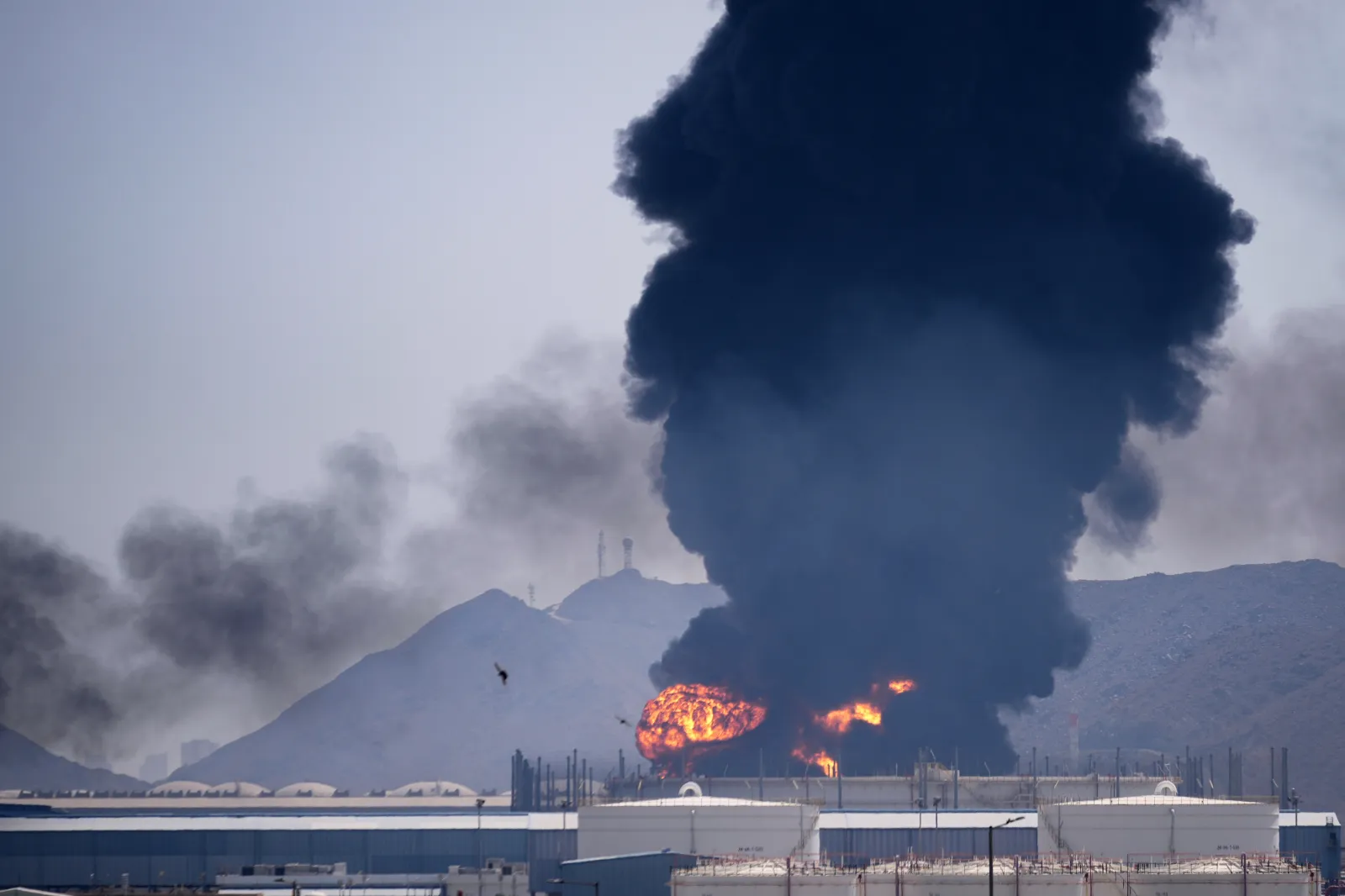
That image has now been damaged. The recent conflict involving the United States, Israel and Iran, and the spillover effects across the Gulf, have made it difficult to argue that the UAE stands entirely apart from the region’s instability.
Flights were disrupted. Markets were shaken. International headlines carried dramatic images and language (exacerbated by fake AI imagery on social media). Investors, executives and conference organizers have had to confront a question that once felt more theoretical than real: What happens when regional turmoil reaches the UAE directly?
Read More on Essays
I say that not as an outside observer, but as someone building a regulated financial business in Dubai and working closely with local institutions. In moments like this, the true test of a financial center is not whether it can maintain an illusion of untouchability. It is whether its institutions can function under stress. Can markets reopen in an orderly way? Can infrastructure keep operating? Can the government communicate clearly? Can businesses continue to make decisions with some confidence that the system around them is still intact?
...
Across the UAE, these mechanisms largely have continued functioning, even as missiles and drones attack the region. The country’s stock exchanges were temporarily suspended, then reopened. Authorities have intercepted hundreds of missile and drone attacks while limiting damage to critical infrastructure. Just as importantly, they have communicated clearly with the public.
Through its response, the UAE is adjusting the image it projects to international investors, in real time. Historically, the UAE’s international appeal depended on the idea that it could float above the region’s geopolitical instability. That was always a difficult claim to sustain indefinitely. Geography does not disappear because a country has world-class infrastructure, global airlines, attractive tax policy and gleaming financial districts. The more durable proposition is that, even in a difficult neighborhood, the UAE has built institutions capable of withstanding shocks and continuing to operate.
That is why I believe this moment, while clearly damaging in the short term, could strengthen the UAE’s standing over time. It is forcing the country to replace the language of insulation with the language of resilience. And for global investors, resilience is ultimately more valuable than image.
Serious investors do not allocate capital based only on whether a place can market itself as untouched. They allocate capital based on institutional credibility. They ask whether regulators are serious, whether infrastructure is dependable, whether decision-making is coherent, and whether disruption leads to breakdown or disciplined response.
In finance, we do not judge serious institutions by whether they have never faced stress. We judge them by how they perform when stress arrives. Banks undergo stress tests for exactly this reason. The same logic applies to jurisdictions.
That is the standard the UAE is now being measured against. And on that measure, it has an opportunity to emerge stronger than many expect.
Ben El-Baz is the managing director of Hashkey MENA, where he leads HashKey’s licensed exchange entities across the Middle East and Europe.
In a polarized era, the center is dismissed as bland. At Newsweek, ours is different: The Courageous Center—it's not "both sides," it's sharp, challenging and alive with ideas. We follow facts, not factions. If that sounds like the kind of journalism you want to see thrive, we need you.
When you become a Newsweek Member, you support a mission to keep the center strong and vibrant. Members enjoy: Ad-free browsing, exclusive content and editor conversations. Help keep the center courageous. Join today.


View 0 Comments
Submit Correction
View Editorial & AI Guidelines