10
Loading video...

By Amanda Castro
Associate News Editor
0
Share
Newsweek is a Trust Project member
See more of our trusted coverage when you search.Prefer Newsweek on Googleto see more of our trusted coverage when you search.
The Trump administration has released newly declassified records detailing a 1949 Los Alamos conference on mysterious “green fireballs,” adding one of the earliest government‑documented UFO investigations to the PURSUE transparency initiative.
The Department of Defense (War) is publishing previously classified UAP (Unidentified Anomalous Phenomena) files every few weeks, giving researchers their first direct access to Cold War-era material long sealed inside federal archives. The release could shape how scientists, historians and national‑security analysts interpret early government attempts to understand unexplained aerial phenomena.
Assistant to the Secretary of War for Public Affairs and Senior Advisor Sean Parnell said the fourth tranche of files is now live on WAR.GOV/UFO, noting that “the Department of War and our agency partners are actively working on the next release of UAP files.”
Read More on News

...
The newly released transcript shows top Los Alamos Scientific Laboratory physicists—including Dr. Edward Teller, Dr. Norris E. Bradbury, and meteor expert Dr. Lincoln LaPaz—confronting a phenomenon they could not explain. Airline pilots, federal agents and military personnel had reported bright green objects streaking horizontally across the sky in late 1948 and early 1949.
LaPaz told the group that the December 12, 1948, event he witnessed was “most certainly not a conventional meteorite fall.” He described a fireball that appeared “in full intensity instantly,” maintained constant brightness, and traveled on a nearly horizontal path before breaking into “bright green” fragments.
Related Story
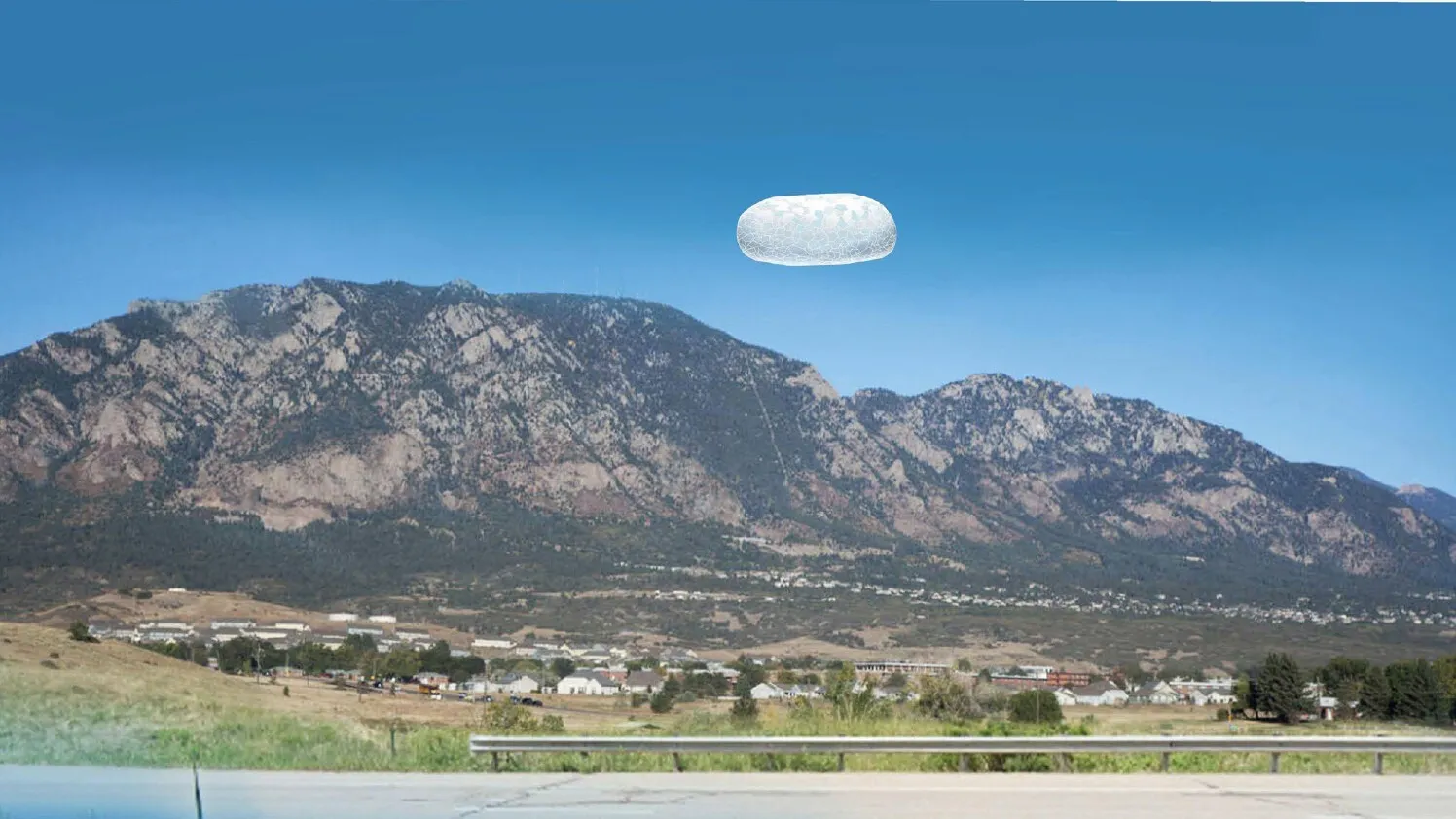
UFO Files: 5 Key Revelations as Pentagon Drops Third Batch of Records
Gaia’s Lead UAP Investigator Joshua Golembeske said what stands out most is the caliber of the room itself. “Bradbury, Teller, Reines, the FBI, AEC security, and AFSWP convened inside Los Alamos at the Secret level, which tells you how seriously the atomic establishment took incursions over its own installations,” he told Newsweek. “There’s a clear through‑line across all these releases: UAP showing a persistent interest in our nuclear facilities.”
Golembeske also pointed to modern parallels in the newly released videos, including a 2023 Middle East infrared clip showing an object abruptly changing shape and direction. “That’s one of the ‘five observables’ investigators use to determine whether an object could be a genuine UAP,” he said, citing “instantaneous acceleration” that would exceed known airframe tolerances.
Pattern That Defied Known Meteor Behavior
Investigators documented three green‑fireball paths in detail. Each traveled at low altitude—8 to 10 miles—and maintained nearly constant velocity over long horizontal distances. LaPaz said he could not find “anywhere among meteorists” examples of conventional meteorites behaving this way.
The January 30, 1949, event was tracked by more than 100 observers across New Mexico and West Texas. The appearance point was southwest of Amarillo, Texas, and the disappearance point was near Lubbock, Texas, with trained observers providing azimuth and elevation measurements within minutes.
LaPaz emphasized that the objects produced no sound, calling it “the most implausible feature of all,” given that meteorites bright enough to be seen at 400 miles typically generate explosive noise and trigger widespread animal alarm—none of which occurred.
DOE-UAP-D004-Los-Alamos-Conference-on-Aerial-Phenomena-1949.pdf.PDF
Golembeske said the signature set described in 1949 maps closely onto modern pilot reports. “Sustained flight with no sound, no exhaust, no train, and performance mismatched to any visible propulsion,” he said. “The strongest through‑line is the nuclear‑facility proximity pattern—Los Alamos, Sandia, Kirtland, and Hanford appear in both 1949 documents, running forward through Malmstrom 1967 to the range incursions in recent AARO and UAPTF reporting.”
Witnesses consistently described the fireballs’ color as a vivid green. According to the transcript, observers repeatedly selected wavelengths “between 4900 and possibly 5300,” clustering around 5218 angstroms—a hue LaPaz compared to copper salts in a Bunsen burner. He noted that such coloration was not characteristic of known meteorites, which contain only “the merest trace of copper.”
Golembeske said the phenomenon described in the transcript aligns with two categories of sightings still reported today. “There seem to be two distinct phenomena: the orb‑like craft, or green fireballs, which persist to this day, and the solid, structured craft,” he said. “Both orbs and craft were sighted over nuclear facilities then, and that continues today.”
The transcript captures a moment when the nation’s leading physicists openly acknowledged that the green fireballs did not fit any known natural explanation. Teller pressed LaPaz on intensity and duration, while investigators described dozens of sightings from airline pilots, military personnel and federal agents.
The release offers an unusually candid view of Cold War‑era scientific uncertainty inside the country’s premier nuclear laboratory—a window into how seriously the government treated unexplained aerial phenomena long before modern UAP programs existed.
Contact Newsweek editors on this story: Amanda Castro and Dave Siminoff.
View 0 Comments
Submit Correction
View Editorial & AI Guidelines