...

By Steve Mollman
News Editor
0
Share
Newsweek is a Trust Project member
See more of our trusted coverage when you search.Prefer Newsweek on Googleto see more of our trusted coverage when you search.
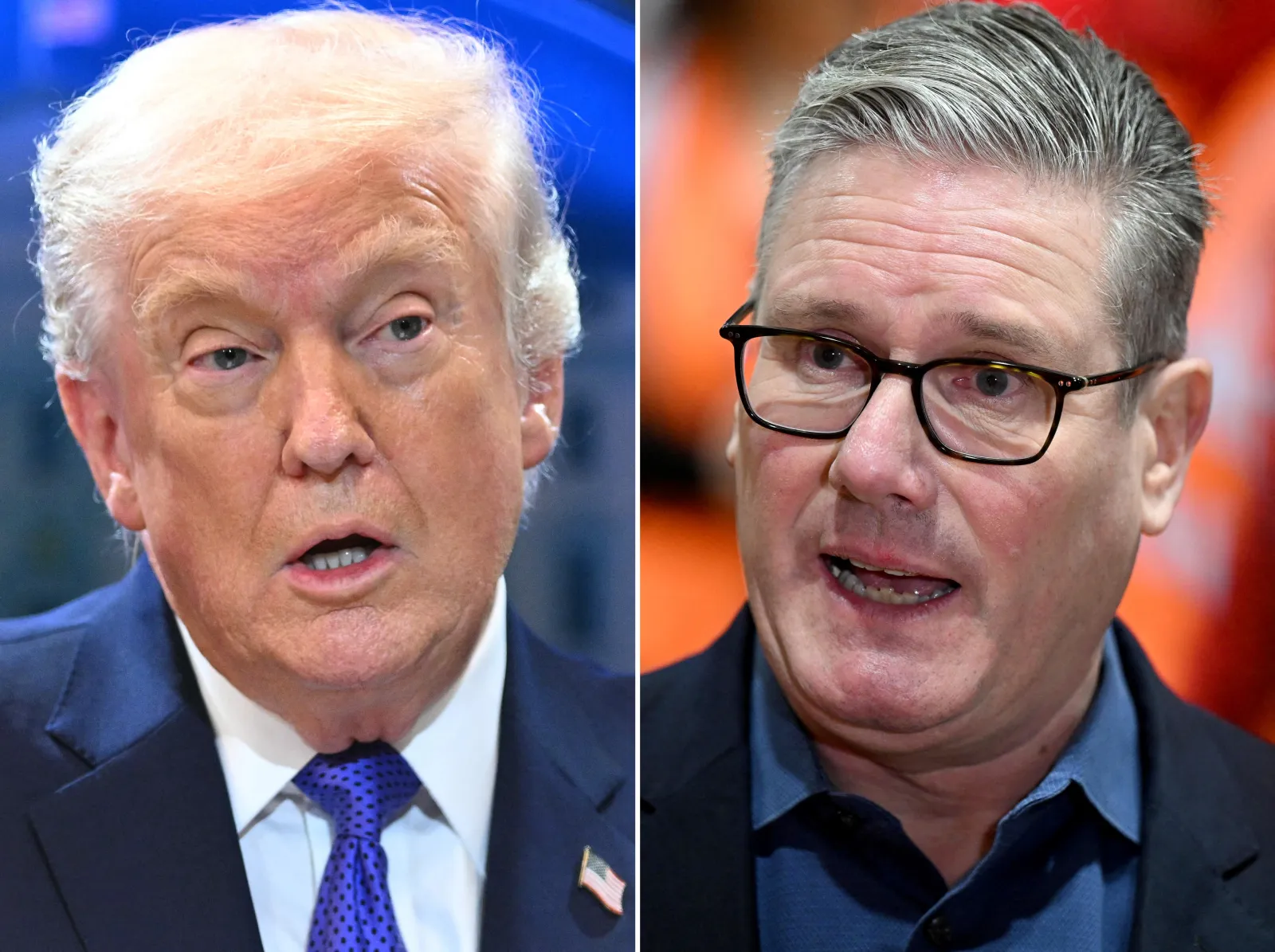
United Kingdom Foreign Secretary Yvette Cooper reacted on Sunday to President Donald Trump criticizing Prime Minister Keir Starmer over the limited help Britain has provided in the Iran War.
In a Saturday Truth Social post, Trump expressed his displeasure with the country and wrote: “The United Kingdom, our once Great Ally, maybe the Greatest of them all, is finally giving serious thought to sending two aircraft carriers to the Middle East. That’s OK, Prime Minister Starmer, we don’t need them any longer—But we will remember. We don’t need people that join Wars after we’ve already won!”
Why It Matters
Last week, the United States and Israel targeted key military targets in Iran and killed Supreme Leader Ayatollah Ali Khamenei and other government leaders. Iran then responded by launching missiles and drones targeting Israel and several Gulf Arab states that host U.S. armed forces. It marks the second time in eight months that Israel and the U.S. used military force against the Islamic Republic.
Read More on News
U.S. officials have said the goal of the operations against Iran has been to diminish the country's nuclear program and Navy.
Public pushback by a U.K. foreign secretary against a sitting U.S. president is unusual by historical standards, suggesting a shift from earlier times when London often went out of its way to publicly emphasize unity, even amid private disagreements.
What to Know
The U.K. blocked the U.S. from using its bases before the initial strikes were conducted on Iran, with Starmer citing concerns that it would violate international law.
When the U.S. and Israel launched their strikes on Iran, Britain took no part. Starmer repeatedly said the U.K. was not involved and did not provide military support, calling instead for a resumption of negotiations. He did, however, describe the Iranian regime “utterly abhorrent,” noting the “appalling violence and repression against the Iranian people.”
Starmer emphasized that U.K. forces in the Middle East were focused only on defensive operations, such as air defense, interception, and force protection.
"Our forces are active and British planes are in the sky today as part of coordinated regional defensive operations to protect our people, our interests and our allies, as Britain has done before, in line with international law," the prime minister said in a video statement on the day of the strikes. "We've stepped up protections for British bases and personnel to their highest level."
On Friday, the U.K. defense ministry said it was increasing the readiness of its flagship aircraft carrier, the HMS Prince of Wales, reducing its notice to sail to five days, down from around 10 to 14. That followed it saying earlier this week that the HMS Dragon was being sent to the Middle East for defensive operations. Officials said no final decision had been taken to deploy, but the move was widely seen as the U.K. signaling willingness to deploy naval support if the U.S. wanted it—which Trump made clear he didn’t.
Cooper defended Starmer on the BBC on Sunday during an interview and said, “The job of the British prime minister is to take decisions in the U.K. national interest, not in the interests of any other country. That's what Keir Starmer has done every step of the way, both in terms of the initial decision not to be involved in those initial strikes that took place, and also in the decision to provide defensive support.”
She added: **“**It's for the U.S. president to decide what he thinks is in the U.S. national interest, and that's for him to do. But it is our job as the U.K. government to decide what's in the U.K. national interest. And that doesn't mean simply agreeing with other countries or outsourcing our foreign policy to other countries.”
Despite the tiff, Trump and Starmer spoke on the phone on Sunday, with the U.S. now using RAF Fairford, an air base in southwest England, and Diego Garcia, a joint U.K.‑U.S. military base on the Chagos Islands in the Indian Ocean, for limited defensive operations against Iran.
...
What People Are Saying
President Donald Trump on Iran in his Truth Social post on Saturday: “They were looking to take over and rule the Middle East. It is the first time that Iran has ever lost, in thousands of years, to surrounding Middle Eastern Countries. They have said, 'Thank you President Trump.' I have said, 'You’re welcome!' Iran is no longer the 'Bully of the Middle East,' they are, instead, 'THE LOSER OF THE MIDDLE EAST,' and will be for many decades until they surrender or, more likely, completely collapse! Today Iran will be hit very hard! Under serious consideration for complete destruction and certain death, because of Iran’s bad behavior, are areas and groups of people that were not considered for targeting up until this moment in time.”
Former U.K. Prime Minister Tony Blair at a Jewish News event on Friday: “We should have backed America from the very beginning…The American relationship matters. It matters particularly today. It’s not a question of whether it’s this president or that president. If they are your ally and they are an indispensable cornerstone for your security...you had better show up.”
Foreign Office Minister Stephen Doughty to the House of Commons on Tuesday: “Our relationship with the United States is strong. It has endured, it continues to endure, and it will endure into the future on both the economic and the security fronts.”
In a polarized era, the center is dismissed as bland. At Newsweek, ours is different: The Courageous Center—it's not "both sides," it's sharp, challenging and alive with ideas. We follow facts, not factions. If that sounds like the kind of journalism you want to see thrive, we need you.
When you become a Newsweek Member, you support a mission to keep the center strong and vibrant. Members enjoy: Ad-free browsing, exclusive content and editor conversations. Help keep the center courageous. Join today.


View 0 Comments
Submit Correction
View Editorial & AI Guidelines