...

By Brendan Cole
Senior Reporter
0
Share
Newsweek is a Trust Project member
See more of our trusted coverage when you search.Prefer Newsweek on Googleto see more of our trusted coverage when you search.
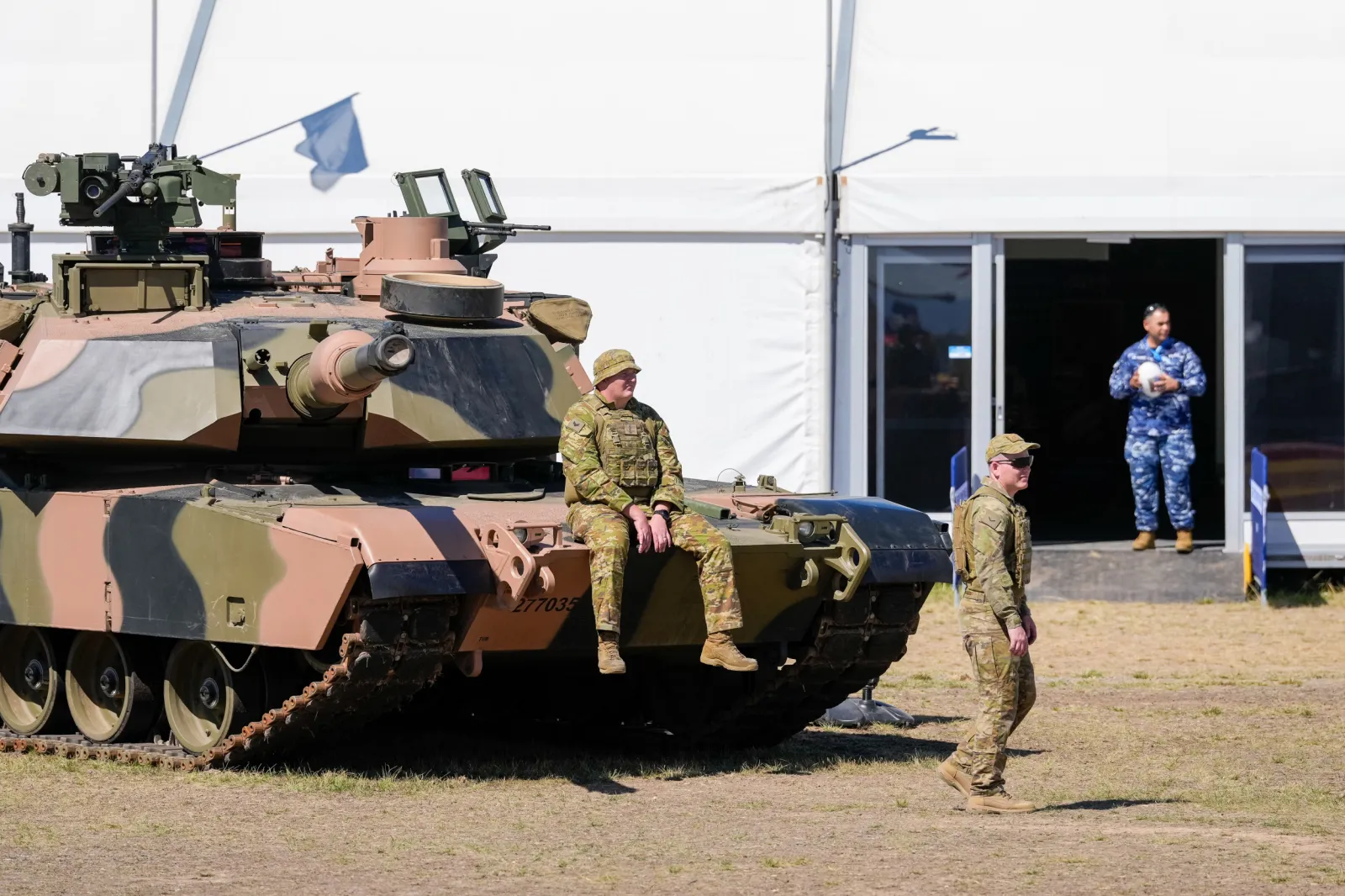
U.S. officials have objected to the move by Australia to provide Ukraine with decommissioned Abrams tanks, it has been reported.
The first of 49 of the tanks have been loaded onto cargo ships to be sent to Ukraine in a delivery which was confirmed by Australia's prime minister Anthony Albenese.
The Australian Broadcasting Corporation (ABC) said that Washington had warned Canberra about the difficulties of transferring Abrams tanks to Ukraine and the challenge of maintaining this equipment at the front.
Read More on World
The Pentagon told Newsweek it did not comment on discussions between partners and allies. Newsweek has contacted the Australian foreign ministry for comment.
...
Why It Matters
While Kyiv welcomes the commitment of military support from Australia, its Abrams, which were big-ticket items in the U.S.'s package of military support during the Biden administration, have faced questions about their suitability.
The Associated Press (AP) reported last year that Ukrainian forces were pulling the tanks from the front lines due to the high risk of detection by Russian drones although Kyiv denied the claim.
What To Know
Australian prime minister Anthony Albanese confirmed the delivery of the tanks when meeting Ukrainian President Volodymyr Zelensky in Rome on Sunday although the date of their arrival was withheld for security reasons, ABC reported.
Zelensky and Albanese also discussed Australia's potential participation in the Coalition of the Willing and post-war security guarantees for Ukraine.
Australia had to wait for Washington's approval to export the U.S.-made tanks to a third country and while this was granted, American officials have expressed frustration about the move, according to ABC, citing an unnamed U.S. official.
When the U.S. donated tanks to Ukraine in 2023, they were hoped to give Kyiv a valuable boost for combined arms maneuvers against Russia, however Western experts and Ukrainian officials raised questions about the quantity of the tanks and their problematic logistics.
An Australian defense official told Australia's ABC said it was unclear whether Kyiv wanted the tanks given that the tank's roof is the weakest point of the vehicle and would be vulnerable in a drone war.
Eric Lies, fellow of alliance strategy at the Australian Strategic Policy Institute (ASPI USA), told Newsweek the donated tanks requiring U.S. approval showed the Trump administration is not completely alienating Ukraine while seeking negotiations and a ceasefire.
However, the concerns that the Ukrainians do not want to vehicles due to it being a "drone war" is also of note but the M1A1 Abrams is very robust and can be modified slightly and used to great effect, Lies said.
"The Ukrainians have proven their ingenuity time and time again on that front," he added.
What People Are Saying
Australian prime minister Anthony Albanese after meeting Volodymyr Zelensky: "Russia's illegal aggression must be stopped, and we stand clearly and unequivocally on the side of Ukraine."
Eric Lies, fellow of alliance strategy at the Australian Strategic Policy Institute (ASPI USA): "Until Putin is shown that he cannot continue fighting in Ukraine without unacceptable losses he won't stop fighting. This support, and the continuing support of other countries, is a vital signal—if you want to stop the fighting, you have to make it unbearable (for Putin)."
A U.S. official to Australian outlet ABC: "we warned the Australians that sending these Abrams tanks would be complicated, and once they finally get to the battlefield the Ukrainians will find them difficult to sustain."
What Happens Next
Australia said it would send Ukraine the 49 M1A1 Abrams tanks as part of a broader military aid package in October 2024. Kyiv had previously received 31 Abrams tanks from the Biden administration in late 2023 although it is unclear how many are still operational as of 2025.
Update 05/20/25, 7 a.m. ET: This article has been updated with a Pentagon response and comment from Eric Lies.
View 0 Comments
Submit Correction
View Editorial & AI Guidelines