10
Loading video...

By Mandy Taheri
Reporter
0
Share
Newsweek is a Trust Project member
See more of our trusted coverage when you search.Prefer Newsweek on Googleto see more of our trusted coverage when you search.
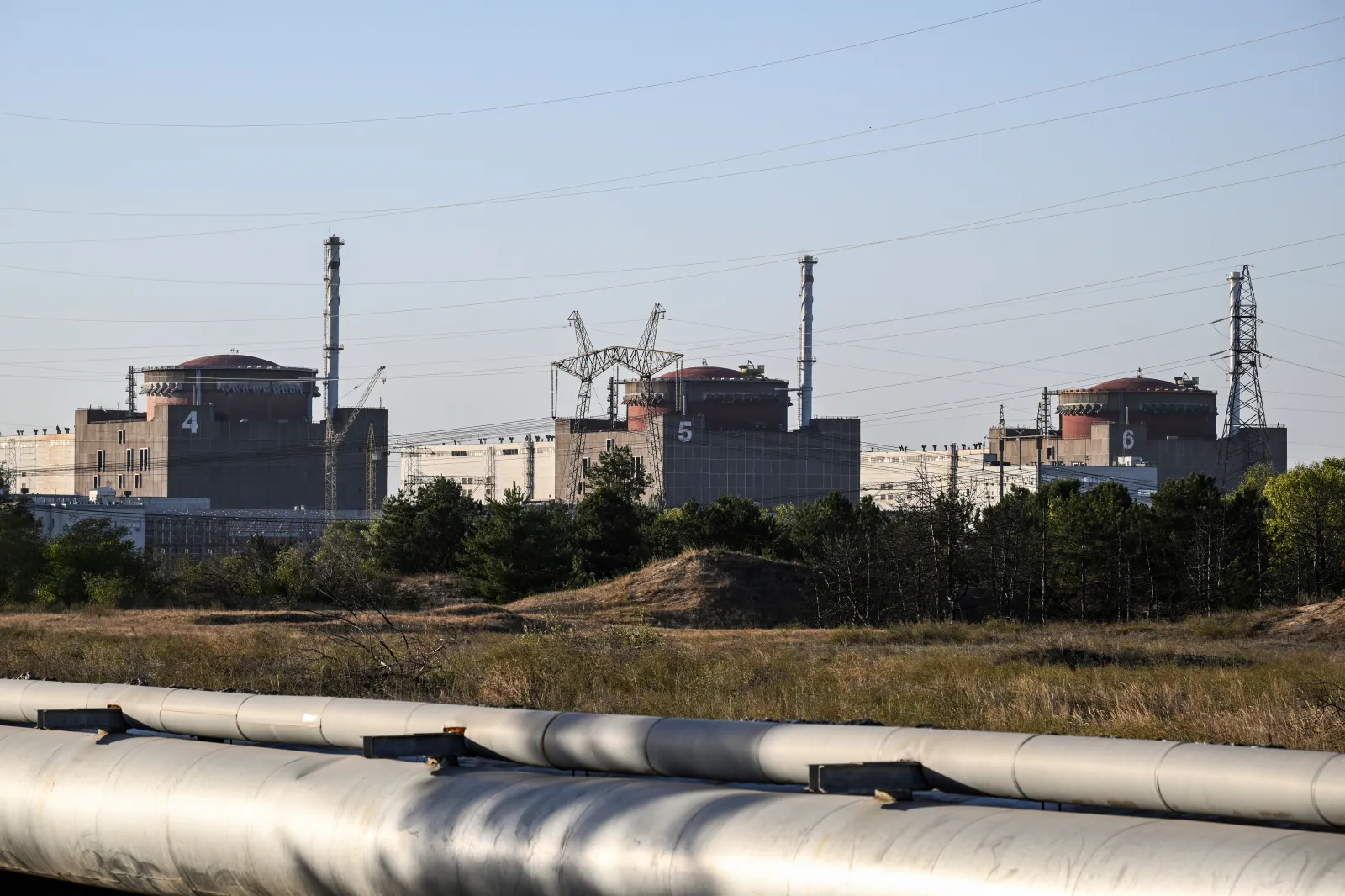
The Russian-occupied Zaporizhzhia nuclear power plant in Ukraine has gone several days without external power, stoking safety concerns over overheating and a possible meltdown.
Newsweek has reached out to the Ukrainian and Russian foreign ministries for comment via email on Saturday.
Why It Matters
Zaporizhzhia, which is Europe's largest power plant, has been under Russian control since early March 2022. It was one of the first sites to be seized by Russian forces in Russian President Vladimir Putin full-scale invasion of Ukraine that began in February 2022, which was launched years after Moscow annexed Crimea in 2014.
Read More on News
The outage is the longest recorded during the war, and has raised concerns about nuclear safety.
Russia has since claimed parts of Ukraine, with Kyiv and nations within the North Atlantic Treaty Organization (NATO) seeking to defend the country's territorial integrity. The over three-years long war has displaced millions and killed large numbers of civilians and soldiers.
...
What To Know
“As a result of Russian actions, the Zaporizhzhia NPP has been without power for the fourth day. This is the plant’s tenth blackout caused by the Russians,” Andrii Sybiha, Ukraine’s minister of foreign affairs, said in a Saturday X post. The Associated Press reported that external power was cut for its fifth day.
The six-reactor facility requires energy for cooling and safety systems, with the United Nations reporting the final power line was cut on Tuesday.
Cooling is necessary to prevent potential nuclear meltdowns. Some have warned of a potential similar outcome as the Fukushima meltdown, which occurred in 2011 after a tsunami and earthquake hit Japan, if the plant is properly connected to external power.
Before the war, when the plant was operational, it provided around one fifth of Ukraine's electricity.
The AP reported that Russian Telegram channels said there are diesel fuel reserves on site to continue ongoing operations of the plant. Jan Vande Putte, a radiation and nuclear energy specialist at Greenpeace Ukraine, told the outlet that "emergency diesel generators are considered the last line of defense, used only in extreme circumstances.” External power to the plant has been cut a couple times during the war, with this being the longest period of time.
Ukrainian officials and allies have said that Russian shelling resulted in the plant’s lack of external power, however, Russia has not confirmed that.
What People Are Saying
The International Atomic Energy Agency wrote in an X post on Saturday: "Without offsite power for 4 days now, ZNPP continues to depend on emergency diesel generators. Plant has diesel fuel for over 10 days and more supplies available, but IAEA in contact with both sides to facilitate restoration of offsite power asap, DG [Director General Rafael Grossi] @rafaelmgrossi says."
Minister of Energy Svitlana Hrynchuk told the AP: “The plant remains in blackout mode, which is a significant violation of the conditions for its normal operation.”
Jan Vande Putte told the AP about the lack of energy to the power plant: “These are undoubtedly the most serious and important events since the beginning of the occupation of the ZNPP by Russia in March 2022.”
Andrii Sybiha said in an X post on Saturday: "However, the Russian attempt to reconnect the ZNPP may be the worst yet, posing the greatest risks. Moscow is actively attempting to enlist the IAEA in this adventure and justify its theft of the ZNPP. Such scenario is a road to an irreversible collapse of the peaceful nuclear order created by the IAEA. We demand that the agency adopt a principled stance. The Zaporizhzhia nuclear power plant must be returned to Ukraine, its rightful owner."
Natalie Bennett, the former leader of Green Party of England and Wales from 2012 to 2016, said in an X post about ZNPP: "Concerning reminder: nuclear power is not safe in a war zone. Which means it is not safe anywhere."
What Happens Next?
Rafael Mariano Grossi, director general of the International Atomic Energy Agency (IAEA,) met with Russia's Atomic Energy Corporation Rosatom, Alexey Likhachev in Moscow earlier this week "to exchange on the nuclear safety and security at ZNPP," he wrote in a Friday X post.
However, following their meeting, the situation at ZPP has not changed yet. It is unclear how long the diesel generators can support the plant.
View 0 Comments
Submit Correction
View Editorial & AI Guidelines