...

By Newsweek Editors
0
Share
Newsweek is a Trust Project member
See more of our trusted coverage when you search.Prefer Newsweek on Googleto see more of our trusted coverage when you search.
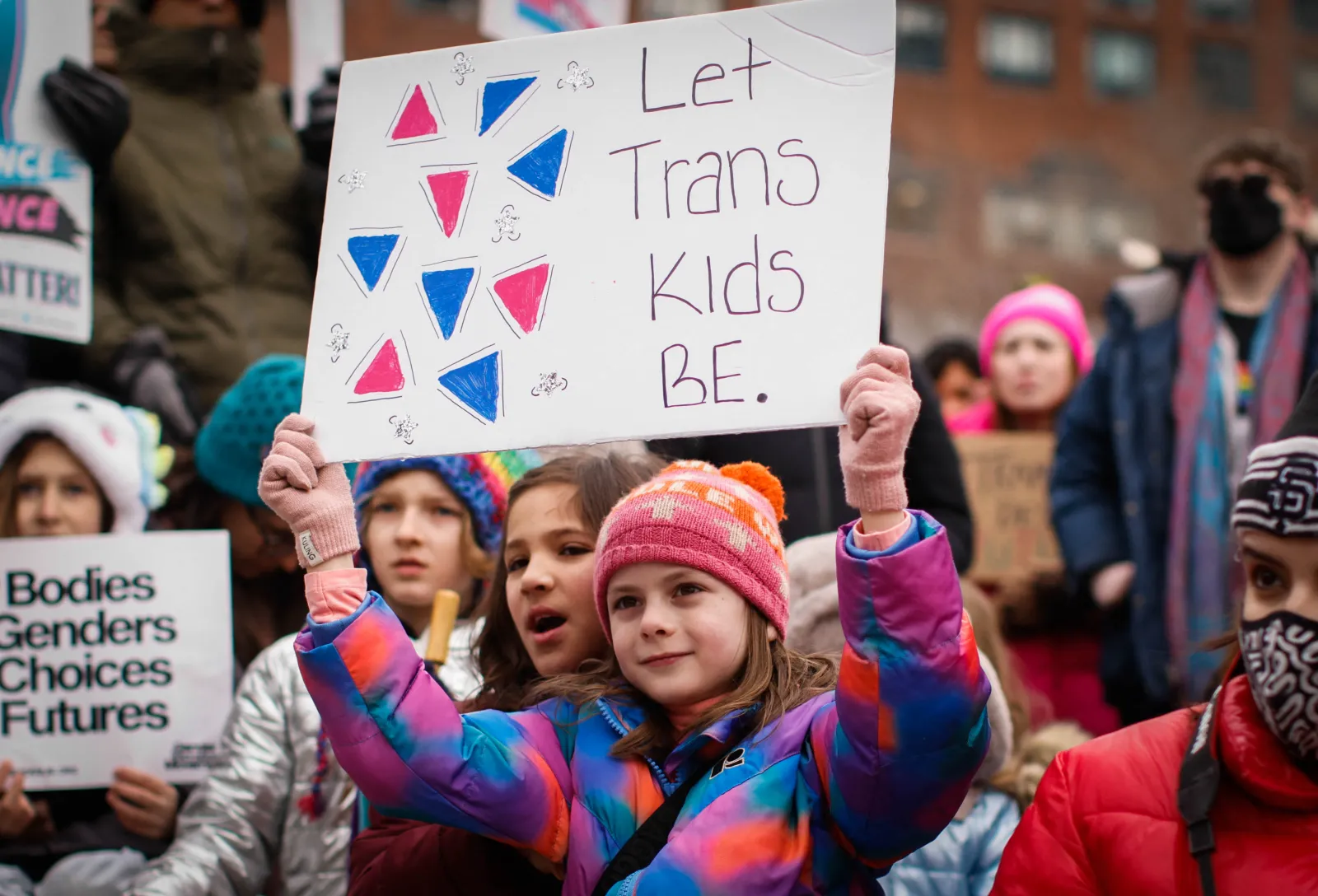
Last Thursday in Montgomery, the Alabama Public Library Service board voted to move any book that discusses “being transgender” out of children’s and teen sections and into the adult stacks—“weeded out of the collection or relocated,” as the new language crisply puts it. The vote happened to coincide with Transgender Day of Remembrance. Board chair John Wahl, who also chairs the Alabama GOP, hailed “a major step forward in putting parents back in control.” The rule, affecting 200-plus libraries, takes effect next year.
Two hundred miles south, Fairhope Public Library offers a cautionary tale of unintended consequences. When Alabama’s board suspended and then revoked Fairhope’s 2025 state aid over teen-shelf content earlier this year, locals raised roughly $40,000 in five days, essentially replacing the lost check. “It came as a complete shock,” said a board volunteer as donations poured in.
There’s a deeper pattern here. Attempts to hide books—especially those with LGBTQ+ themes—often make them more popular. In the landmark Wichita Falls case a quarter-century ago, two picture books about same-sex parents were barely read until a political campaign targeted them; afterward, each title was checked out over a hundred times.
Read More on News
As conservatives escalate rules to quarantine “gender ideology,” readership, card sign-ups, and donations spike in response.
Common Knowledge
The Alabama board’s majority frames its move as parental empowerment. “We want to put Alabama families in charge. We want them to make the decision what is best for their families,” said John Wahl, celebrating the vote to move “materials that discuss ‘transgender procedures, gender ideology or the concept of more than two biological genders’” out of youth sections. “You can call it second-guessing or you can call it accountability,” he added.
Supporters say it’s about age-appropriateness, not censorship. Local coverage and advocacy groups backing the rule call for removing “inappropriate material,” severing ties with the American Library Association, and keeping “divisive political agendas” away from kids
Conservative national commentators have argued for years that parents objecting to pornographic material aren’t book banners, and that sorting youth shelves by stricter standards is consistent with the First Amendment. The Alabama rule’s backers cite precisely this reasoning.
Opponents answer that this is censorship by relabeling. “So long term they are banning these books, slowly removing these books from your public library,” said Angie Hayden of Read Freely Alabama, warning that state rules also block new purchases of any title deemed “inappropriate” for minors.
Mack Reynolds, a trans protester outside the hearing, called out the timing on a day that remembers on trans people who have lost their lives, telling AP that books are the best way for people to learn.
Uncommon Knowledge
If you’ve followed the culture war, you’ve heard this script before. But the next act often surprises: bans raise demand. A Marketing Science study examined the staggered timing of book bans across states and found a 12 percent average increase in circulation for the most-targeted titles after a ban, compared with similar, unbanned books. The “ban effect” bled across borders: bans in one state nudged up checkouts in places without bans, too.
In Wichita Falls, Texas, the city tried to defuse controversy in 1999 by relocating two LGBTQ+ family picture books to the adult section. The litigation record shows that before the campaign, each was checked out only “two or three times.” After opponents targeted them, Daddy’s Roommate went out 115 times, and Heather Has Two Mommies also 115 times. The court struck down the relocation rule as a First Amendment violation in 2000, stressing that moving a children’s book to the adult stacks can burden minors’ access.
In April 2022, the Brooklyn Public Library launched Books Unbanned, issuing free e-cards nationwide to teens in censorship-heavy states. As of October 2025, BPL reports 51,000 young cardholders and one million e-checkouts through the program—a pipeline around local restrictions. Seattle joined in 2023; by 2024 it had doubled Books Unbanned cardholders to over 10,300, with 250,000 total checkouts.
Money also talks. In Fairhope, Alabama, the state froze and then pulled 2025 aid over teen-shelf content. A local fundraiser replaced $40,000 in a matter of days. In Jamestown, Michigan, voters initially defunded the Patmos Library over LGBTQ+ titles; the backlash brought in $245,000 (including $50,000 from author Nora Roberts).
For conservatives, that’s a problem. The Alabama board’s strategy—move anything trans-related out of sight—clashes with the way information actually travels. That is also precisely what produces counter-mobilization: lawsuits, national card programs, bestseller spikes, and donation increases.
As Wahl noted, broad public sentiment still favors parents having a say in what young children read. But if Alabama is seeking to control it, it may experience the Wichita Falls effect and send curious readers searching elsewhere. The state can command a shelf; it cannot command demand.
If you’re enjoying Uncommon Knowledge, please share. If you have suggestions for future editions or feedback, email subscriber.feedback@newsweek.com. We want to hear your voice.
View 0 Comments
Submit Correction
View Editorial & AI Guidelines