10
Loading video...

By Trevor Davies
0
Share
Newsweek is a Trust Project member
See more of our trusted coverage when you search.Prefer Newsweek on Googleto see more of our trusted coverage when you search.
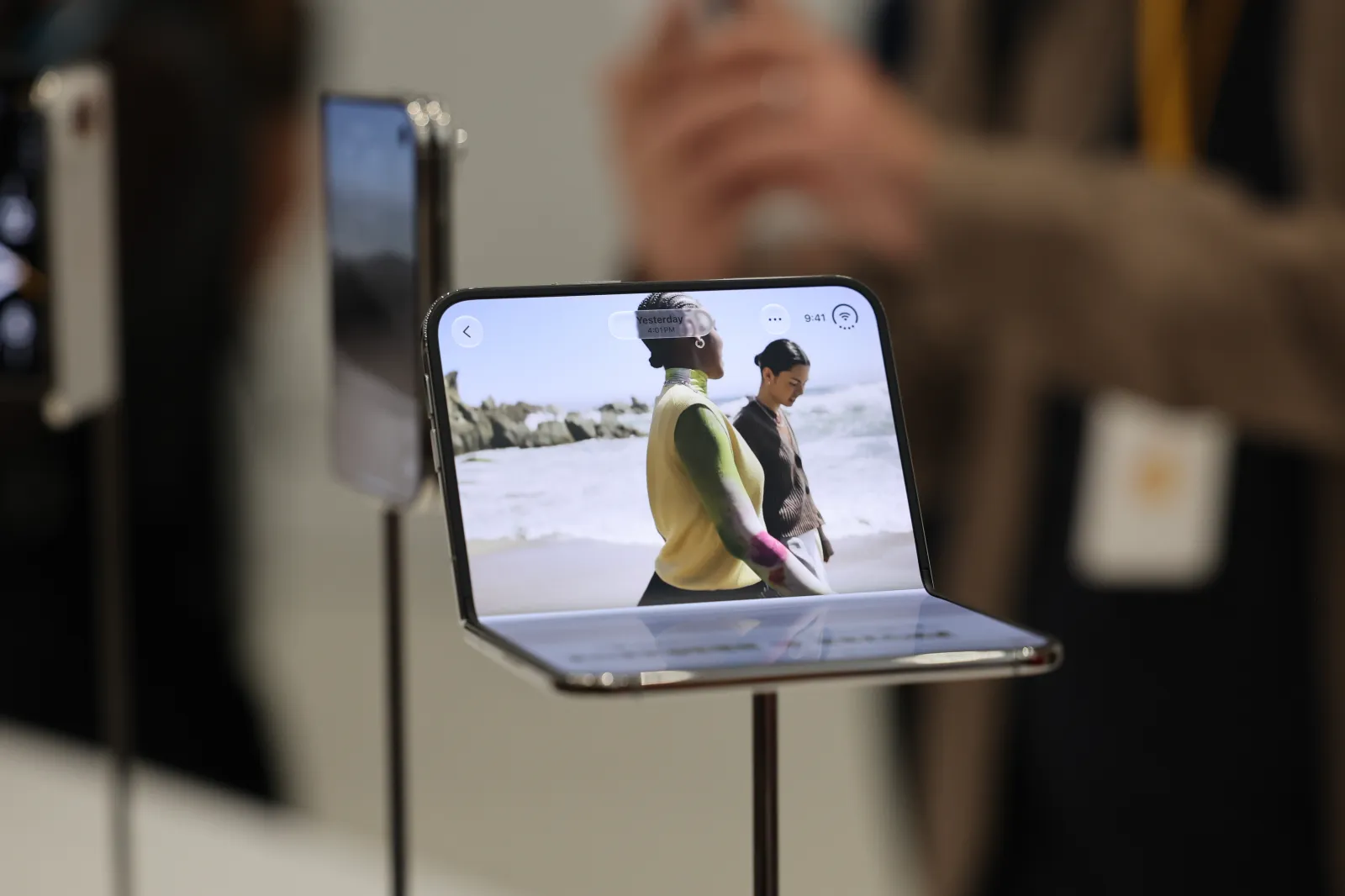
Current OLED screens, as used in Apple’s new foldable iPhone, have one element that could be vastly improved and the clue is in the name of the technology.
Organic Light-Emitting Diodes (LEDs) mean each pixel on the display creates its own light using organic carbon-based materials, without needing a separate backlight.
And that makes for some very enjoyable viewing on displays, including televisions, tablets, phones, and watches, made by manufacturers wanting to deliver the best quality displays available on the market today.
Read More on Business
But a New Mexico company believes that its technology can help create even better screens that are brighter, faster, more cost-effective, longer-lasting and deliver an even better viewing experience, using newer MicroLED technology. In theory, they could even be as rollable as a roller blind, projection screen, or a newspaper in a Harry Potter movie.
...
"The O in OLED means organic, so it can die somewhat easily and relatively quickly, even faster when the brightness is turned up," Bruce Berkoff, chief marketing officer for iBeam Materials, told Newsweek.
"As foldable phones and tablets grow in popularity, iBeam Materials' approach can lead to much better and less expensive solutions than currently being used or developed. This also could lead to both affordable and truly ‘rollable’ large-screen TVs, as well as indoor and outdoor advertising displays in the future."
MicroLED screens replace the organic carbon-based compounds of OLED displays with millions of tiny inorganic LEDs, typically made from semiconductor materials. The arrays of microscopic LEDs create near-perfect images, colors and blacks. Its future application is virtually limitless in the display sector, powering televisions, public displays, mobile phones, smartwatches and smart glasses.
A few MicroLED displays are already available, but they are out of reach for most people, because manufacturers have not yet found a way to make them affordable and scalable for mass markets. The 146-inch 4K display from Samsung called the Wall All-in-One is one example of the problem facing MicroLED technology: it costs $219,999.
But iBeam Materials believes its patented roll-to-roll manufacturing technique would replace very fiddly and costly manufacturing steps.
The Issue
MicroLEDs are typically grown on single crystal sapphire wafers before being transferred to a backplane containing the circuitry that controls the picture. Depending on a display’s size and resolution, manufacturers may have to move, align, and connect millions of components.
Even a low defect rate can leave dead pixels when so many parts are involved. Finding and repairing those faults adds time and expense.
Omdia, the technology research firm, says high costs, limits in mass-transfer systems and backplane-yield problems have constrained commercialization. Nevertheless, it forecasts MicroLED display revenue rising from $52.4 million in 2025 to $105.4 million in 2026, initially led by specialized products including near-eye displays, smartwatches and public screens.
For context, recent market estimates place the global display market at roughly $180 billion to $200 billion a year.
The Solution
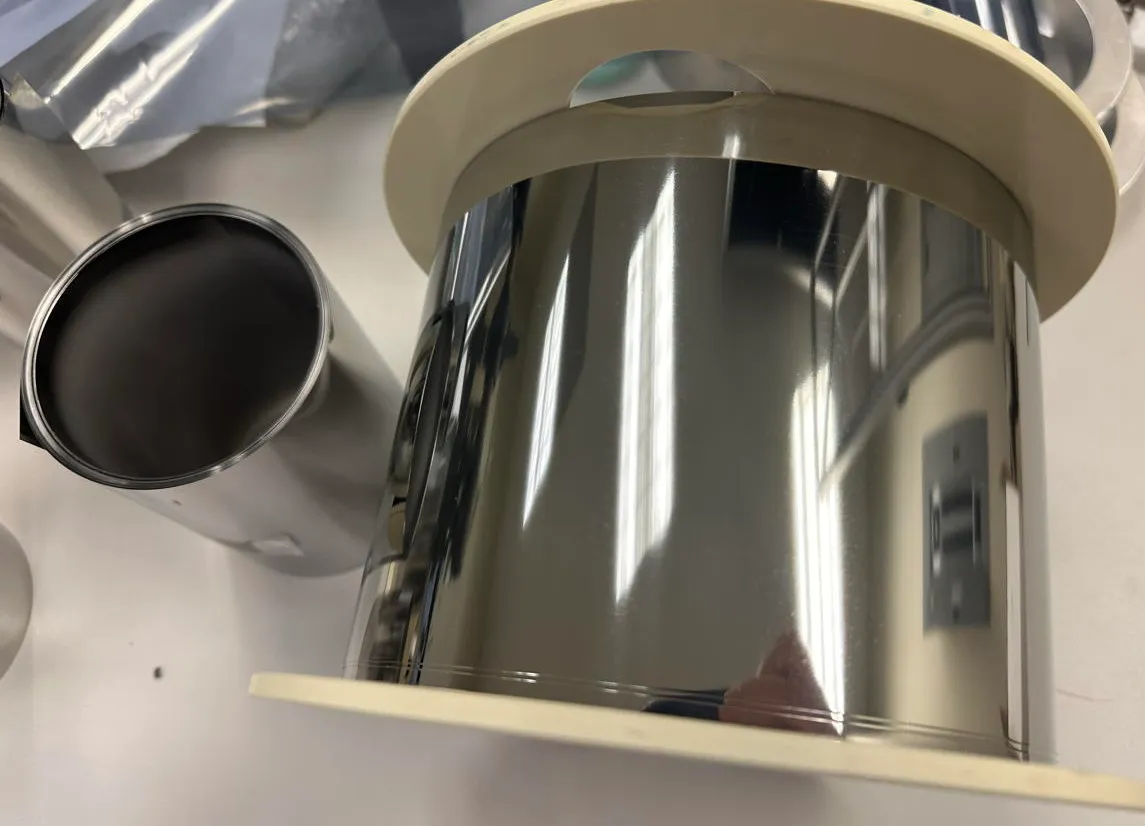
iBeam Materials uses ion-beam-assisted deposition, or IBAD, to put a thin, crystal-aligned surface on flexible metal foil. High-quality semiconductor materials used to make LEDs can then be grown on that ordered foundation.
The Santa Fe company says MicroLEDs and some of their control electronics could be fabricated together on the continuous roll of foil. If successful, the process could eliminate the need to transfer and assemble vast numbers of separate components.
...
The principle is similar to film or cassette tape moving between reels. The foil would travel through manufacturing equipment as layers are added, creating a sheet that could later be divided into products.
"We believe iBeam’s unique and breakthrough approach to use roll-to-roll manufacturing will enable paper-thin, super bright, flexible, energy-efficient and very cost-effective displays and display manufacturing lines, with lower investment and operational costs than any display or MicroLED factory in the world today," said Berkoff.
"Samsung has expressed early interest in this technology and in fact, we have some issued patents together, and many more on our own."
Berkoff’s enthusiasm is palpable. "These displays could even enable the neat type of displays shown in the newspapers featured in the Harry Potter movies."

...
"This is very interesting technology," said Raymond Soneira, founder, president and CEO of DisplayMate Technologies Corporation. Soneira, who is credited with a Ph.D. in theoretical physics from Princeton, independently assesses emerging display technologies and advises companies on how to improve their products, receiving prototypes before launches and evaluating plasma, LCD and OLED screens over the past two decades.
He agreed that MicroLED is the next generation in displays. "Given that MicroLED has proved itself and what iBeam is producing, the result should be an outstanding display."
"Bruce [Berkoff] has worked with high-end products and companies. I'm looking forward to seeing an iBeam prototype because it sounds really promising."
The Potential Savings
iBeam Materials says that startup investment costs (CAPEX) for a roll-to-roll production line could perhaps be five to 10 times less for similar screen output than a current MicroLED line. So a much smaller and easier-to-create initial factory with less output could still be quite beneficial, and even less expensive to start, by another factor of two or three. Berkoff said this path could enable a $100 million investment to possibly take the place of a $2 billion to $3 billion cost for a more standard factory.
Operating and material costs could also be lowered by maybe around 30-50 percent, which means huge savings over time, to produce what promises to be a vastly superior product.
MicroLED may therefore reach consumers first in small, mobile display products where its brightness, lifetime and even flexibility justify its price. Affordable giant televisions might well take a bit longer.
The opportunity may also become particularly significant inside AI data centers, where energy efficiency is becoming a physical constraint on expansion.
Berkoff sees MicroLED-based optical communication as one potential route for moving certain data more efficiently.
"Our roll-to-roll approach, and our ability to monolithically integrate semiconductor electronics as well, gives us a unique and valuable approach to many types of light- and display-related devices in the future," says Berkoff.
Science has produced the light. Whether manufacturing can place it in millions of homes remains the darker question.
View 0 Comments
Submit Correction
View Editorial & AI Guidelines