...

By Micah McCartney
Reporter
0
Share
Newsweek is a Trust Project member
See more of our trusted coverage when you search.Prefer Newsweek on Googleto see more of our trusted coverage when you search.
The Philippines coast guard on Tuesday intercepted a Chinese deep-sea research vessel operating in its exclusive economic zone (EEZ), in a possible violation of maritime law.
Why It Matters
China claims most of the South China Sea as its territory, putting it at odds with overlapping claims by the Philippines and several other neighbors.
Read More on World
Chinese coast guard patrols around flashpoints claimed by the U.S. treaty ally have resulted in dramatic confrontations, with China's forces at times employing water cannons and ramming maneuvers aimed to drive away Philippine government vessels.
Newsweek reached out to China's Institute of Deep‑sea Science and Engineering by email with a request for comment.
...
What To Know
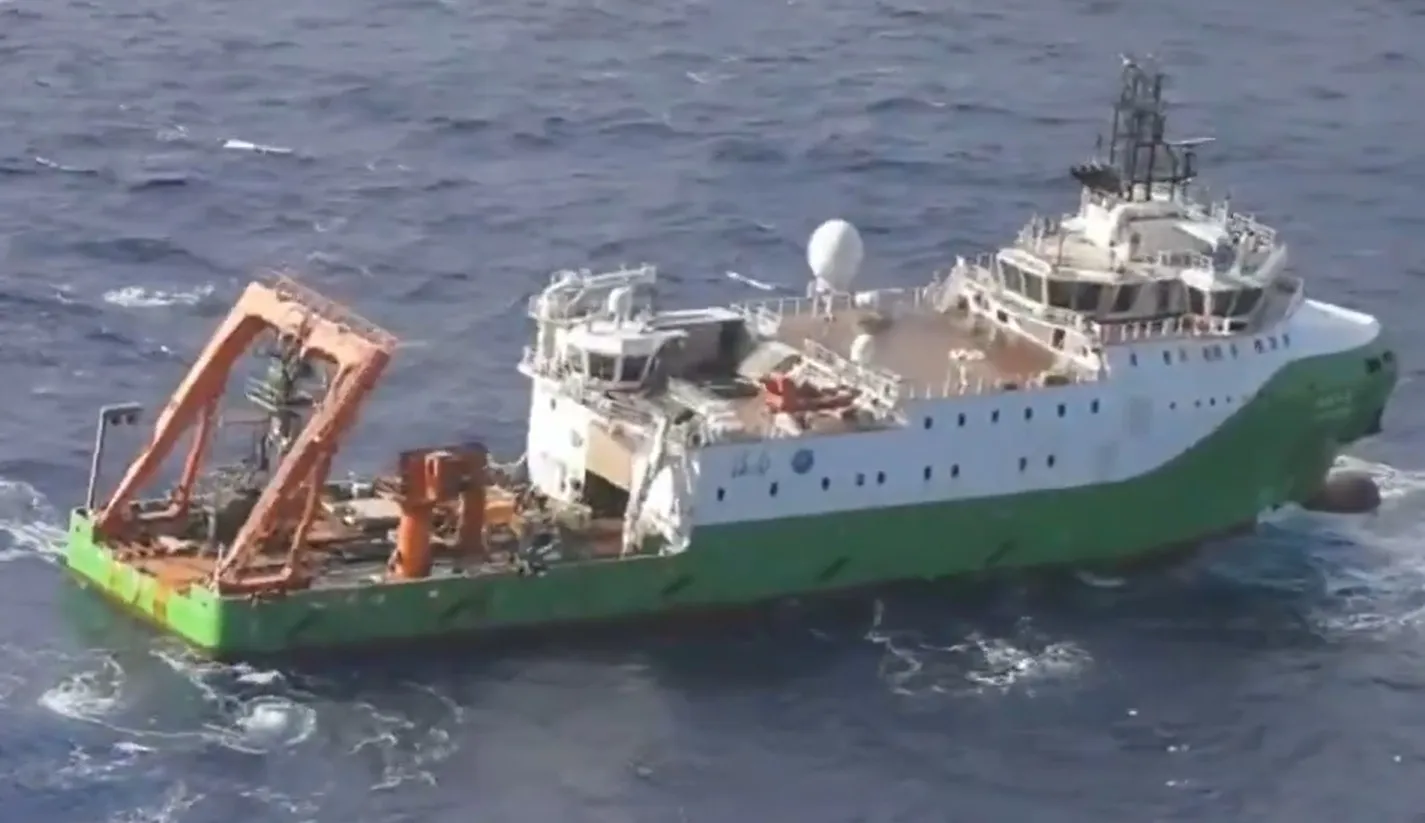
The CRV Tan Suo Er Hao, a 285-foot long deep-sea scientific vessel, was detected roughly 24 miles off Cagayan, a northern province of the main Philippine island of Luzon, Philippine coast guard spokesperson Jay Tarriela said in a post on social media.
Philippine coast guard chief Ronnie Gil Gavan dispatched a patrol plane to contact the ship and determine whether it was carrying out oceanographic research without Manila's consent.
The Chinese vessel ignored multiple radio challenges reminding it of the prior consent requirement under the United Nations Convention on the Law of the Sea (UNCLOS) and requesting clarification of its intentions, Tarriela said.
UNCLOS, to which both China and the Philippines are signatories, bars research activities conducted inside another nation's EEZ, which extends 230 miles from the claimant state's coastline, without the claimant state's permission.
Operated by the Institute of Deep-Sea Science and Engineering under the Chinese Academy of Sciences, the Tan Suo Er Hao is outfitted with 13 laboratories, advanced navigation and seafloor mapping equipment, and serves as a mother ship for manned and unmanned submersibles capable of diving to depths of approximately 15,000 and 33,000 feet, respectively.
Analysts have raised concerns that China's civilian survey vessels serve a dual purpose, gathering not only scientific data but also intelligence on foreign military forces and infrastructure, which is then shared with the People's Liberation Army.
What People Are Saying
Philippine coast guard spokesperson Jay Tarriela wrote on X: "The Philippine Coast Guard remains vigilant in protecting the country’s maritime domain and will continue to monitor and challenge unauthorized activities within the Philippine EEZ in accordance with the directive of President Ferdinand Marcos, Jr of upholding national sovereignty and maritime laws."
Guo Wei, deputy spokesperson for the Chinese Embassy in Manila, wrote: "This is like driving on a public highway that international law clearly allows everyone to use—only to be accused of trespassing because someone insists a side road is the only 'approved' route…The Luzon Strait is the highway; Bashi, Balintang, and Babuyan are all part of it, and international passage is guaranteed under UNCLOS."
What Happens Next
Open‑source automatic identification system (AIS) data broadcast by the Tan Suo San Hao showed it had left the Philippine EEZ and was operating some 500 miles east of Luzon as of the time of writing. It’s unclear whether it will return to the area.
View 0 Comments
Submit Correction
View Editorial & AI Guidelines