10
Loading video...

By Ryan Chan
China News Reporter
0
Share
Newsweek is a Trust Project member
See more of our trusted coverage when you search.Prefer Newsweek on Googleto see more of our trusted coverage when you search.
The United States recently deployed the combat-proven High Mobility Artillery Rocket System, or HIMARS, to a remote Pacific island for an exercise as the Army continues to bolster its ability to fight across dispersed islands in a potential conflict with China.
The Chinese Foreign Ministry did not immediately respond to a request for comment.
Why It Matters
HIMARS is a mobile, precision-strike launcher capable of firing rockets and missiles with a range of over 310 miles. Since its first deployment with the U.S. Army in 2005, the Lockheed Martin-made launcher has been widely used by the U.S. and its allies, including in Ukraine, where it has conducted long-range attacks against Russian forces.
Read More on U.S.
Facing China's force buildup and growing military reach, the U.S. Army is undergoing a firepower transformation by divesting "outdated, redundant and inefficient" weapons that do not align with the maritime expanse of the Pacific. This summer, a Hawaii-based unit, the 25th Infantry Division, replaced howitzers with HIMARS launchers.
What To Know
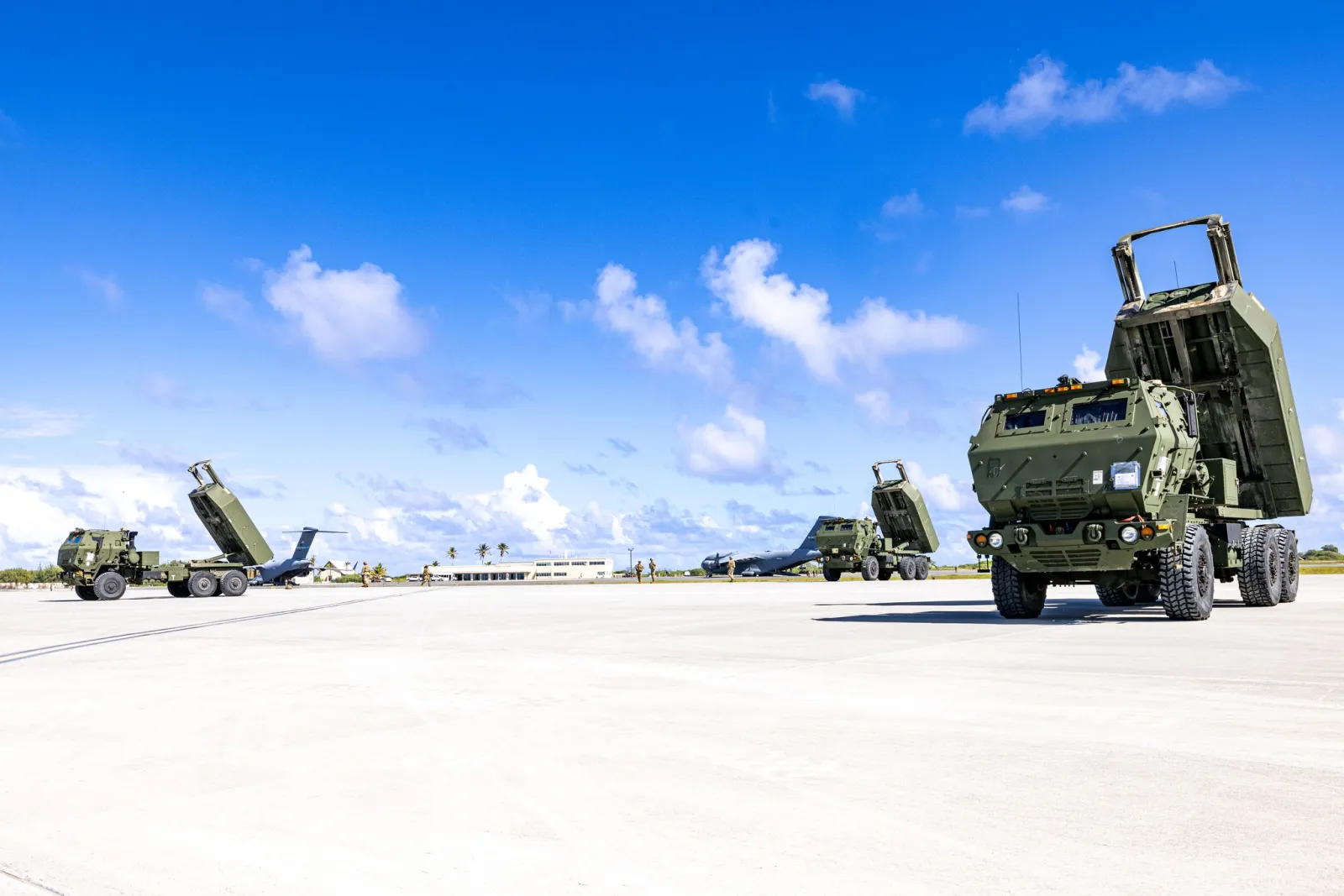
In a video released on Wednesday by the 25th Infantry Division, U.S. Army soldiers assigned to the unit's 2-11 Field Artillery Regiment conducted an operation known as HIMARS Rapid Infiltration, or HIRAIN, with the U.S. Air Force on November 13.
...
The operation was part of the Joint Pacific Multinational Readiness Center (JPMRC) Rotation 26-01, an exercise held by the U.S. Army Pacific in and around the Hawaiian Islands from October 28 to November 16, according to the 25th Infantry Division.
HIRAIN refers to the rapid deployment of HIMARS launchers, flown by cargo aircraft to remote locations for missions and swift redeployments. At least three launchers were airlifted to Wake Island from an undisclosed location in Hawaii, the footage shows.
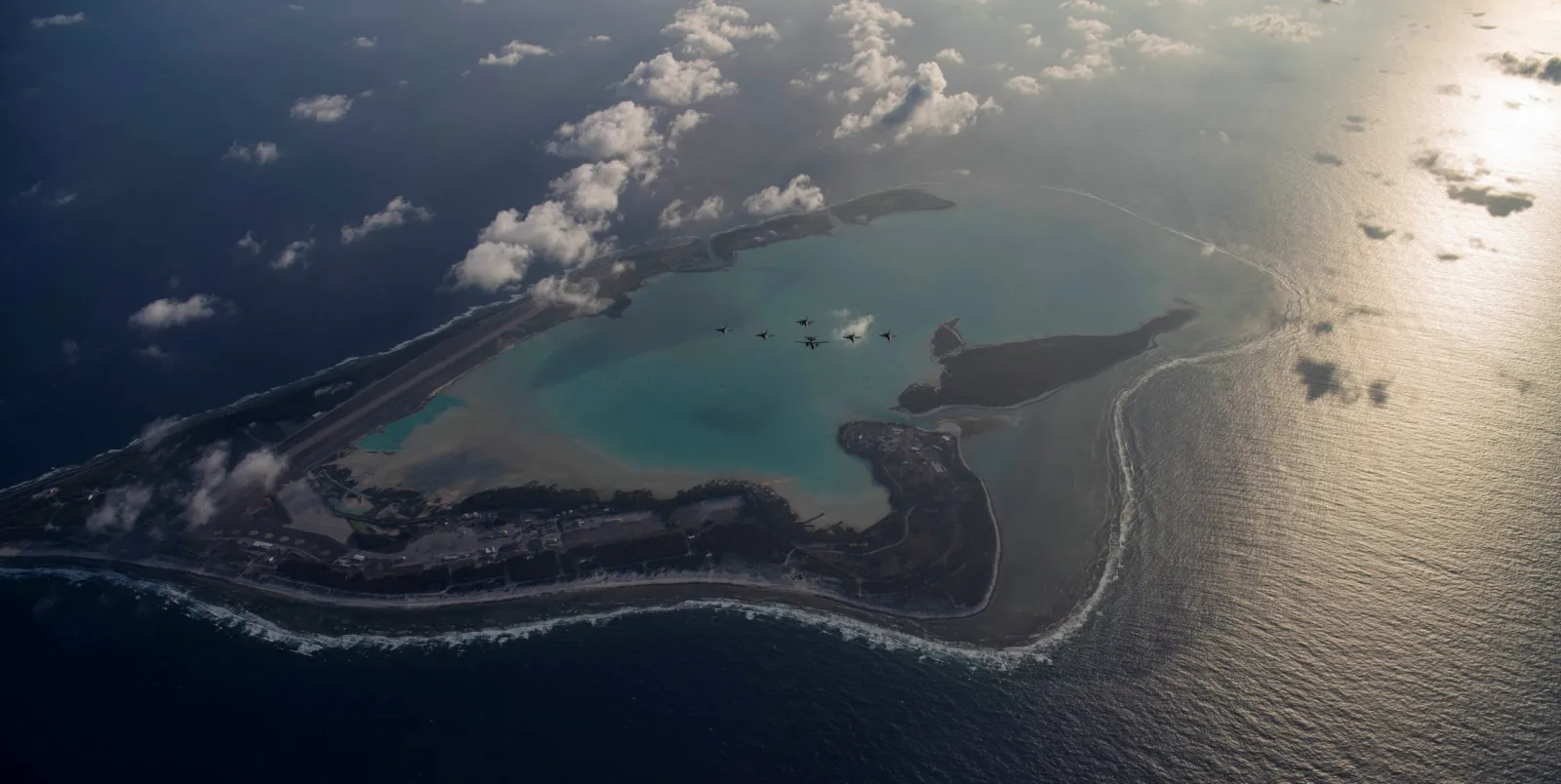
Located in the middle of the Pacific, Wake Island—also known as Wake Atoll—covers about 2.5 square miles and lies more than 2,300 miles west of Honolulu, Hawaii, and roughly 1,500 miles northeast of Guam, according to the U.S. Interior Department.
The tiny island is strategically located between the Second and Third Island Chains under a U.S. strategy to deter and defend against potential Chinese aggression. The airfield on the island serves as a trans-Pacific refueling depot for military missions.
Wake Island Airfield, where the 25th Infantry Division's HIMARS launchers were deployed, had its infrastructure modernized in 2020 and 2021, including repairs and expansion of a taxiway and an area used for loading and unloading ammunition.
...
The 25th Infantry Division said the operational reach of its artillery brigade increased with the unit's first HIRAIN in the Indo-Pacific region, reinforcing its role as a "rapid-deployment and precision-fires asset" in the division, according to a Facebook post.
What People Are Saying
The U.S. Army 25th Infantry Division said: "Joint rehearsals between U.S. Army and U.S. Pacific Air Forces teams allowed force packages to be uploaded and downloaded within minutes—showcasing how deep fires can deploy quickly across dispersed islands."
The U.S. Air Force Installation and Mission Support Center said: "[Wake Island] is considered the air bridge for Air Force aircraft flying across the Pacific Ocean because of its unique location and the 9,800-foot runway."
Lockheed Martin said: "The Lockheed Martin HIMARS provides advanced tactical missile capabilities supporting homeland defense operations, contributing to regional security/stability and allowing for expeditionary deployments to deter, defeat or neutralize advancing threats."
What Happens Next
The U.S. Army is expected to continue modernizing its capabilities to transform the land fighting force to operate in maritime environments across the Pacific.
View 0 Comments
Submit Correction
View Editorial & AI Guidelines