
...



By Daniel Orton, Brendan Cole, and Steve Mollman
0
Share
Newsweek is a Trust Project member
See more of our trusted coverage when you search.Prefer Newsweek on Googleto see more of our trusted coverage when you search.
The United States launched airstrikes against roughly 140 targets across Iran early Sunday, retaliating after Tehran attacked a commercial vessel in the strategic Strait of Hormuz, setting the ship ablaze and forcing its crew to abandon it.
The U.S. operation marks a sharp escalation in regional hostilities, threatening a fragile June 17 peace agreement and sending shockwaves through global energy markets.
"Iran made a poor choice. Now they pay," U.S. Defense Secretary Pete Hegseth wrote on X after the operation.
Read More on World
U.S. Central Command (CENTCOM) said the strikes targeted missile and drone launch sites, ammunition depots, communications equipment, and other military infrastructure. The operation was intended to degrade Iran's ability to threaten commercial shipping in the strategic waterway, according to CENTCOM.
Newsweek has reached out to CENTCOM, the White House, the Pentagon, and the Iranian foreign ministry for comment.
...
Regional Retaliation and Casualties
Following the U.S. strikes, the Revolutionary Guards-affiliated Tasnim news agency said Sunday Iranian forces had retaliated by striking U.S.-linked targets in Jordan, Qatar, Kuwait, Bahrain and Oman.
Air defense systems were activated across the region. Qatar said its military intercepted incoming fire, while missile alerts sounded across several Gulf states hosting U.S. military facilities.
The strikes resulted in reported civilian casualties. Bahrain's Interior Ministry said on Sunday that three people, including a child, were injured by falling debris from interception operations.
Iran’s Islamic Revolutionary Guard Corps (IRGC) had said on Saturday it had targeted the U.S. Prince Hassan Air Base in Jordan and that ballistic missiles destroyed the base’s command and control center and MQ-9 drone hangars.
Related Story
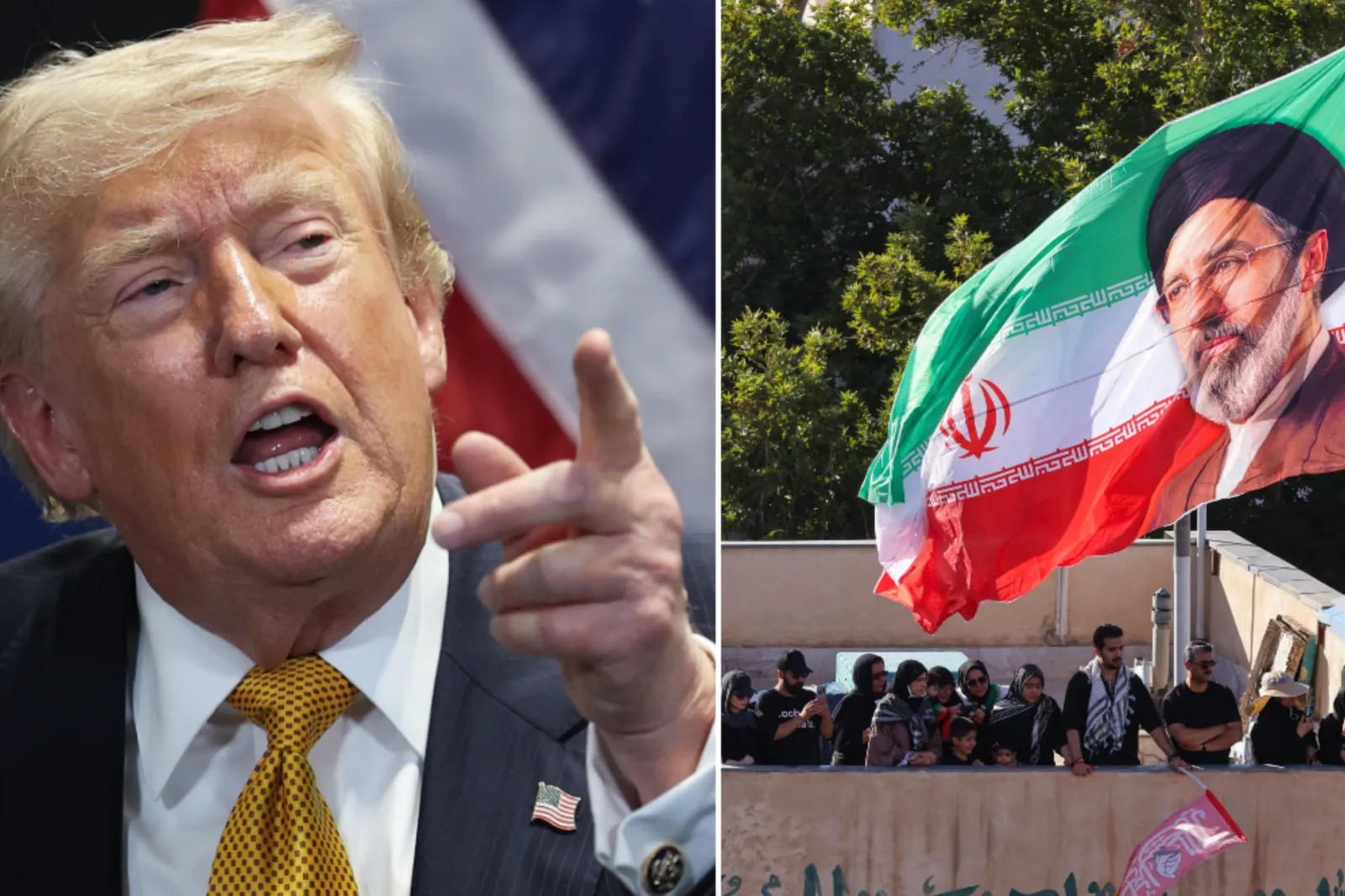
Iran Vows Revenge Against US For Khamenei’s Killing: ‘Must Be Done’
Middle East Diplomatic Backlash
The Iranian attacks drew swift and widespread condemnation from Arab nations.
Kuwait’s foreign ministry said the strikes violated its sovereignty and posed a direct threat to its security and stability. The country's defense ministry said attacks damaged three northern border posts and an offshore Kuwait Oil Company drilling platform, injuring one worker. Oman summoned the Iranian ambassador and condemned the reported drone attack on its territory, according to state media. Egypt said the strikes threatened the security and sovereignty of Arab states and marked a serious escalation.
However, some in Tehran signaled a willingness to expand the conflict. Hossein Shariatmadari, editor of the hardline Kayhan newspaper, wrote in an op-ed the United Arab Emirates (UAE) should be an Iranian military target because it was "an arms depot" and a base for Israeli fighter jets and U.S. refueling aircraft.
Crisis in the Strait of Hormuz
The escalation began with an attack on a Cyprus-flagged container ship, which suffered significant engine room damage. India's foreign ministry said 10 Indian nationals had been rescued from the vessel while one remained missing. The ship's crew abandoned the vessel after it caught fire.
The Strait of Hormuz is one of the world's most important energy chokepoints. Before the war, roughly a fifth of global oil and natural gas trade passed through the narrow waterway, making any disruption a concern for energy supplies and fuel prices worldwide.
Following the incident, Iran warned the strait would remain closed "until further notice" and threatened additional attacks if it faced further military action from the U.S. and its regional allies.
Battle for Maritime Control
CENTCOM strongly rejected Iranian assertions that Tehran controls the strait. In a Sunday post on X, it said the strait "remains an international waterway" and that U.S. forces are "positioned and prepared" to keep it that way.
"Iran does not control the strait. Traffic is flowing," the command wrote.
Conversely, Iranian media and officials have insisted that the waterway remains in Tehran’s control. Ebrahim Rezaei, from parliament’s National Security Committee, wrote on X on Sunday after the latest strikes, "we have taken the Strait of Hormuz with power, and we will preserve it with power."
Amid the military standoff, diplomatic efforts to preserve regional stability continue. Pakistan’s Foreign Minister Mohammad Ishaq Dar urged Iran to de-escalate in line with the Memorandum of Understanding struck on June 17 between the U.S, and Tehran to end the Iran war and reopen the strait, which now hangs in the balance.
Iran's foreign ministry said Sunday that talks with Oman focused on future arrangements for managing shipping through the Strait of Hormuz and that the two countries would continue discussions on maritime security in the waterway.
Contact Newsweek editors for this story: Daniel Orton, Trevor Davies, Steve Mollman and Anthony Murray.
View 0 Comments
Submit Correction
View Editorial & AI Guidelines