...

By Melissa Fleur Afshar
Reporter
0
Share
Newsweek is a Trust Project member
See more of our trusted coverage when you search.Prefer Newsweek on Googleto see more of our trusted coverage when you search.
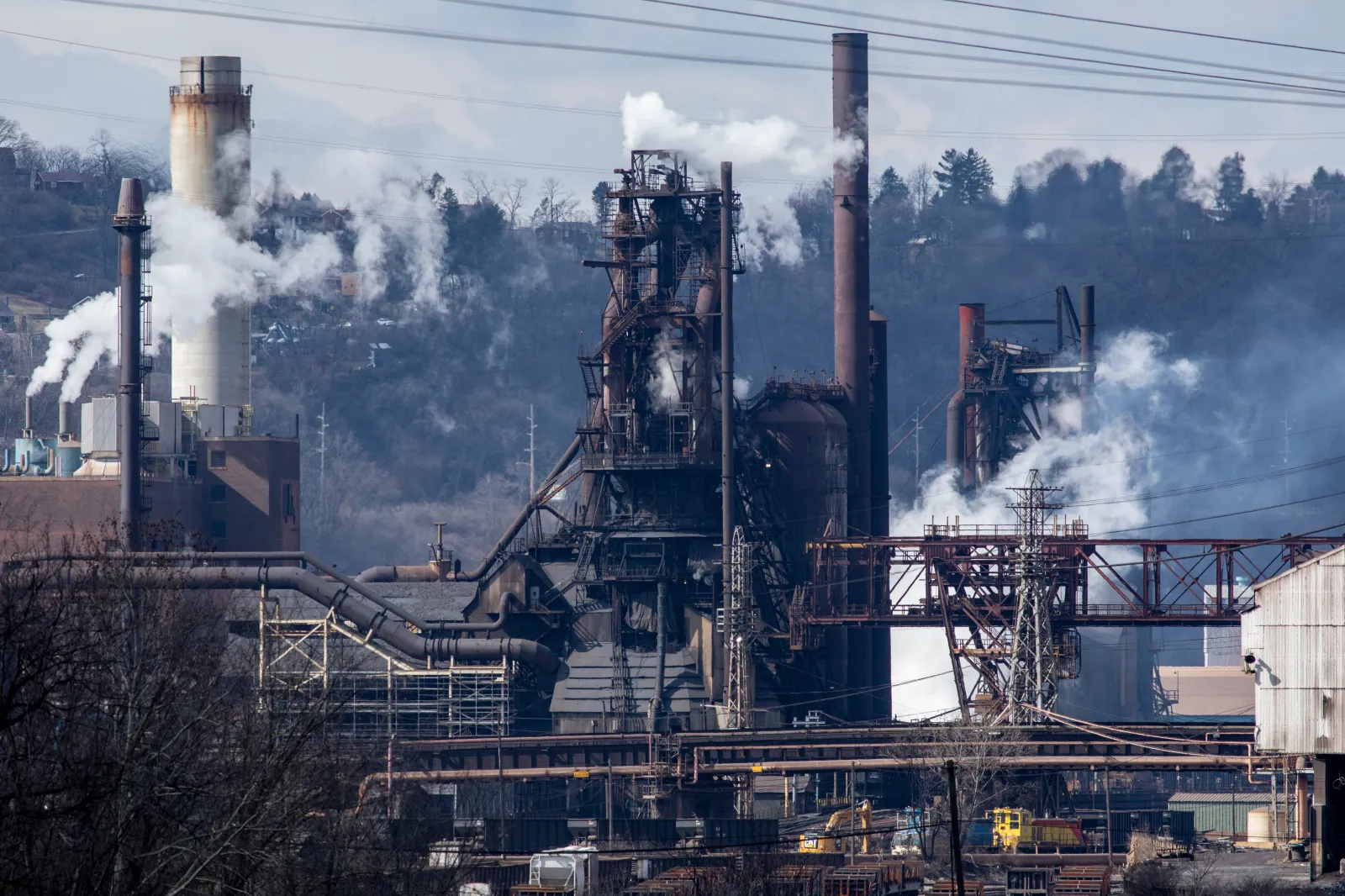
Air pollution in and around the city of Pittsburgh is estimated to claim the lives of more than 3,000 people every year, even as federal regulators move to weaken rules designed to protect public health.
Researchers set out to examine the long-term effects of fine particle pollution in southwestern Pennsylvania. Their findings show that the Pittsburgh region remains one of the nation’s most dangerous pollution “hot spots,” with harms occurring even when pollution levels fall below current federal standards.
The team's analysis indicates that pollution contributed to roughly one in every nine adult deaths in the region in a single year, underscoring what the authors say is a gap between public health science and U.S. air policy.
Read More on Health
...
The research builds on decades of evidence linking air pollution to serious illness.
Studies triggered by the 1948 Donora smog disaster—when toxic air trapped in a Pennsylvania mill town killed at least 20 people and sickened many more—helped establish that polluted air causes chronic heart disease, stroke, chronic obstructive pulmonary disease, lung cancer and diabetes in adults.
When it comes to children, pollution exposure has been associated with premature birth, low birth weight, stillbirth, asthma and impaired lung development. More recent evidence also has linked air pollution to autism in children and dementia in adults.
Before Donora, air quality was not regulated at the federal level. Pollution was widely seen as a local nuisance and an unavoidable cost of industrial growth. The tragedy forced a national reckoning, helping lay the foundation for the Clean Air Act—first enacted in 1963 and strengthened in 1970 and 1990—and spurred the creation of the country’s first air pollution research programs.
Despite those advances, air pollution is still blamed for an estimated 200,000 deaths across the U.S. each year, and those deaths are not evenly spread. Instead, they cluster in specific regions.
The new study identifies southwestern Pennsylvania—covering Donora, Pittsburgh and surrounding communities—as one of the most affected areas.
The researchers point to a mix of causes, including a legacy of steel mills and coke ovens that burn coal to fuel steel production, steep valleys that trap polluted air and a long history of weak local enforcement of federal clean air laws. As a result, the Pittsburgh metropolitan area continues to rank among the most polluted regions in the country.
How the Study Was Conducted
To measure the impact of air pollution around Pittsburgh, the team used NASA satellite images to estimate pollution levels in each census tract. They then linked that data to death and birth records from the Pennsylvania Department of Health. The focus was on fine particle pollution, known as PM2.5, which is small enough to penetrate deep into the lungs and bloodstream.
The results were stark. In 2019, between 3,085 and 3,467 deaths in southwestern Pennsylvania—about 11 to 12.5 percent of all adult deaths that year—were likely attributable to PM2.5 exposure.
Pollution was also linked to 229 premature births, 177 cases of low birth weight and 12 stillbirths.
The study also examined cognitive impacts. Using existing scientific evidence showing that even small increases in pollution are tied to measurable declines in children’s IQ, the researchers estimated the effect on all 24,604 children born in the Pittsburgh area in 2019.
The result was a collective loss of more than 60,000 IQ points, or about 2.5 points per child on average.
Notably, many of these harms occurred at pollution levels below the Environmental Protection Agency’s (EPA) current standard of 9 micrograms per cubic meter for PM2.5, suggesting that even low-level exposure carries serious risks.
The findings come as the EPA, under Lee Zeldin, has announced plans to raise allowable PM2.5 limits, ease enforcement of the Clean Air Act and repeal the greenhouse gas endangerment finding that allows the agency to regulate climate-warming emissions.
The agency has also stopped counting the economic benefits of pollution controls, including the value of lives saved, while continuing to tally the cost of efforts to lower air pollution.
Is there a health issue that's worrying you? Let us know via health@newsweek.com. We can ask experts for advice, and your story could be featured on Newsweek.
Reference
Whitman, E. M., Bryan, L., Sehdev, S., & Landrigan, P. J. (2026). Particulate Air Pollution, Disease, and Death in the Cities and Towns of Southwestern Pennsylvania. Annals of Global Health, 92(1). https://doi.org/10.5334/aogh.5145
View 0 Comments
Submit Correction
View Editorial & AI Guidelines