
...

By Jordan King
Reporter
0
Share
Newsweek is a Trust Project member
See more of our trusted coverage when you search.Prefer Newsweek on Googleto see more of our trusted coverage when you search.
The U.S. Coast Guard (USCG) has changed the language of a new policy regarding the display of hate symbols including swastikas and nooses after it was revealed it had planned to describe them as "potentially divisive."
The USCG used this phrase for the first time earlier this month, The Washington Post revealed, shifting from a 2019 policy stating that the symbols were "widely identified with oppression or hatred," meaning their display would be "a potential hate incident."
But after widespread backlash, the USCG changed the policy again on Thursday, saying that "divisive or hate symbols and flags are prohibited," adding that this included "a noose, a swastika, and any symbols or flags co-opted or adopted by hate-based groups."
Read More on News
Why It Matters
The quick back-and-forth over the Coast Guard's policy drew national attention amid heightened concerns over antisemitism and hate crimes in the U.S. military and broader society.
It also comes after Admiral Linda Fagan, who used to be acting commandant of the Coast Guard, was fired on President Donald Trump’s first day in office in part for putting an “excessive focus” on diversity and inclusion, Trump officials said at the time.
What To Know
The initial draft policy also would have handled incidents involving these symbols as reports of harassment, rather than as hate incidents, according to the Associated Press.
The proposal further noted that these restrictions would not apply to private areas like family housing.
Multiple people spoke out against the new policy, including Democratic Senator Jacky Rosen of Nevada, who said it "rolls back important protections against bigotry and could allow for horrifically hateful symbols like swastikas and nooses to be inexplicably permitted to be displayed."
“At a time when antisemitism is rising in the United States and around the world, relaxing policies aimed at fighting hate crimes not only sends the wrong message to the men and women of our Coast Guard, but it puts their safety at risk,” she said.
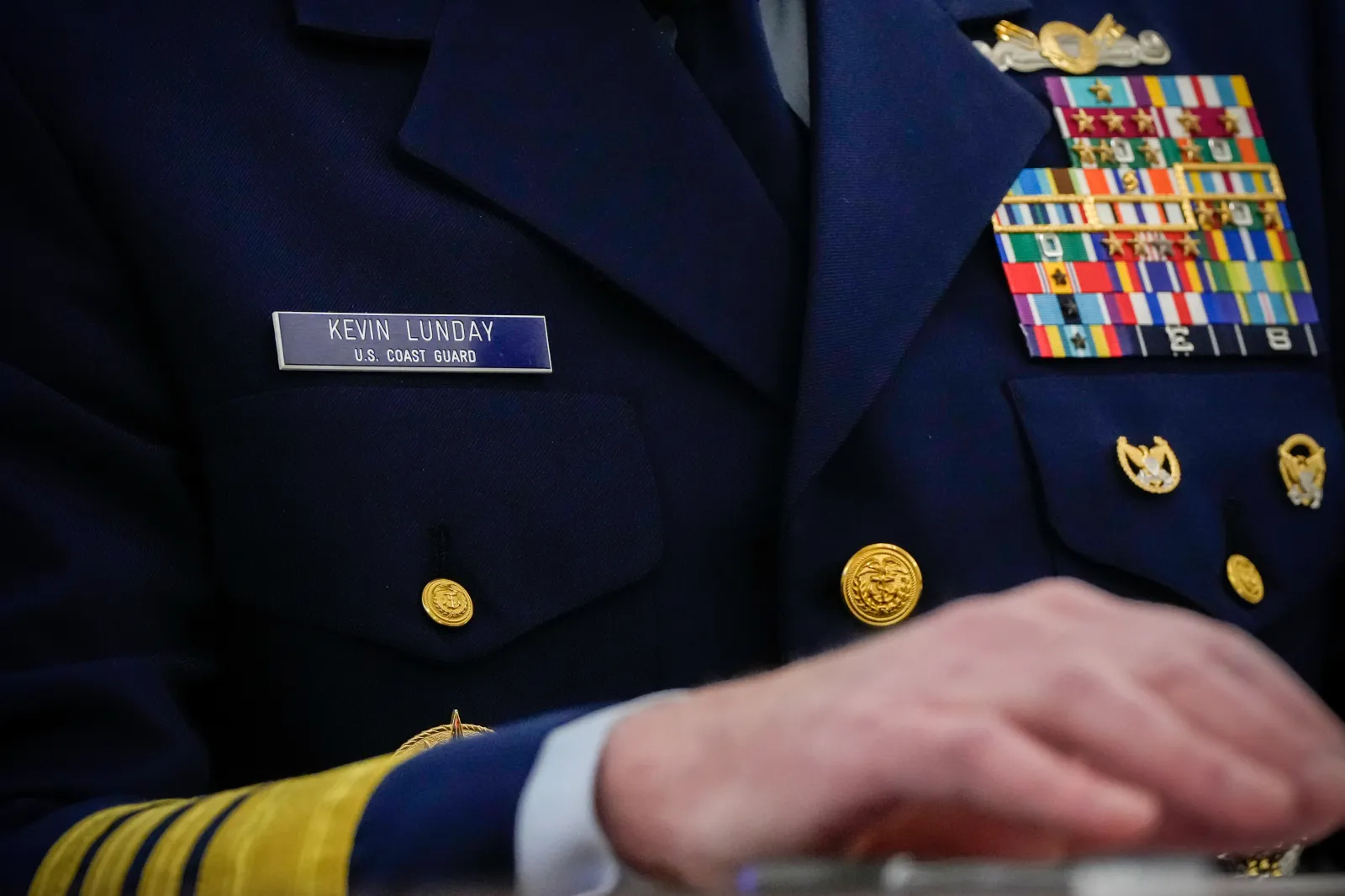
Admiral Kevin Lunday, acting commandant of the Coast Guard said that it was “categorically false” to claim that the policy had rolled back any prohibitions.
“Any display, use or promotion of such symbols, as always, will be thoroughly investigated and severely punished,” Lunday added.
But, on Thursday, the Coast Guard announced the new language in a memo which said under “prohibition”: “Divisive or hate symbols and flags are prohibited. These symbols and flags include, but are not limited to, the following: a noose, a swastika, and any symbols or flags co-opted or adopted by hate-based groups as representations of supremacy, racial or religious intolerance, antisemitism, or any other improper bias.”
...
What People Are Saying
**Lunday said in his memo: “**The Coast Guard does not tolerate the display of divisive or hate symbols and flags, including those identified with oppression or hatred. These symbols reflect hateful and prohibited conduct that undermines unit cohesion.”
Cornell University law professor Menachem Rosensaft, who is also a Jewish community leader, said in a statement: "The swastika is the ultimate symbol of virulent hate and bigotry, and even a consideration by the Coast Guard to no longer classify it as such would be equivalent to dismissing the Ku Klux Klan’s burning crosses and hoods as merely ‘potentially divisive.’”
What Happens Next
The Coast Guard has stated it will continue to track and review incidents involving divisive and hate-based symbolism and adjust policies as needed.
Update, 11/21/2025, 11:24 a.m. ET: This article was updated with additional information.
View 0 Comments
Submit Correction
View Editorial & AI Guidelines