
By Alexis Kayser
Healthcare Editor
0
Share
Newsweek is a Trust Project member
See more of our trusted coverage when you search.Prefer Newsweek on Googleto see more of our trusted coverage when you search.
This is a preview of the September 18 edition of Access Health—Tap here to get this newsletter delivered straight to your inbox.
On Tuesday, Newsweek hosted our flagship Digital Health Care Forum at our New York City headquarters. Hundreds of health care leaders gathered in the World Trade Center to discuss a variety of tech-related topics: How do we achieve interoperability? How do we balance risk with the inevitable price of progress? How should we think about AI governance, and how can we turn those thoughts into actual guidelines?
Read More on Business
We pondered these questions in panel discussions, fireside chats, presentations and individual conversations. Oftentimes, we couldn't come to a single conclusion—which illustrates both the novelty and complexity of this moment in health tech.
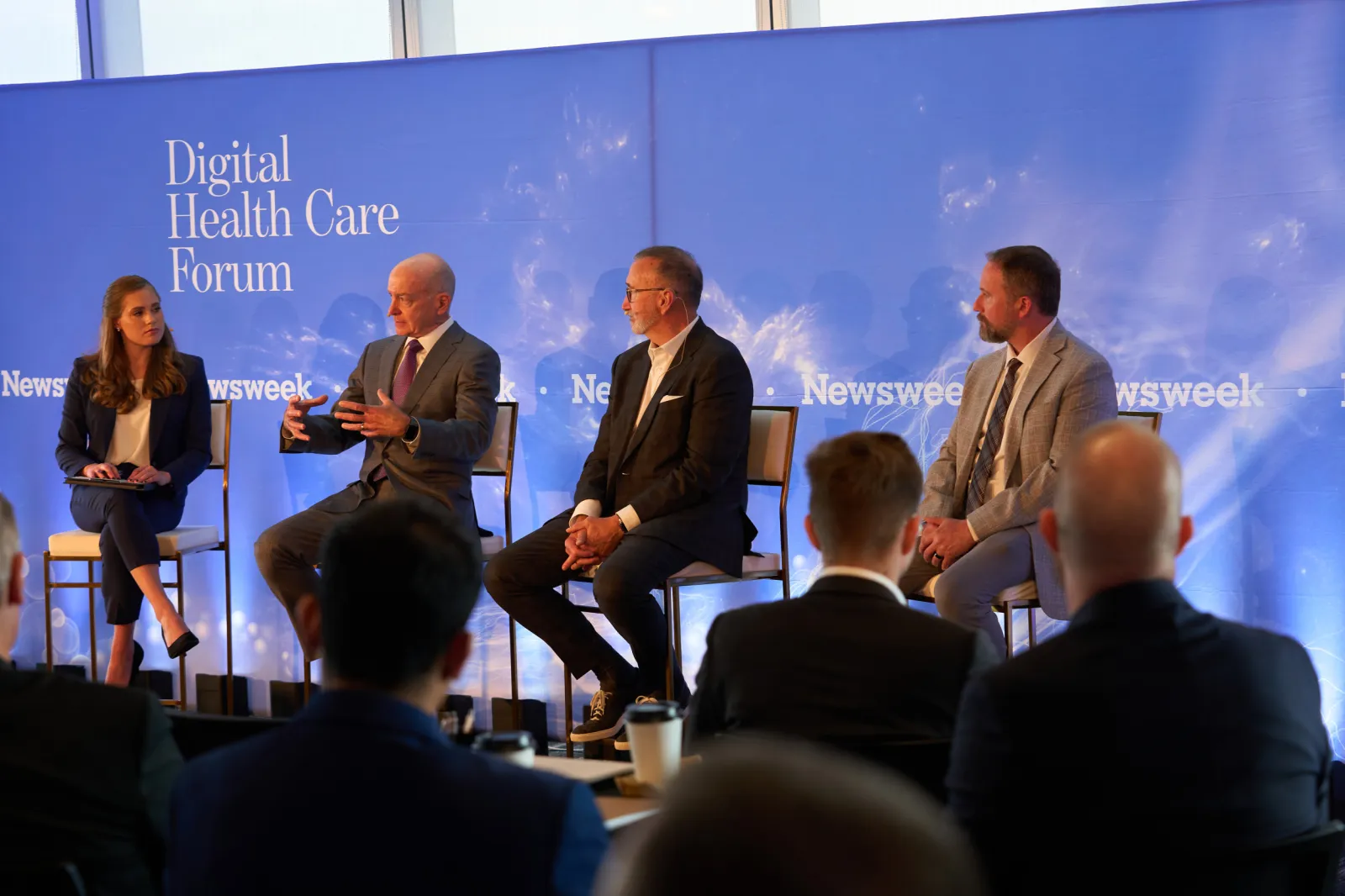
You can get a bird's-eye view of the day from our live blog and this recap article by my colleague, Senior Reporter Lauren Giella. But for today's intro, I wanted to take you inside a single panel that stood out to me: our discussion on "Pacing Innovation: Balancing Governance, Risk and Progress."
I moderated this conversation with Aneesh Chopra, chief strategy officer of Arcadia and the first U.S. chief technology officer under President Barack Obama's administration; Dr. Daniel Yang, vice president of AI and emerging technologies at Kaiser Permanente; and Dr. Baligh Yehia, president of Jefferson Health.
It was an interesting cast for two reasons: Chopra brought a government insider's perspective on tech policy and data sharing, while Yang and Yehia could speak from a "payvider" point of view. Both Kaiser Permanente and Jefferson Health belong to the small cohort of U.S. systems that house health plans and provider networks, all under the same umbrella.
About halfway through the discussion, Chopra shared a story from Amy Gleason, acting administrator of the U.S. Department of Government Efficiency (DOGE) under President Donald Trump's administration. As a former emergency room nurse, Gleason saw the fragmentation of patients' health records firsthand—and got up close and personal with the issue when her daughter was battling multiple rare health conditions. She decided to plug her daughter's health records into a prominent chatbot, which identified a misdiagnosis and confirmed her eligibility for a clinical trial.
"Now this is not like this is going to be a new AI doctor era, but it's a chance for us to bring new technology, new capabilities into a new product area," Chopra said. "And what would that new product area be? It's this vision of a total cost of care, accountable entity."
"If you're a health system, a physician group or a health plan, you're in a fragmented part of the health care ecosystem," he continued. "If that is one, you have the ability to pool together a lifetime record of the patient and to incorporate it for decision support or guidance to ensure that the individual gets advice and care at every step of their journey."
This brought us to the issue of risk in data aggregation. Who owns patients' health records? Do they belong to the patient themselves or to the health system that collected the data over time? Or are they public property? Is it a social responsibility to share them, for the sake of public health, stronger research and the greater good?
Here's what Chopra said: "This gets to the question about who's aggregating and for what purpose. And so remember, the bedrock principle in HIPAA is that we as consumers have the right to access our own data. But as I challenge every health system CEO I've ever met—and I'm still 0 for whatever that number is—go to your medical records office and show me your HIPPA right of access form. It doesn't exist. We have HIPAA authorization forms because we, the institutions, want permission from the consumers who visit us, the patients, to use their data in other ways. But that's different from saying, 'I'm offering you the chance to take your data back and to do with it what you wish.'"
This is the driving force behind CMS' Aligned Networks initiative, he said. The Trump administration intends to make it as easy as possible for patients to access their own health information, and what they do with it after that is their own prerogative.
But data sharing amongst organizations for other HIPAA-covered purposes is trickier. Currently, there is a restriction on what payers and providers can share with one another. If we do, indeed, move to view health records as a community resource, both parties need to agree on a governance model that both parties trust. Otherwise, Chopra said, the "asymmetrical warfare" between each entity's AI models could result in a net negative for the industry.
"I actually worry that if we don't resolve this, we're going to see AI as an inflationary good, not a deflationary good in the overall health care ecosystem," Chopra said.
"So, the open question," he mused, "is whether or not we see more of an open data model with aligned incentives between payers and providers that's benefiting from AI, where you're asking the right questions: Is it allowed to have access to this shared resource?
"Well, if both parties agree to trust it, then I think we're going to reap the benefits. Otherwise, I am worried [about a] 55-45 [split]. We're probably tilting towards inflation, not deflation."
In Other News
Major health care headlines from the week
- Health systems are advocating for an extension of the Acute Hospital Care at Home (AHCAH) waiver, which is set to expire at the end of the month. In this week's cover story for Newsweek magazine, I investigated the promise of these programs and explored some of the challenges that they're up against. Read the full article here.
- The American Hospital Association's CEO, Rick Pollack, is urging Aetna to reverse its new "level of severity inpatient payment policy," set to take effect September 15. In a letterto Aetna President Steve Nelson, Pollack said the new policy will reduce patients' opportunities to file appeals for denied claims and "further stress an already financially unstable health care system." Click here to read the full letter.
- Health care talks are heating up on Capitol Hill. Democratic lawmakers are asking Republicans to roll back some of the Affordable Care Act cuts that are proposed in President Donald Trump's spending plan—and failure to reach an agreement could result in a government shutdown, The Washington Post reported. Also, the House Ways and Means Oversight Subcommittee hosted a hearing on tax-exempt hospitals this week. The committee, led by Republicans, heard arguments that nonprofit hospitals are engaging in non-clinical activities (like support for "gender identity politics"), and that urban hospitals are unfairly utilizing programs designed for rural hospitals. Witnesses on this side included Ge Bai, a professor of health, policy and management at the Johns Hopkins Bloomberg School of Public Health, and William Hild, executive director of the conservative nonprofit Consumers' Research. On the other hand, hospital leaders argued that nonprofits provide critical services that are rarely profitable.
- CMS announced a $50 billion commitment to transform rural health care on Monday. The funding will become available in fiscal year 2026 and will be distributed annually in chunks of $10 billion through the year 2030. Once approved, states can use the funds for various pre-approved investments, including recruitment and retention of clinical teams, expansion of treatments for opioid use disorder and mental health treatments and technology trainings for rural health care workforces. States must apply for the funds by November 5, and awards will be allocated by December 31. More information is available on CMS' website.
Pulse Check
Executive perspectives on key industry issues
...
Dr. David Callender, president and CEO of Memorial Hermann Health System in Texas, participated in Newsweek's Digital Health Care Forum on Tuesday. Ahead of the event, I connected with him to learn how he approaches tech and innovation from a business standpoint.
Find a portion of our interview below.
Editor's Note: Responses have been lightly edited for length and clarity.
How do you determine which technologies will provide the greatest return on investment for Memorial Hermann?
Obviously, with all of the technology that's available today and the very rapid development of new technology, we have a lot of choices. So a big issue for us is matching the availability of technology or technologies that can help us drive down what we call our "road to value." [That] is really the key to success.
So what are the pain points that we have, and then what technologies are available to us or could we pursue that help us fill the gap, relative to reducing the amount of pain or meeting a significant need that we have that will help us drive value? We think about value in the health care context as it's been defined, so it's not just the outcomes divided by the cause, but there's also multiplication times the consumer experience, the experience of our own employees, and then all of the health access and engagement issues in our community.
There are really five factors that drive value in health care. From our perspective, these have been pretty much proven to have significant impact in previous studies that have been performed. We're focused on driving value, thinking about how we generate the very best outcomes at the optimal cost, with the best possible experience for patients and consumers of health information and health products, making sure that our employees have a very fulfilling work experience, and doing everything we can on our own and with very important partners in the community to address the huge health equity and access issues across the greater Houston community.
What are the health equity issues, specifically, that you think technology can help address in your community?
They're certainly not peculiar or unique to Houston. We know that we have those non-medical drivers of health, like access to transportation, access to safe and secure housing, access to a stable and nutritious food supply, level of educational attainment; all of these and others [are] important factors in terms of any individual's health status.
Let's think, for example, about what we could do about the transportation problem. And just a scenario, let's say we have an elderly patient who is on Medicare—perhaps dual- eligible Medicaid and Medicare—who doesn't have reliable transportation to get back and forth to appointments, to get to a pharmacy to pick up prescriptions. They may not have a stable housing situation, so we're thinking about those [problems] and the sorts of technology that we could apply.
It's a pretty simple one in terms of transportation. In our region, we partner with a couple of ride services, Uber and Lyft, to help provide rides for patients back and forth to their appointments, to pick up their prescriptions, and in some cases, to get to a food pharmacy. And so there's some pretty readily available technology support to address some of those non-medical drivers.
Now we also partner a lot with the United Way, which uses an incredible array of technology to really help not only match individuals and families to sources of support, but also to opportunities to get the skills that they need to be employed and generate a self-sustaining wage. So those are not technologies that we control access to, but one of our partners does and can offer those.
Patients have so much choice now in where they receive their health care, whether that's through a virtual care company or one of the many health systems in the area. Some health systems have even shifted their verbiage, referring to "patients" as "consumers." Has that level of patient choice impacted the need for Memorial Hermann to innovate in order to remain competitive?
Oh, absolutely. I think we all face that as we go forward, [there are] so many more sources of information about health. Obviously, we're fortunate here in Houston [as] our region still continues to grow in population. We'll see what happens over the course of time.
But you know, we've essentially been forced to grow to be able to accommodate the demands for health care. That's true of our competitors, who are also colleagues across the greater Houston area. As we think about that growing need for service, and we think about the need to improve efficiency, and again, the need to improve outcomes and experience, there's clearly a role for technology that helps us connect better, more effectively and more broadly with patients and consumers.
Now I'm biased as a physician, so I think about both [patients and consumers]. I think about patients, those who actually have come to us for service, and then I think about that broader need to improve health. And I think about consumers of health information in particular, but also health products. What's our role as a health system in terms of providing the best information about health or partnering with others to do that—to help people find the resources they need if we don't directly control those or offer them, that can help them improve their health or get on a better road to good health? So yeah, I distinguish between consumers and patients, and I think it's important to consider the needs of both as we go forward, if we're truly going to accomplish that mission goal of improving health.
Click here for video footage of Callender's panel, The Business Case for Tech and Innovation, at Newsweek's Digital Health Care Forum. Brad Reimer, CIO of Sanford Health, and James Hereford, president and CEO of Fairview Health Services, also participated in the discussion.
C-Suite Shuffles
Where health care leaders are coming and going
- Medical geneticist Dr. Joyce So will be the first chief genomics officer of Cedars-Sinai. She will lead genomics initiatives at the Los Angeles-based system and guide their integration into clinical practice and organizational strategy. Whole genome sequencing is becoming a core focus for many health systems as they invest in personalized medicine—but it raises some ethical and financial questions. I dove into this topic for a January cover story, which you can read here.
- UVA Health has named Dr. Mitchell Rosner its next CEO and executive vice president for health affairs at the University of Virginia. Rosner has served the academic health system for 21 years and spent the last seven months as interim executive vice president for health affairs. More than two dozen UVA Health leaders signed a letter to the university's rector and interim president, asking them to give Rosner the permanent position, the organization said in a news release.
- The CDC has appointed five new members to its Advisory Committee on Immunization Practices (ACIP): Dr. Catherine Stein (an epidemiologist and professor at Case Western Reserve University in Cleveland, Ohio), Dr. Evelyn Griffin (an OB-GYN at Baton Rouge General Hospital in Louisiana), Dr. Hillary Blackburn (director of medication access and affordability at AscensionRx in St. Louis), Dr. Kirk Milhoan (medical director of For Hearts and Souls Free Medical Clinic in Kihei, Hawaii) and Dr. Raymond Pollak(a surgeon and transplant immunobiologist who formerly held leadership roles at the United Network for Organ Sharing, the American Society of Transplant Surgeons and the University of Illinois). HHS Secretary Robert F. Kennedy Jr., fired all 17 members of the previous ACIP on June 9, claiming that a fresh start could help restore Americans' trust in the nation's vaccine practices.
Executive Edge
How health care leaders are managing their own health
...
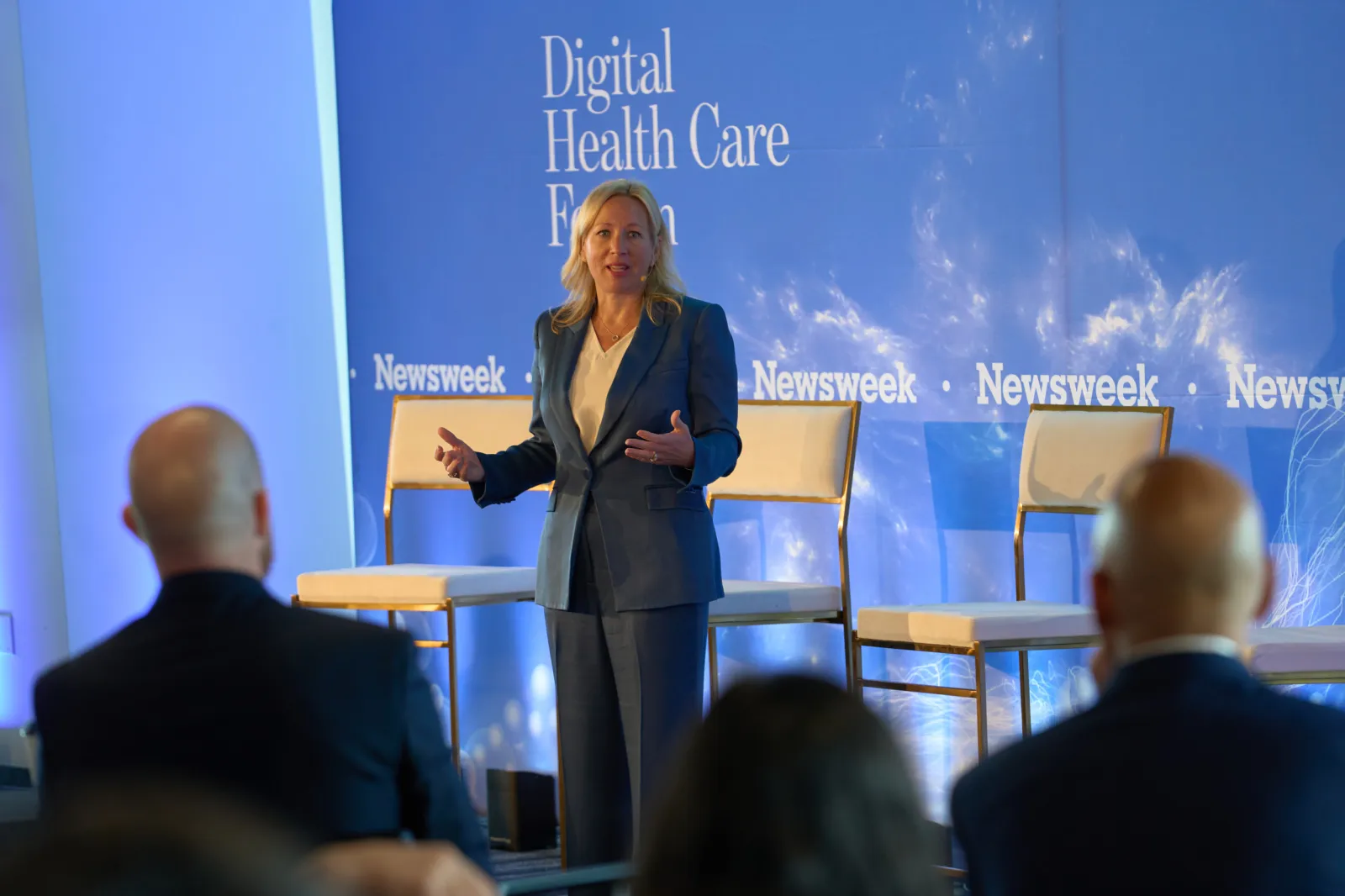
Tina Freese Decker, board chair of the American Hospital Association and president and CEO of Corewell Health, gave the opening remarks at Tuesday's Digital Health Care Forum. Her speech included plenty of advice for health care leaders, including five core behaviors that they should adopt to embrace the changing technology landscape.
Read on for some words of wisdom from Decker, including three of the key behaviors she suggests that health care leaders adopt:
- "The first [key behavior] is one that we have all heard and don't prioritize, and that is taking care of ourselves and each other. It is very important, even in the best of times, and it is so critical that we invest in our resilience and our grit and our adaptability and our physical and emotional well-being. Even as we're taking care of others, we have to prioritize how to take care of ourselves.
- "The second is we need to make sure that we are very focused on our mission, on our purpose and what we're doing: everything ties to that mission that we have. We have 10 rules of the road for technology. First thing on that, what is the problem that we're trying to solve? It's not the solution, it's "what is the problem?" And that problem is always, "how do we realize our mission? What are we trying to accomplish every single day? What are we going to accomplish every single day?" Tie it back. So that's a big focus for us to be laser-focused on our mission.
- "The third behavior that we are focused on is, be curious about the road ahead, and vigorously debate, which requires active listening. It's like a dance. You have to actively listen and communicate. You have to seek out different points of view, really make sure that you've heard and understood what's happening before you make that decision, and then when you make that decision, ensure that you are challenging the status quo. The best part about innovation is that you have to have healthy dissatisfaction with the status quo, and so I really think we can pause and challenge what we've always done and make sure that we're not just doing incremental things like moving paper to electronic—but truly thinking about it in a different way. I also believe that the quality of the decision that you make is based on the quality of the discussion that you have. So ensure that that discussion counts."
This is a preview of the September 18 edition of Access Health—Tap here to get this newsletter delivered straight to your inbox.
View 0 Comments
Submit Correction
View Editorial & AI Guidelines