...

By Hugh Cameron
Reporter
0
Share
Newsweek is a Trust Project member
See more of our trusted coverage when you search.Prefer Newsweek on Googleto see more of our trusted coverage when you search.
The U.S. is on track for an economic "heart attack," if lawmakers are unable to pull the country out of its "death spiral of debt," according to the founder of the world's largest hedge fund while speaking on a recent podcast.
Why It Matters
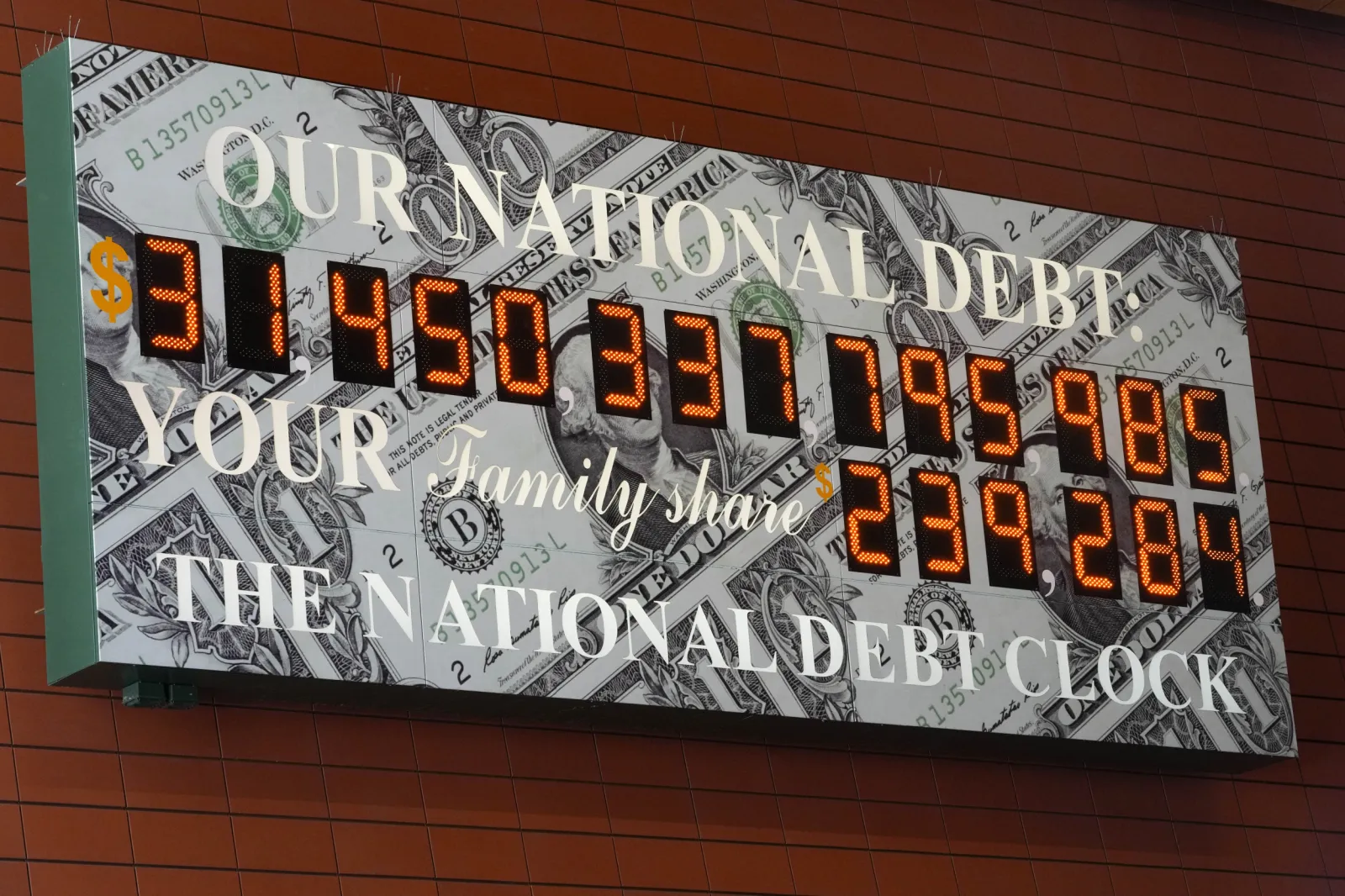
The U.S. national debt currently stands at $36.2 trillion, according to the Treasury Department. The U.S. currently runs at a roughly 123 percent debt to gross domestic product (GDP) ratio, reflecting an inability to pare down what it owes.
Read More on News
...
What To Know
Excessive borrowing can drive up interest rates, potentially stagnating economic growth, while also limiting the government's ability to respond to economic crises and increasing the risk of inflation if the government resorts to printing money to manage its debt.
If debt and interest payments tighten a government's financial resources, it can result in what Ray Dalio, founder and co-chief investment officer at Bridgewater Associates, terms "economic debt heart attacks."
Dalio made the comments during an episode of the All-In podcast which aired last week.
"To me, it's almost like the circulatory system. Credit is like blood that brings nutrients to all of the parts of the body. And it passes through a system that's like arteries and then credit creates debt," Dalio said.
"And the key question, if it's healthy, is does the debt create an income that is more than enough to service the debt? And that's a healthy process. And if not, credit begins to build up this debt, it begins to become like plaque in the arteries."
Minimizing the national debt, and in particular the federal budget deficit, has been a central promise of Donald Trump's administration, and is one of the principal goals of Elon Musk's newly formed Department of Government Efficiency.
According to a recent report from the Congressional Budget Office (CBO), the federal budget deficit is projected to rise in relation to GDP over the next 10 years, with the national debt surging by $23.9 trillion during this period.
A previous CBO report estimated that the gross federal debt will total $56.8 trillion in 2024, which the House Budget Committee chalked up to "unsustainable federal and executive spending."

...
What People Are Saying
Dalio told the All-In podcast that U.S. policymakers have to wake up to the fact that the country's economic condition "is very bad."
To stabilize the U.S. debt-to-income ratio, Dalio has suggested increasing taxes, cutting spending, or a central bank purchasing the government's debt as potential solutions.
"When there's a lot of borrowing to service debt, there's what's called the 'death spiral' (...) And that is that dynamic where there's too much debt and you have to borrow to service the debt," Dalio explained.
"And then people, investors, know that that's a problem to service the debt, so the credit is worse. And that means that interest rates go up, which is the worst thing that can happen to a heavily indebted entity. And then as they rise, you get that spiral, you need to borrow more, and so on."
"The U.S. government's wide deficit and elevated debt levels restrict its ability to respond effectively to future economic downturns," according to JP Morgan analysts in June.
"Historically, during recessions, governments boost spending to stimulate growth. However, the fiscal space for additional stimulus might be constrained by an already wide budget deficit. This could slow any economic recovery."
What Happens Next?
The widening gap between the nation's income and spending, further exacerbated by potential new tax cuts, indicates that achieving a balanced budget is a far-off goal for the next few administrations.
Do you have a story we should be covering? Do you have any questions about this article? Contact LiveNews@newsweek.com.
View 0 Comments
Submit Correction
View Editorial & AI Guidelines