...


By Jason Lemon, Mandy Taheri, and Ellie Cook
0
Share
Newsweek is a Trust Project member
See more of our trusted coverage when you search.Prefer Newsweek on Googleto see more of our trusted coverage when you search.
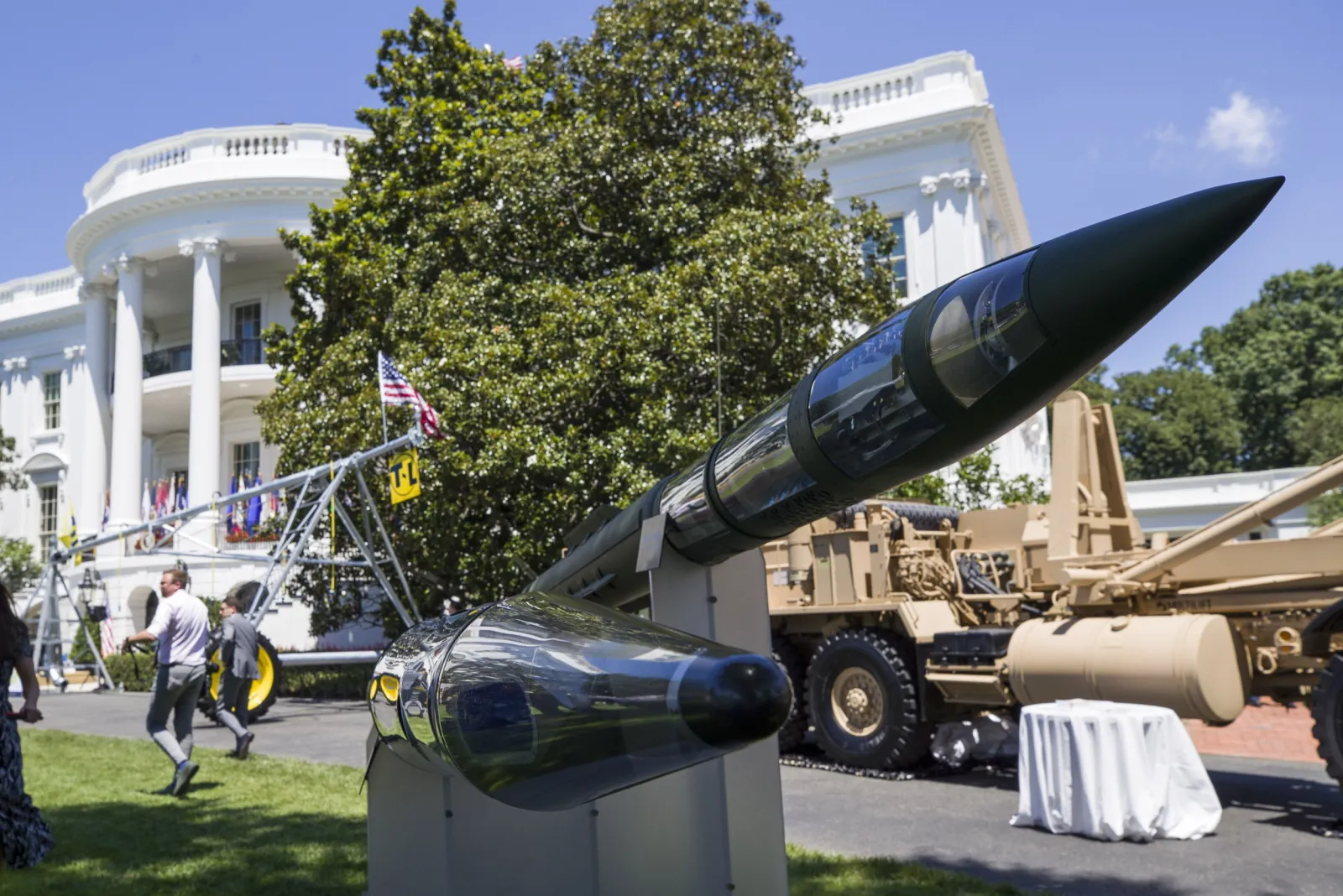
The United States will deploy a Terminal High-Altitude Area Defense (THAAD) system and military crew to Israel to enhance the country's air defense capabilities. The move comes almost two weeks after Iran launched a ballistic missile attack against Israel.
U.S. Secretary of Defense Lloyd Austin, under the direction of President Joe Biden, "authorized the deployment of a Terminal High-Altitude Area Defense (THAAD) battery and associated crew of U.S. military personnel to Israel to help bolster Israel's air defenses following Iran's unprecedented attacks against Israel on April 13 and again on October 1," Pentagon press secretary Major General Pat Ryder told Newsweek in a Sunday statement via email.
According to the nonpartisan Congressional Research Services (CRS), "A THAAD battery consists of 95 soldiers, six truck mounted launchers, 48 interceptors (eight per launcher)." As of CRS's April 2024 report, the U.S. had seven THAAD batteries. The U.S. is expected to deploy about 100 military personnel to operate the air defense system.
Read More
Iran Issues New Warning: ‘We Have No Red Line’5 min read

Russia Nuclear War Warning Issued by NATO Ally Politician4 min read

Israel’s Strikes on UN Peacekeepers Spark International Outrage5 min read

THAAD protects against short, medium and long-range ballistic missile threats. THAAD's manufacturer, Lockheed Martin, says it "is the only U.S. system designed to intercept targets outside and inside the atmosphere."
The Department of Defense's (DOD) statement continued, "The THAAD Battery will augment Israel's integrated air defense system. This action underscores the United States' ironclad commitment to the defense of Israel, and to defend Americans in Israel, from any further ballistic missile attacks by Iran."
On October 1, Iran launched around 180 missiles at Israel, majority of which were intercepted and destroyed, with the support of U.S. defenses, prior to reaching their target. The attack came days after Israel assassinated Hezbollah chief Hassan Nasrallah on September 27, an ally of Iran's government.
October's attack was larger than the 110 ballistic missiles and 30 cruise missiles Iran fired toward Israel in April in response to an Israeli airstrike on the Iranian embassy in Damascus, Syria.
"This is not the first time the United States has deployed a THAAD battery to the region," the DOD said.
...
Following Hamas' October 7, 2023, attack on Israel, the U.S. moved a THAAD battery to the Middle East. A THAAD battery was also deployed to Israel back in 2019 for "training and an integrated air defense exercise," the DOD said.
The U.S., a strong ally of Israel, has provided billions in military aid and diplomatic support to the country over the years. A recent report conducted by Brown University's Watson Institute for International and Public Affairs, estimates that the U.S. has approved $17.9 billion "in security assistance for Israeli military operations in Gaza and elsewhere since October 7 [2023]."
Hours before Sunday's formal announcement, Iranian Foreign Minister Seyed Abbas warned of the reported U.S. plan to deploy troops and missile operations. In a post on X, formerly Twitter, he wrote that the U.S. "is now also putting the lives of its troops at risk by deploying them to operate U.S. missile systems in Israel."
He added: "While we have made tremendous efforts in recent days to contain an all-out war in our region, I say it clearly that we have no red lines in defending our people and interests."
Update 10/13/24, 1:19 p.m. ET: This article has been updated with additional information and context.
Update 10/13/24, 12:56 p.m. ET: This article has been updated with additional information and context.

...
View 0 Comments
Submit Correction
View Editorial & AI Guidelines