
...


By Anna Commander and Brendan Cole
0
Share
Newsweek is a Trust Project member
See more of our trusted coverage when you search.Prefer Newsweek on Googleto see more of our trusted coverage when you search.
The U.S. and Iran exchanged fresh missile and drone strikes on Wednesday, underscoring the fragility of a ceasefire that Washington says remains in effect as both sides continue to signal a willingness to negotiate.
The exchanges followed the U.S. striking an empty oil tanker it said was attempting to breach a U.S.-imposed blockade of Iranian ports in place since April 13, during which six commercial vessels have been disabled and 122 redirected.
Kuwait’s military said Iranian drones had hit its international airport on Wednesday, causing "significant" damage and injuries, and suspending air traffic from the American ally which described the attack as "criminal Iranian aggression."
Read More on World
Islamic Revolutionary Guard (IRGC)-affiliated Tasnim News published a video of what it said showed explosions at U.S. military bases in Kuwait, although U.S. Central Command (CENTCOM) claimed air defenses had downed all drones and that no American personnel or assets were harmed.
CENTCOM said Tuesday night that the tenuous ceasefire was still “ongoing," although the latest exchanges highlight the lack of progress in resolving the Middle East crisis. Secretary of State Marco Rubio insisted before the Senate Foreign Relations Committee that a deal with Tehran was within reach.
'Self-defense' Strikes on Qeshm Island

...
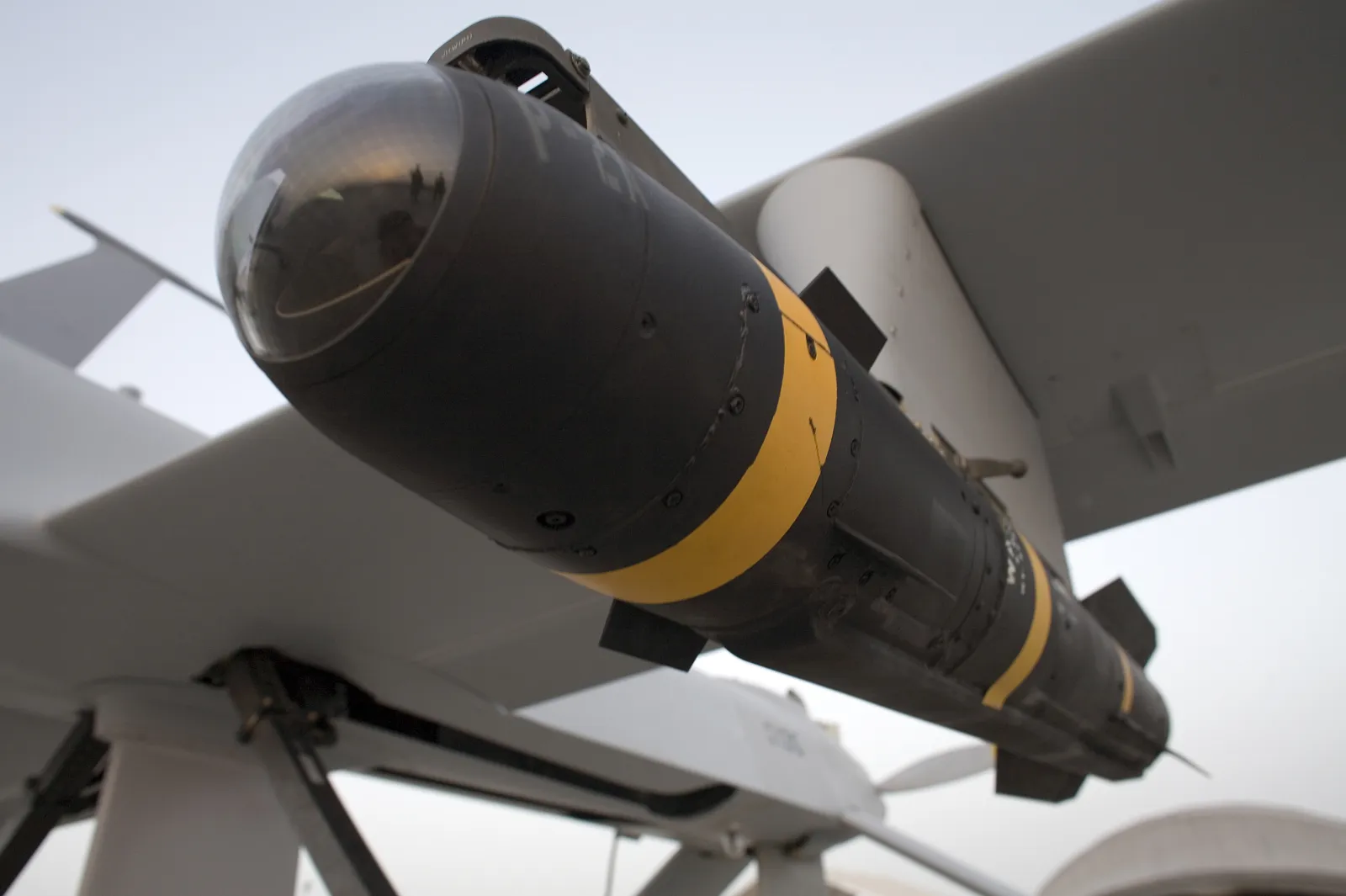
This followed confirmation from CENTCOM on Tuesday that it had launched a Hellfire missile against the Botswana-flagged tanker Lexie sailing toward an Iranian port.
The U.S. said it had conducted "self-defense" strikes on Qeshm Island in the Strait of Hormuz which Tehran has blockaded, upending global energy markets. The Hellfire is a short-range guided missile designed to hit targets accurately from aircraft, drones, ships, or ground launchers.
CENTCOM posted a video of the moment the missile struck the tanker. The command said on X that the ship’s crew had "ignored repeated warnings, failing to comply with directions from U.S. forces multiple times over a 24-hour period."
...
The CENTCOM statement added the U.S. strikes on Qeshm Island were "in response to attempted attacks by Iran across the Middle East," with Tehran claiming it had attacked American bases and helicopters in the region with missiles and drones.
The U.S. said Iran also fired three missiles at Bahrain, all of which broke apart or were intercepted.
'Time To Make a Deal'
In a Truth Social post on Tuesday, President Donald Trump said he had told Iran, "It’s time, one way or another, for you to make a Deal. You’ve been doing this for 47 years, and it cannot be allowed to go on any longer!"
The U.S. also conducted strikes against Iran last week, targeting their one-way attack drones and, following earlier "self-defense" strikes in southern Iran, targeting missile launch sites and Iranian vessels trying to establish mines.
Iran Believes Time Is On Its Side
Rajan Menon, professor emeritus of International Relations at the City College of New York, previously told Newsweek that the window for reaching a deal "is closing rapidly."
"Trump is encountering severe blowback from those who think he’s about to sign a deal on Iran’s terms. He’s therefore signaling to Iran that it could face renewed war if it doesn’t offer better terms," Menon said.
"Iran, for its part, believes that time is on its side given the steep price increases created by a war that the majority of Americans now oppose as well as Trump’s plummeting approval ratings."
"The situation now resembles a game of chicken: each side is racing full speed ahead, hoping that the other will swerve first to avoid a collision," Menon continued. "The result could well be a collision—meaning a return to war. That outcome is not inevitable, but it is becoming much more likely."
Meanwhile, Iran's parliament’s deputy speaker, Ali Nikzad said on Wednesday that negotiations would proceed under the oversight of the Supreme Leader Mojtaba Khamenei who has not been seen in public since he took over. “The red lines considered by the supreme leader are on the agenda," Nikzad said.
Tehran Retaliating Harder
Trita Parsi, executive vice president of the Quincy Institute, a think tank, posted on X that an Iranian source had told him Tehran had "stopped playing the tit-for-tat game. Instead, it's now striking back 'at least 1.5x as hard' for every attack the U.S. against Iran."
Former U.S. Deputy Assistant Secretary of State Len Khodorkovsky told Newsweek last week that the best path to lasting peace "is to empower the Iranian people, who despise the regime."
"Their protests in January, responding to the call from Crown Prince Reza Pahlavi, led to this moment," he said, referring to the exiled son of Iran's last shah who was overthrown in the Islamic Revolution in 1979. Khodorkovsky is a senior adviser to the chairman of the Krach Institute for Tech Diplomacy at Purdue University.
"They won’t accept a deal that empowers their oppressors. President Trump has a historic opportunity to reshape the Middle East by turning an enemy into a friend for generations to come," he added.
View 0 Comments
Submit Correction
View Editorial & AI Guidelines