...


By Amir Daftari and Shane Croucher
0
Share
Newsweek is a Trust Project member
See more of our trusted coverage when you search.Prefer Newsweek on Googleto see more of our trusted coverage when you search.
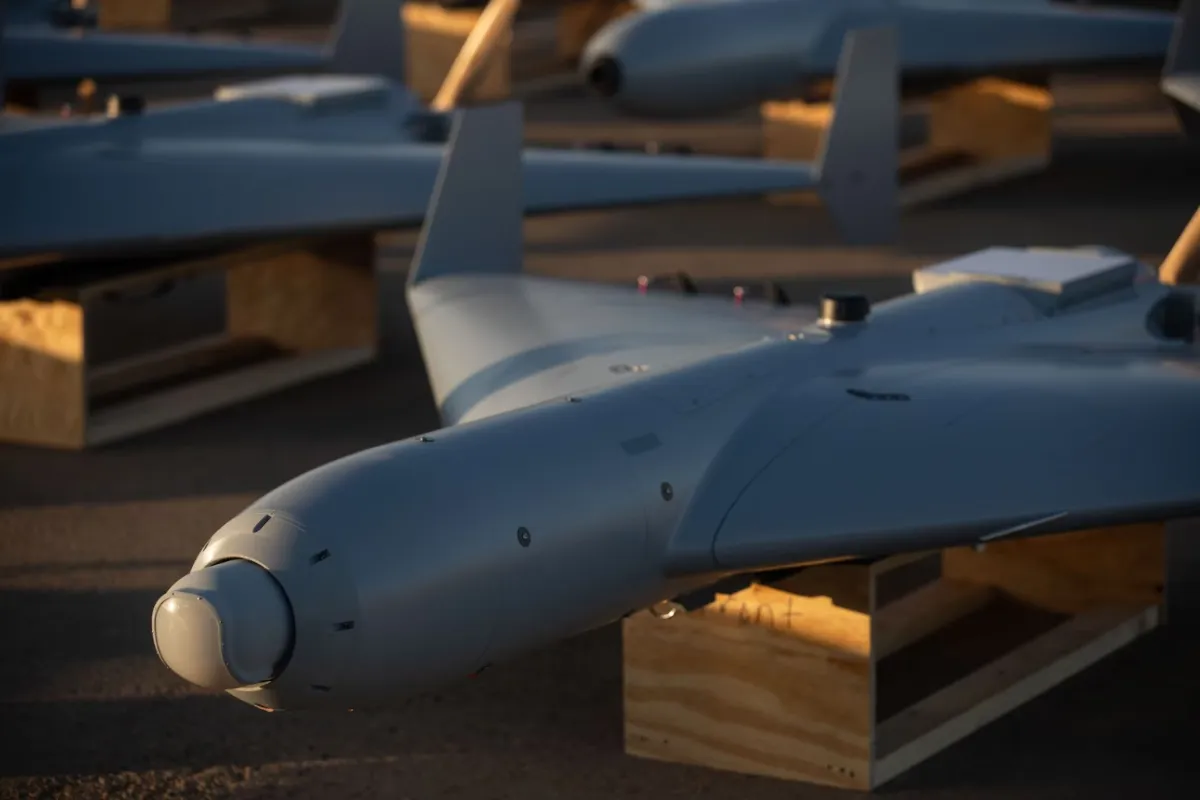
U.S. Central Command (CENTCOM) said it has deployed the U.S. military’s first one-way-attack drone squadron to the Middle East.
The Low-Cost Uncrewed Combat Attack System (LUCAS) drones are intended to mirror Iran's Shahed-136 uncrewed aerial vehicles (UAVs), providing a low-cost, scalable capability for autonomous, swarm-style operations.
Their deployment to the region is a clear signal from the U.S. to Iran, demonstrating Washington’s intent to counter Tehran’s growing drone arsenal and strengthen its operational flexibility across the Middle East.
Read More on World
Newsweek has contacted the Pentagon and Iran's Foreign Ministry for comment.
Why It Matters
The deployment comes in the wake of the 12-Day War between Israel and Iran, which included U.S. strikes on Iranian nuclear facilities and underscored how quickly conflict can flare in the region.
Iran relies heavily on inexpensive drones and missiles, pushing the U.S. to adapt to a security environment where rapid, scalable responses are increasingly important. By fielding LUCAS, the Pentagon adds a low-cost, easily deployable tool that can respond quickly to emerging threats, signaling a shift toward more flexible deterrence in a volatile region.
...
What To Know
On Wednesday, CENTCOM announced the creation of Task Force Scorpion Strike, the first unit equipped with LUCAS drones. The roughly two dozen personnel assigned to the task force will manage operations across the Middle East, marking a critical step in moving the drones from development to active deployment.
The task force operates under U.S. Special Operations Command Central, which oversees special operations missions across the region. CENTCOM’s Rapid Employment Joint Task Force, created earlier this year to fast-track new technologies and experimental systems, helps integrate LUCAS quickly into operational units and ensures the drones are ready for rapid deployment across CENTCOM’s area of responsibility.
LUCAS Copies Iranian Design
Developed by Arizona‑based SpektreWorks in partnership with the U.S. military, LUCAS is modeled on Iran’s Shahed‑136. About 10 feet long with an 8-foot wingspan, the drone represents a practical choice: a proven, low-cost design that can be produced and deployed rapidly in response to evolving threats. Its design also supports autonomous coordination and swarm operations, giving operators a scalable, versatile tool in complex operational environments.
Shahed Drones Beyond Iran
Iran has relied heavily on drones to project power across the Middle East and beyond, using them directly and supplying allied militias in Yemen, Iraq, and Syria to strike infrastructure, military targets, and maritime shipping. These kamikaze-style UAVs give Tehran a persistent, asymmetrical tool to threaten adversaries at minimal cost, while maintaining operational deniability and challenging traditional defenses.

...
Beyond the Middle East, Russia has deployed Shahed-type drones supplied by Iran in Ukraine since late 2022, striking energy infrastructure and artillery positions. Captured wreckage confirms Iranian components, and open-source assessments show Moscow continues to rely on them in 2025. The global reach of Tehran’s drone program shows why Task Force Scorpion Strike and LUCAS are critical for the U.S. to counter low-cost, mass-produced UAV threats.
What People Are Saying
Admiral Brad Cooper, U.S. Central Command commander: “This new task force sets the conditions for using innovation as a deterrent. Equipping our skilled warfighters faster with cutting-edge drone capabilities showcases U.S. military innovation and strength, which deters bad actors.”
What Happens Next
Task Force Scorpion Strike will be testing LUCAS drones and integrating them into U.S. special operations. The deployment supports Secretary of Defense Pete Hegseth’s initiative to “unleash U.S. military drone dominance,” signaling a shift toward scalable UAVs. Tehran may respond by accelerating its drone programs or relying more on proxies.
View 0 Comments
Submit Correction
View Editorial & AI Guidelines