10
Loading video...

By Jordan King
Reporter
0
Share
Newsweek is a Trust Project member
See more of our trusted coverage when you search.Prefer Newsweek on Googleto see more of our trusted coverage when you search.
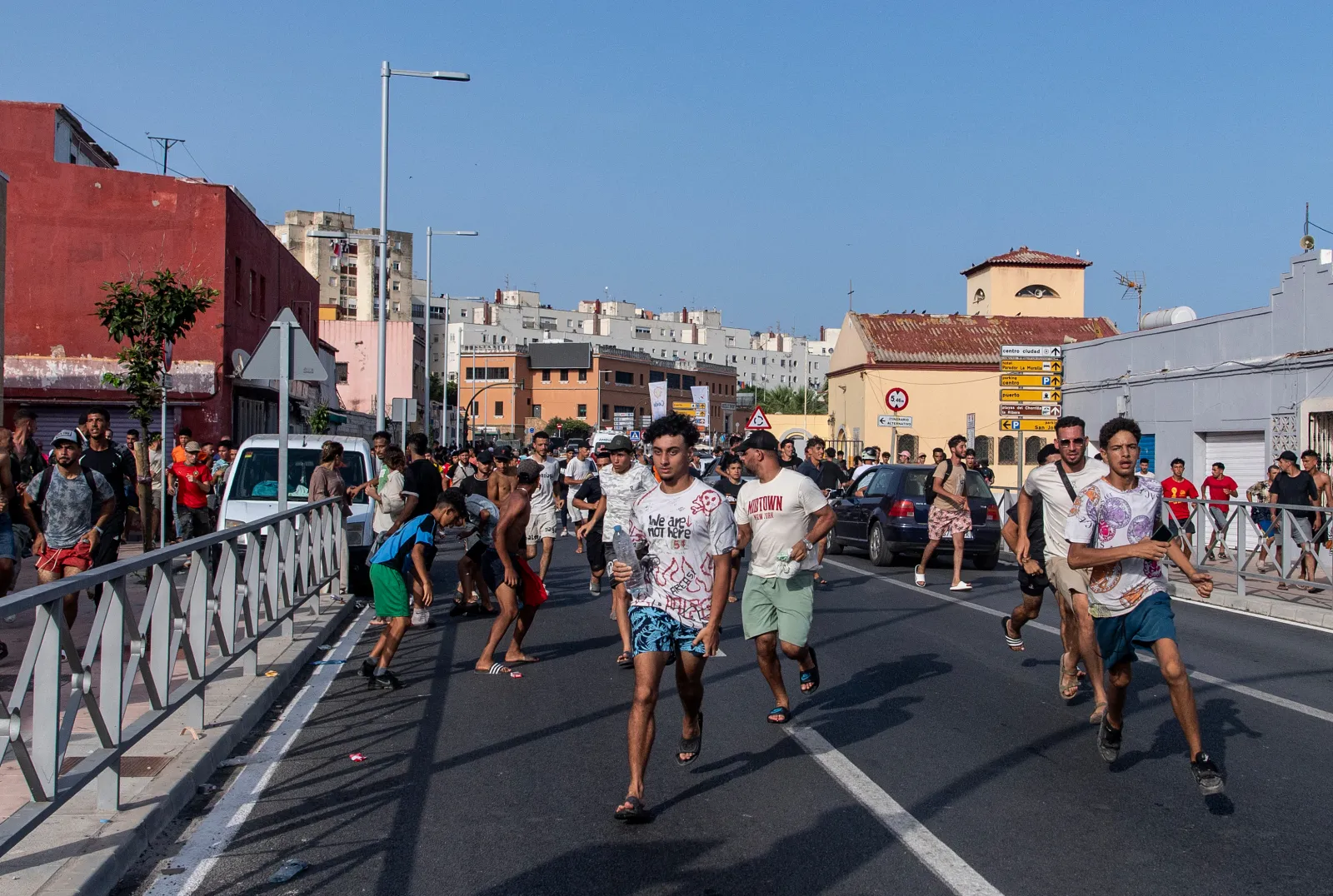
Americans have been told to "reconsider travel" to Ceuta after tens of thousands of migrants crossed into the Spanish enclave in northern Africa on Thursday, triggering a diplomatic crisis and fierce political fallout.
The U.S. State Department said in its Level 3 advisory issued on Saturday that Americans should "reconsider travel" to the area because of "risks posed to their safety and security," after President Donald Trump and other Republicans had seized on the incident to make warnings about America's future if Democrats regain power.
Mainland Spain is under a Level 2 advisory telling Americans to "exercise increased caution due to terrorism and unrest."
Read More on News
Spain’s Interior Ministry reported that as many as 60,000 people had arrived in Ceuta from Morocco within several days, though most later went back. The Spanish government also confirmed on Sunday that 72 people had died, either in the water or amid a crush close to a coastal barrier.
Italy temporarily reinstated border checks on arrivals from Spain, while officials in Finland and Denmark backed calls to consider suspending Spain from the Schengen Area over its handling of the crisis.
Spanish Prime Minister Pedro Sánchez wrote in a letter to European Commission President Ursula von der Leyen that the reactio of some EU partners was "selfish, polarizing and unlawful" fueled by "prejudice, fake news, ignorance or political interest."
Von der Leyen credited Spanish and Moroccan law enforcement with containing the crisis and said "not a single person reached mainland Spain or the rest of the EU."
...
What Sparked the Ceuta Migrant Crisis?
Ceuta is one of two Spanish territories on the coast of North Africa, which have the European Union’s only land borders with the continent. Migrants frequently attempt to reach the enclave by climbing its border fence or swimming from nearby Moroccan towns.
The specific trigger for last week’s sudden surge is disputed, with Spanish officials linking it to people-smuggling networks spreading a misleading interpretation of a recent Supreme Court ruling that migrants arriving by sea could not be summarily returned. But activists in Morocco have pushed back against this narrative, questioning whether tens of thousands of migrants would have known about the ruling.
Sánchez’s opponents argued that Spain’s decision to grant legal status to some undocumented migrants had encouraged the crossings. However, that program applied only to people who arrived before January 1 and had already lived in Spain for at least five months.
Several migrants told The Associated Press (AP) that they were driven by scarce employment opportunities and low wages in Morocco.

...
Madrid deployed soldiers and additional National Police and Civil Guard officers to reinforce the border, clear access to beaches and restore order. Spanish forces used water cannons, tear gas and warning shots as they tried to prevent further crossings, while Moroccan security forces also moved to stop migrants approaching the frontier.
By Sunday, shops had reopened and residents and tourists had returned to Ceuta’s cafes and restaurants, although Civil Guard vessels continued searching the surrounding waters for bodies, according to the AP.
Trump Seizes on Ceuta Crisis
President Donald Trump used the scenes from Ceuta to defend his administration’s border policies and warn voters against returning Democrats to power.
Speaking after a Cabinet meeting at Camp David on Friday, he called the situation in Ceuta a "catastrophe" that "looks like an invasion of a country."
He said the "same thing is going to happen to us if the Republicans don’t get elected. Except worse, much bigger."
Trump also told Fox News: "Remember that picture. That's going to be us in three years if the wrong side gets in."
Similarly, Vice President JD Vance said the images demonstrated the consequences of "mass migration and the radical left-wing globalist policies that have enabled the Invasion of the West."
He shared footage in a post on X and said: "Thank God (Trump) was elected and our country’s border no longer looks like this."
The U.S. State Department also weighed in on Friday, saying in a post on X that it stood with "the people of Spain, and all Europeans" against what it described as an "egregious violation" of sovereignty and human rights. It also blamed the crisis on what it called the Spanish government's "deliberate efforts to enable and facilitate mass illegal migration into Europe."
Spain rejects this argument. The program that has been blamed for the influx is one that came into effect in April, granting an initial one-year residence and work permit, along with access to Spain’s social security and health systems, to certain immigrants living in the country illegally. But it did not grant people Spanish or European citizenship.
Eligibility was limited to applicants who had arrived before January 1 and could demonstrate at least five months of residence, meaning those involved in the latest influx could not benefit from it.
Contact Newsweek editors on this story: Tobias Meyjes and Tony Phillips
View 0 Comments
Submit Correction
View Editorial & AI Guidelines