10
Loading video...

By Ellie Cook
Senior Defense Reporter
0
Share
Newsweek is a Trust Project member
See more of our trusted coverage when you search.Prefer Newsweek on Googleto see more of our trusted coverage when you search.
Three people were killed in the latest U.S. attack on an alleged drug smuggling boat in Caribbean waters on Monday, according to the U.S. military.
It was the latest strike in a U.S. government crackdown on narcotrafficking into the country that has attracted increased international criticism and congressional scrutiny.
More than 150 people have been killed in the Caribbean and eastern Pacific by U.S. attacks since early September, according to figures provided by the Trump administration.
Read More on World
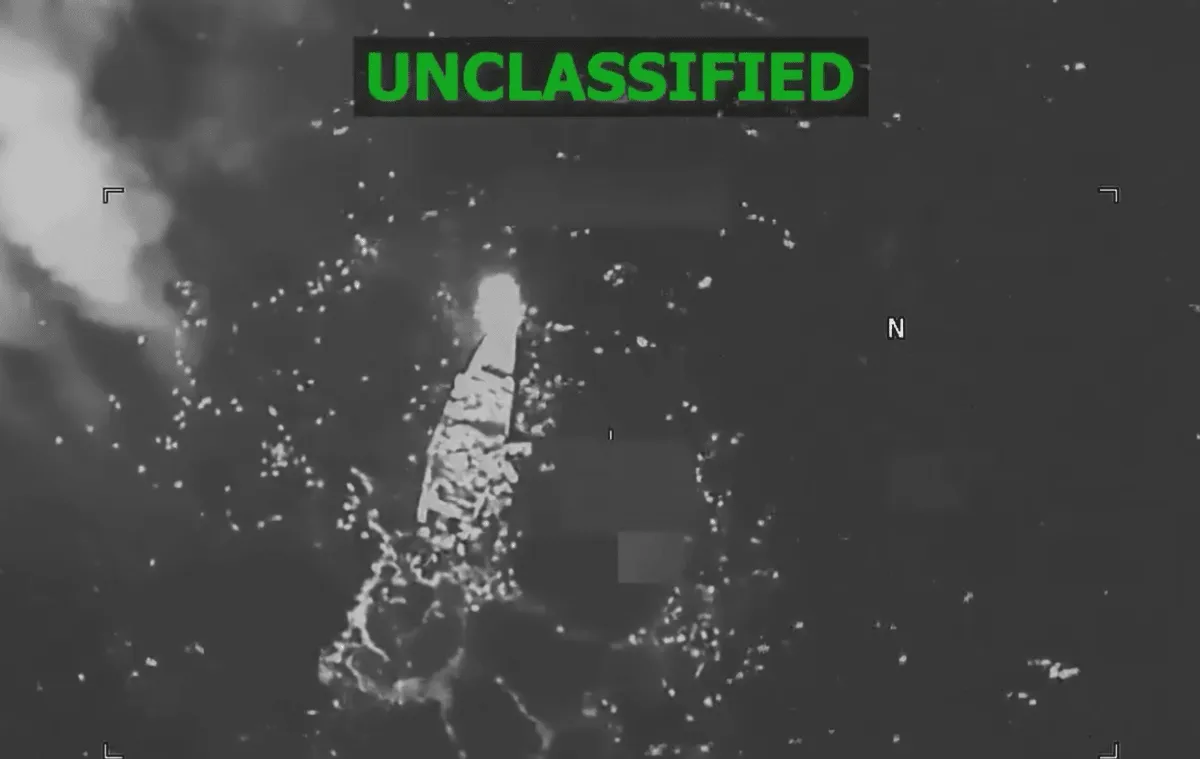
The U.S. Southern Command (SOUTHCOM) described the three people killed on Monday as "male narco-terrorists" traveling along a known trafficking route and said no U.S. military personnel were harmed in the "lethal kinetic strike."
...
The military shared footage bearing an "unclassified label" showing a boat floating in an unspecified area before flames and smoke engulf the vessel. The 20-second clip then shows what remains of the boat.
This is the third U.S. attack on suspected drug vessels within a week. SOUTHCOM said it had killed three people in the eastern Pacific on Friday, four days after strikes on three separate boats killed 11 people. It was one of the deadliest attacks by the U.S. on alleged drug vessels in the last six months.
The U.S. government has said it is in a legal "armed conflict" with drug cartels, insisting the campaign against alleged small drug vessels is necessary to clamp down on drug flows into the country and save American lives.
International experts and some former officials have criticized the strikes as illegal under international law. Lawmakers have looked more closely at the attacks since it emerged U.S. forces killed survivors of the first attack in September with a follow-up strike.
There was a lull in the number of strikes in January after elite U.S. forces swept into the Venezuelan capital, Caracas, and captured then-leader Nicolás Maduro. Along with his wife, Maduro was brought to New York to face narco-terrorism charges.
Earlier this month, a U.S. Marine on the USS Iwo Jima amphibious assault ship in the Caribbean became the first known U.S. casualty in the region since the start of the strikes on suspected drug vessels.
Lance Corporal Chukwuemeka Oforah was declared dead on February 10 after falling overboard three days earlier and being "lost at sea," the Marines said in a statement.
Five U.S. Navy ships and 10 aircraft from different branches of the military were involved in a 72-hour search for Oforah.
View 0 Comments
Submit Correction
View Editorial & AI Guidelines