

By John Feng and Jordan King
0
Share
Newsweek is a Trust Project member
See more of our trusted coverage when you search.Prefer Newsweek on Googleto see more of our trusted coverage when you search.
The United States twice scrambled fighter jets after it detected a Russian intelligence and surveillance plane near Alaska on both Wednesday and Thursday, the North American Aerospace Defense Command (NORAD) said.
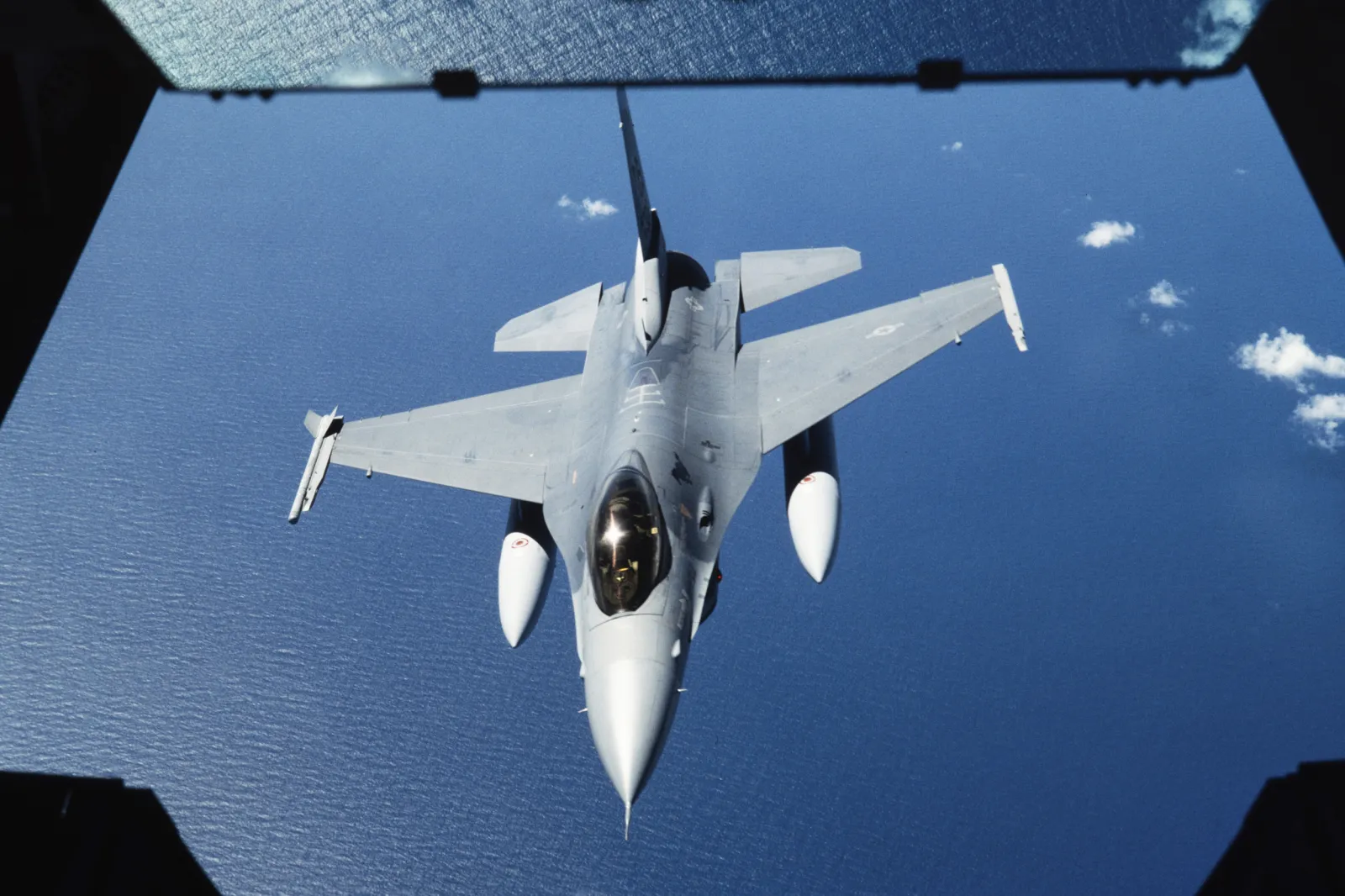
On Wednesday, two F-16s and one KC-135 tanker were launched to identify and monitor a Russian IL-20 COOT plane flying in the Alaskan Air Defense Identification Zone (ADIZ).
The next day, an E-3, two F-16s and one KC-135 tanker were sent to intercept the same type of aircraft.
Read More on News
"This Russian activity in the Alaskan (airspace) occurs regularly and is not seen as a threat," NORAD said about both incidents.
Why It Matters
While Russian aircraft entering the Alaskan ADIZ is not uncommon, the timing and type of aircraft involved have drawn particular attention. These intercepts occurred less than a week after a diplomatic meeting between Trump and Putin, when the war in Ukraine was the central topic. The Russian flights are viewed by U.S. defense officials as routine but underscore continued military posturing near American airspace.
What To Know
"The Russian military aircraft remained in international airspace and did not enter American or Canadian sovereign airspace" on either day, NORAD said.
The Alaskan Air Defense Identification Zone is an international airspace that is used as a buffer for air defense.
An Il-20 plane was intercepted on Wednesday about 25 nautical miles from St. Lawrence Island, a U.S. territory situated just under 50 miles from Russia, a NORAD spokesperson told the Air & Space Forces Magazine. The surveillance aircraft remained within the ADIZ for approximately one hour and 12 minutes.
While the U.S. Air Force frequently monitors Russian Tu-95 bomber flights in the area, the use of an Il-20, equipped for electronic intelligence gathering, is rarer.
It comes after Poland scrambled fighter jets after Russia launched long-range missile strikes on Ukraine on Wednesday night.
A day before that, Japan scrambled fighters to intercept two Russian Tu-95 Bear bombers and two fighters over the Sea of Japan.
...
What People Are Saying
NORAD said in its press release regarding Thursday's incident: "NORAD employs a layered defense network of satellites, ground-based and airborne radars and fighter aircraft to detect and track aircraft and inform appropriate actions. NORAD remains ready to employ a number of response options in defense of North America."
It added: "An ADIZ begins where sovereign airspace ends and is a defined stretch of international airspace that requires the ready identification of all aircraft in the interest of national security."
The Polish military wrote on X on Thursday: "In connection with the activity of long-range aviation of the Russian Federation, conducting strikes on Ukrainian territory—including with the use of hypersonic missiles—aircraft of the Polish Air Force and allied aviation are operating in Polish airspace."
A Japan Joint Staff spokesperon said: "We will continue to monitor Russian military movements in the airspace surrounding Japan with great interest and will take all possible measures to ensure vigilance and surveillance."
What Happens Next
U.S. and allied aircraft will continue to monitor activity in the region. As of now, no changes in U.S. air defense posture have been announced following the intercepts.
View 0 Comments
Submit Correction
View Editorial & AI Guidelines