...


By Ellie Cook and Hugh Cameron
0
Share
Newsweek is a Trust Project member
See more of our trusted coverage when you search.Prefer Newsweek on Googleto see more of our trusted coverage when you search.
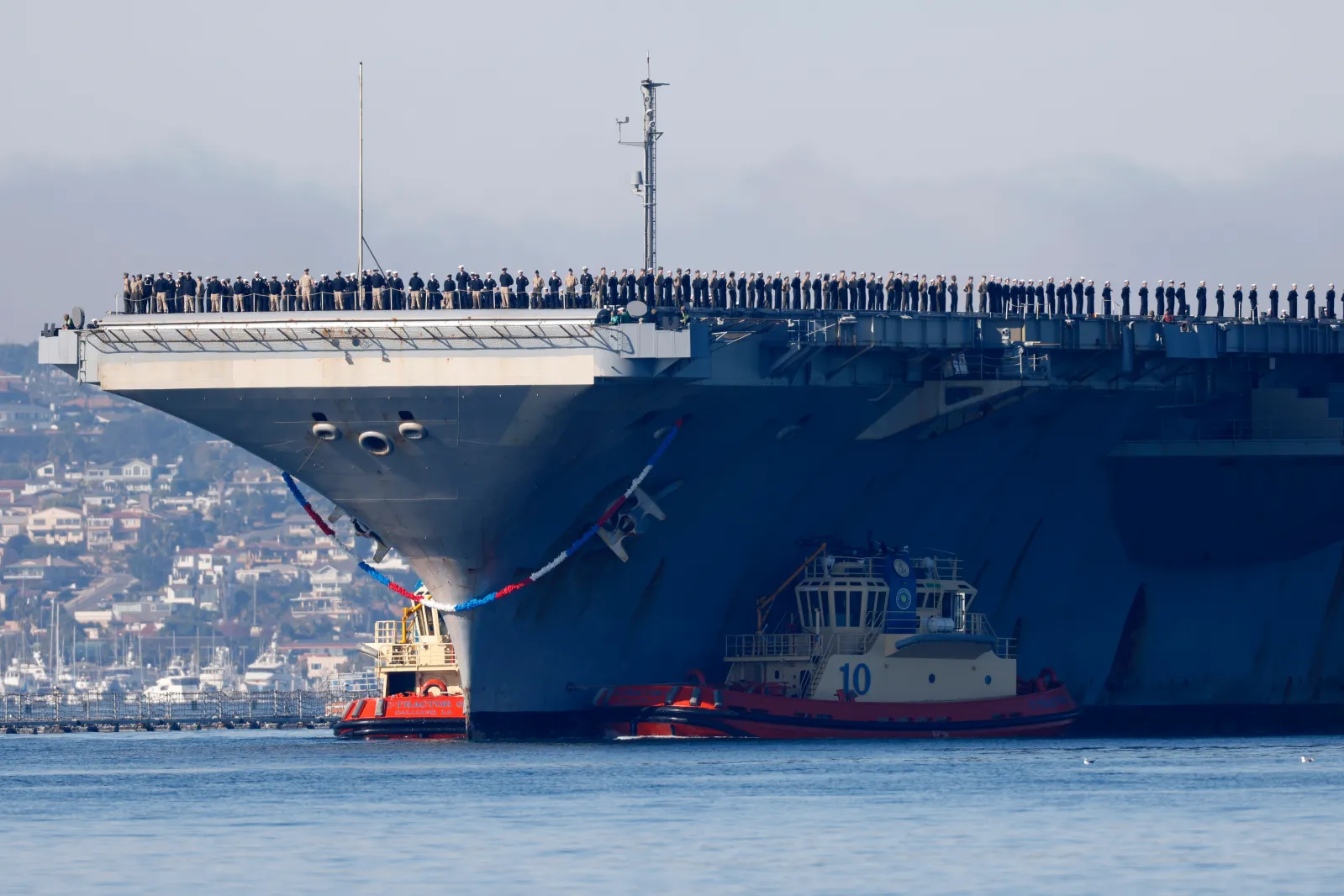
The U.S. military has denied an Iranian media report that said seven U.S. Navy sailors deployed on the USS Abraham Lincoln aircraft carrier had been killed in a brawl onboard the warship.
Iran's semiofficial Tasnim news agency reported on Tuesday that several others had been wounded in a "bloody clash" on the Lincoln, which is deployed in the Middle East as part of the U.S.'s war with Iran.
"This report is false," U.S. Central Command (CENTCOM), which oversees all U.S. forces in the Middle East, said in a statement to Newsweek. "As we have continuously seen, Iran continues to peddle lies and spread falsities."
Read More on World
Relatives and, increasingly, U.S. lawmakers, say the roughly 5,000 U.S. personnel aboard the carrier are overworked, lacking access to basic hygiene supplies and adequate nutrition after more than 200 days continuously at sea.
Family members told specialist outlet the Navy Times that at least two American sailors had attempted to jump overboard from the USS Abraham Lincoln. An unnamed U.S. official told CNN on Thursday that a sailor went overboard from the carrier in July, before being quickly rescued.
CENTCOM said no service members on the carrier had died, but that one sailor fell overboard on August 3. They were "quickly and safely recovered," the military said.
...
Drawn-Out Carrier Deployments
Medical and academic probes indicate that sailors out at sea for long periods of time suffer high levels of stress and often go without adequate health care or assistance to cope.
"Extended Navy deployments can certainly result in an increase in mental health challenges," retired U.S. Navy Vice Admiral Robert Murrett, who is now a professor of practice of public administration and international affairs at Syracuse University, told Newsweek on Thursday.
Most carrier deployments last about six months, although they can be drawn out under certain circumstances. There will typically be port calls throughout this period to refuel and allow crew members to rest.
But the Lincoln has been deployed for just under nine months, with only a brief port call in Guam in December after being sent from San Diego to the Pacific and rerouted to the Middle East.
It was scheduled to return home in May, but its deployment has been repeatedly extended. It is not clear when the Lincoln and its crew will finally arrive back at their home port.
Drawing out already monthslong deployments without clear, compelling reasons can demotivate or frustrate those onboard, cramped into contained quarters, a former U.S. Navy commander told Newsweek. They spoke on the condition of anonymity because of the sensitivity of the subject matter.
Roughly every four to five months into a deployment, sailors can become "anxious" or wound up and will need to make a long port call or have some other distraction, they added.
Reports of Supplies Shortages
On Monday, Democratic Representative Mike Levin of California said sailors on the Lincoln did not have basic hygiene supplies, with access only to moldy showers and broken toilets, and that they often did not have hot water or enough food.
It has been more than 200 days since the Lincoln has been able to restock at a port, but the Navy has supply ships built into its operations to keep the carrier and its crew functioning.
"The ship should not face supply difficulties," Eric Labs, a senior analyst for naval forces and weapons at the Congressional Budget Office, the U.S.'s federal agency for nonpartisan economic analysis, told Newsweek.
Fresh produce is often the most difficult to replenish, added Bryan Clark, an expert in naval operations at the Hudson Institute in Washington, D.C. This can affect morale, he told Newsweek.
"The standard has been for delivery of fresh and appetizing food," said Bradley Martin, a retired U.S. Navy captain now with the RAND think tank. "When that gets missed, the crew definitely notices."
Contact Newsweek editors on this story: Tobias Meyjes and Shakeema Edwards.
View 0 Comments
Submit Correction
View Editorial & AI Guidelines