...

By Theo Burman
Live News Reporter
0
Share
Newsweek is a Trust Project member
See more of our trusted coverage when you search.Prefer Newsweek on Googleto see more of our trusted coverage when you search.
With nuclear tensions rising due to the conflict between Israel and Iran, Newsweek has analyzed maps of what a nuclear war would look like if the U.S. were targeted.
Israel launched a wave of strikes on Iran on Friday morning, targeting nuclear facilities, military sites, and key officials in what it said was the start of an operation named "Operation Rising Lion".
Why It Matters
Israel has struck major Iranian targets, and Iran has retaliated with their own drones. Both Israel and Iran have nuclear capabilities, which means that any escalation in fighting could have disastrous consequences for the international community.
Read More on News
What To Know
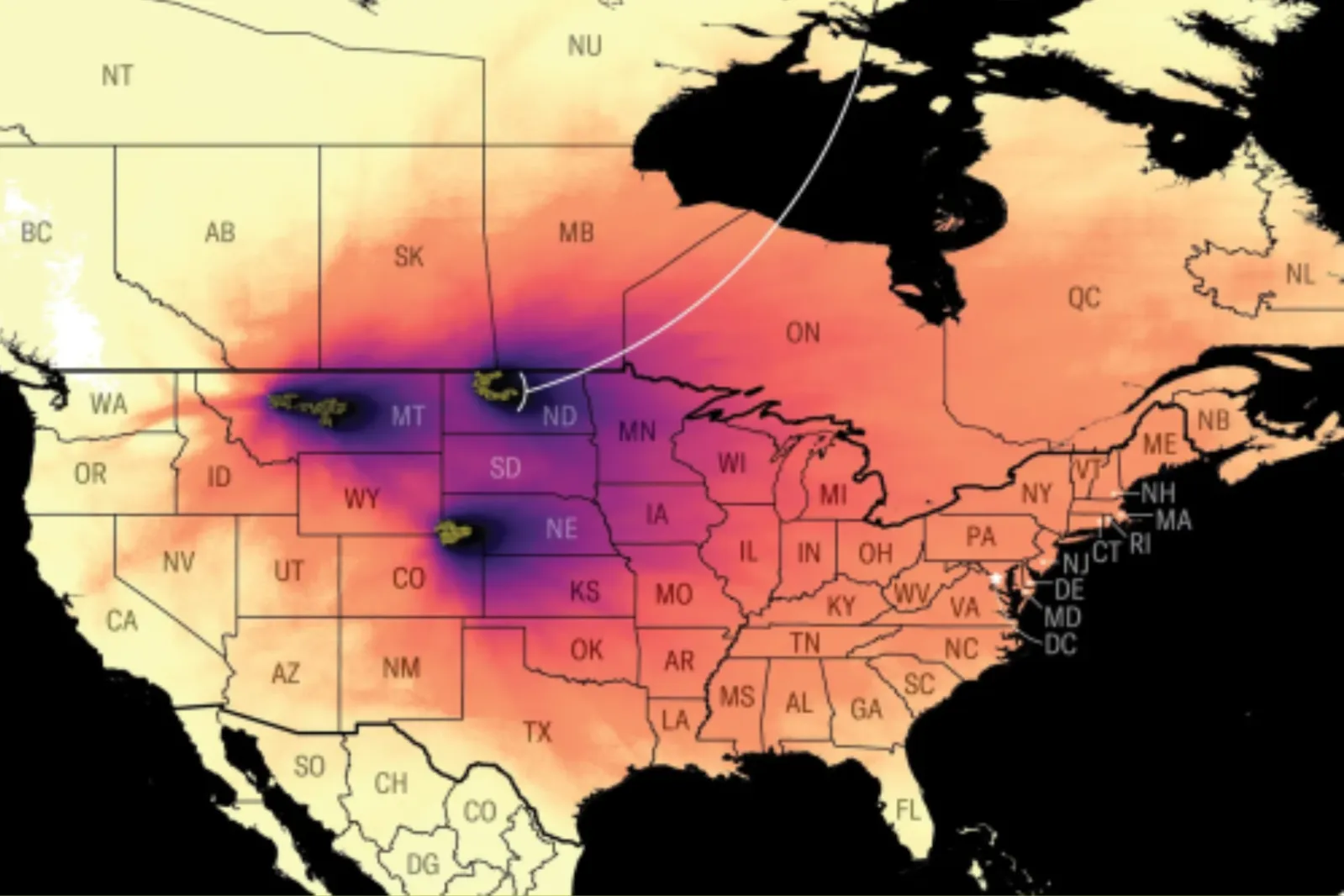
Newsweek has looked at Scientific American's fallout map of a hypothetical nuclear attack on missile silos in Colorado, Wyoming, Nebraska, Montana and North Dakota to see which states would be the least affected and would therefore be the safest places to be during a strike.
In the "average-case scenario," these safest states would be Maine, New Hampshire, Vermont, Massachusetts, Rhode Island, Connecticut, New York, New Jersey, Pennsylvania, Delaware, Maryland, District of Columbia, Virginia, West Virginia, North Carolina, South Carolina, Georgia, Florida, Alabama, Mississippi, Tennessee, Kentucky, Ohio, Indiana and Michigan, which are the furthest away from any strikes and the resulting fallout.
...
Other states that would be less affected include Washington, Oregon, Idaho, Nevada, California, Utah, Arizona, New Mexico, Texas, Arkansas and Illinois, though these areas are all closer to the hypothetical strike zones.
Nebraska, Montana, and North Dakota would be the worst states to be during a strike, as that is where the nuclear silo fields that might be targeted are situated.
Scientific American said that a strike in this area would "annihilate all life in the surrounding regions and contaminate fertile agricultural land for years", while also affecting Minnesota, Iowa and Kansas with high levels of radiation.
What People Are Saying
John Erath, the Senior Policy Director for the Center for Arms Control and Non-Proliferation, told Newsweek: "While those who live near military facilities, ICBM silos in the Midwest or submarine bases along the coasts might bear the most immediate and severe consequences of a nuclear attack, there's no question: ANY nuclear war or weapons detonation would be bad for everyone.
"Nowhere is truly 'safe' from fallout and other consequences like contamination of food and water supplies and prolonged radiation exposure.
"Administrations of both parties have long understood nuclear weapons are only for defense and deterrence, not for starting a nuclear war. We would all do well to remember former President Ronald Reagan's words, recently reaffirmed by President Joe Biden: 'A nuclear war cannot be won and must never be fought.'"
What Happens Next
Iran has launched retaliatory strikes on Israel. Iran has launched similar strikes before, which did not result in an all-out war between the nations.
View 0 Comments
Submit Correction
View Editorial & AI Guidelines