...

By Jenna Sundel
News Reporter
0
Share
Newsweek is a Trust Project member
See more of our trusted coverage when you search.Prefer Newsweek on Googleto see more of our trusted coverage when you search.
A former federal prosecutor said search history "can be very incriminating" in a criminal case, as a Florida sheriff revealed new details about searches made by a man accused of killing two University of South Florida (USF) students from Bangladesh.
The Hillsborough County sheriff also announced on Friday that a body found in Tampa Bay has been identified, using DNA and dental records, as the second victim in the killings.
The announcement is a significant development in a case that gained national attention after the two students, Zamil Limon and Nahida Bristy, went missing last month. Hillsborough County Sheriff Chad Chronister said they were "dedicated students and loyal friends." Chronister also revealed new information about the man charged with two counts of first-degree murder in their killings, Limon's roommate, Hisham Saleh Abugharbieh.
Read More on U.S.
Chronister said content on Abugharbieh’s phone had been erased, but a forensic examination revealed "disturbing" searches in the days before April 16, when Bristy and Limon went missing. The searches included phrases like “Can a knife penetrate a skull?” and “Can a neighbor hear a gunshot?” He said there were also purchases for large heavy-duty black contractor bags, Lysol wipes, duct tape, lighter fluid and a lighter.
"This was calculated. This is what makes this so premeditated," Chronister said.
...
Neama Rahmani, a former federal prosecutor and the president of West Coast Trial Lawyers, told Newsweek that digital evidence is "highly, highly effective."
"People that are innocent don't engage in searches related to covering up a murder or cleaning it up. They don't wipe their phone, right?" Rahmani said. "That's all evidence of consciousness of guilt."
Rahmani said cellphone evidence "has really changed the game and has given law enforcement an advantage" they did not have decades ago.
"Routinely, law enforcement is able to successfully get cellphone data, and it's not often excluded as not having probable cause to do so," Rahmani said.
He said the technology "is not only good, it is deemed reliable and admissible."
Chronister said the investigation into this incident is ongoing, and officials are awaiting information from records and subpoenas that could result in additional charges. He said officials are also working to release both bodies back to the victims' families in Bangladesh.
"What began as a missing person's case ended with the discovery of a monstrous crime," Chronister said. "Our community has been left heartbroken and the victims' families shattered after this tragic loss."
Newsweek reached out to the public defender for the Thirteenth Judicial Circuit for comment.
The sheriff said Bristy's remains were found in a plastic bag by a kayaker whose fishing line got snagged.
"When he went and got closer to remove his fishing line, he sees that a plastic bag has been opened. There's been saltwater in there. He can't tell what it is, but it looks like a human body, so he does the right thing and contacts law enforcement," Chronister said.
Chronister said her body was in an advanced stage of decomposition, so officials were not able to identify her by fingerprint, which is how Limon's body was identified. He said the body was identified as Bristy through DNA and dental work, as well as the clothes she was seen wearing in a video from the last time she was seen on campus.
Who Were Zamil Limon and Nahida Bristy?
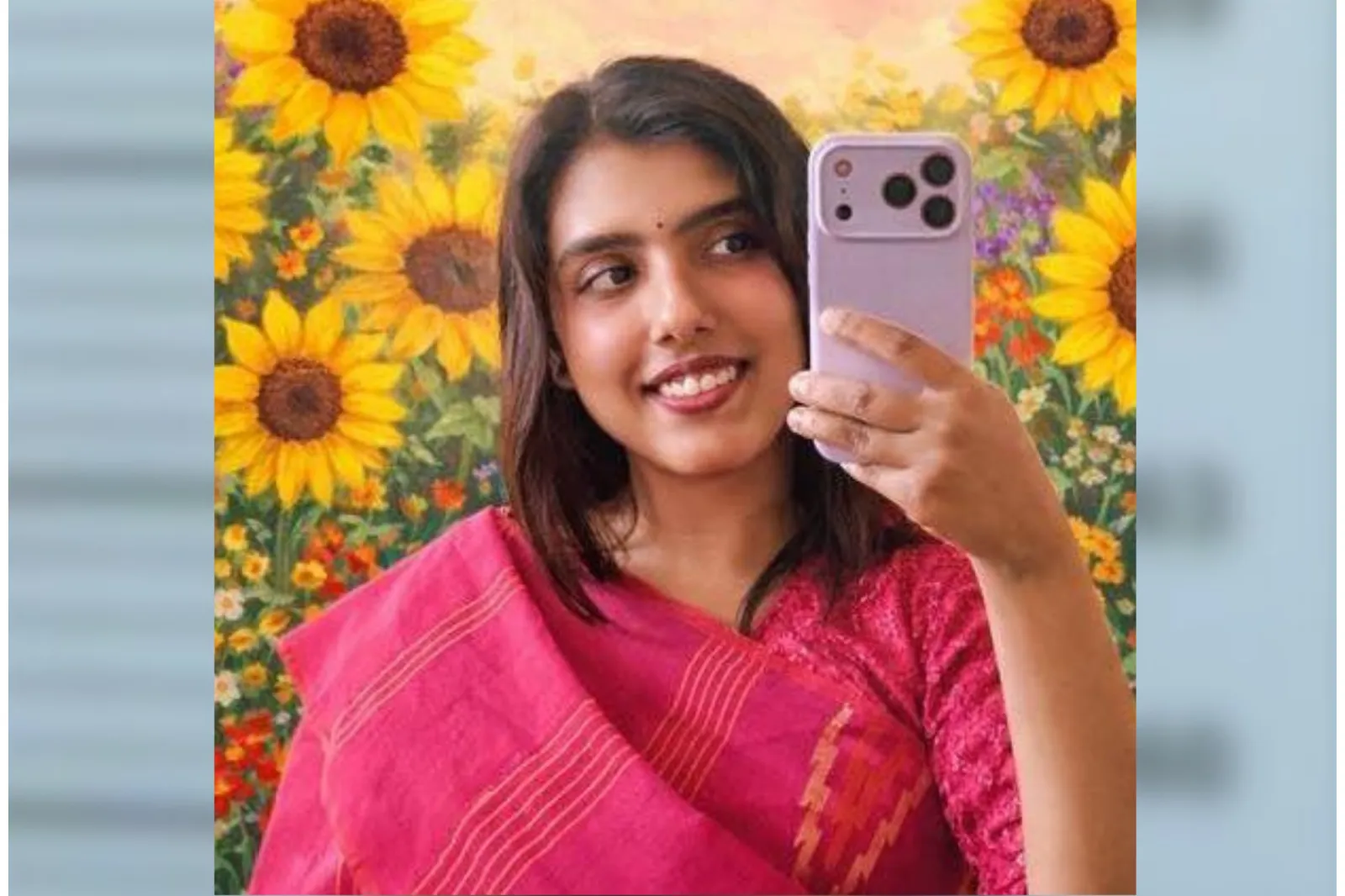
Limon and Bristy, both 27, were last seen on April 16 in the Tampa area, the university's police department said. Zubaer Ahmed, Limon’s younger brother, told WTVT in Tampa that Limon and Bristy were discussing marriage but were focusing on finishing their degrees first.
Limon was studying geography, environmental science and policy. Bristy was studying chemical engineering.
"They were accountable and responsible, which is why when they didn't show up to meetings, stopped answering calls, and missed appointments, their friends immediately knew something was very wrong," Chronister said.
Chronister said Bristy was reported missing on April 17, and university police located video from the last time she was seen on campus on April 16. The sheriff said Zamil was reported missing on April 18. He said law enforcement determined that the cases were "connected" and a "collaborative effort started."
Sheriff Details in Investigation Into Missing Students
Chronister said officials spoke to Limon's two roommates following his disappearance.
"One roommate continues to be elusive. The stories are inconsistent," he said.
The sheriff said the other roommate was "extremely cooperative," and officials determined that he was not involved.
Detectives searched the dumpster after learning that the doormat, pots and pans were missing from Limon's residence, the sheriff said.
"This is where we get the first break in our case. We go out there, dumpster diving, these detectives getting inside of the dumpster and empty the entire contents, and they find Zamil's glasses, his student ID, his wallet and his clothes, which are extremely bloodied at the time," Chronister said.
He said the development led to the case being classified as an "endangered" missing persons case.
Officials then obtained a search warrant for the home, both roommates' phones and their cars. The sheriff said law enforcement used technology to identify the presence of blood in the kitchen, continuing down the hallway and into Abugharbieh's bedroom.
"The technology is so precise and finite that we can see the outline of a human being on the floor next to our suspect's bed where he was curled up in a fetal position," Chronister said.
Chronister said Abugharbieh had a laceration on his left pinky and a deep laceration on the back of his left tricep. The sheriff said Abugharbieh was "unable to explain" where he got the injuries, and officials believe they are "defensive wounds."
Chronister said blood found on the passenger side of Abugharbieh's vehicle was identified as belonging to Bristy. The car's GPS had been wiped, according to the sheriff.
The sheriff said surveillance video showed Abugharbieh exiting his car for a short amount of time on the Howard Frankland Bridge. Limon's body was found in a trash bag on the bridge.
"He had been stabbed several times, which ultimately was the cause of his death. He was bound in front at his hands and at his ankles," Chronister said.
Abugharbieh was taken into custody on April 23 after officials responded to a domestic violence call at a residence just north of USF's campus. Chronister said Abugharbieh had approached his sister with a towel wrapped around him after he got out of the shower, and he was "trying to grind on his sister" and "at one point tries to kiss his sister."
"His sister has difficulty trying to push him away and she is not able to freely leave that confrontation because he's able to overpower her. He batters the family at the same time," Chronister said.
Investigators said officers were able to remove family members to safety before Abugharbieh barricaded himself inside the house and refused to come out. A SWAT team was called to the scene, and Abugharbieh later surrendered peacefully, officials said.
This article includes reporting by The Associated Press.
Do you have a story that Newsweek should be covering? Do you have any questions about this s tory? Contact LiveNews@newsweek.com.
View 0 Comments
Submit Correction
View Editorial & AI Guidelines