10
Loading video...

By Aliss Higham
Reporter
0
Share
Newsweek is a Trust Project member
See more of our trusted coverage when you search.Prefer Newsweek on Googleto see more of our trusted coverage when you search.
The United States Postal Service (USPS) could close thousands of post offices, reduce service levels and raise prices if Congress does not approve legislation to address the agency's financial problems, Postmaster General David Steiner recently warned.
In remarks delivered to the USPS Board of Governors on Friday, Steiner said Congress faces an either-or choice: provide the Postal Service with legislative changes and federal funding to support its public-service obligations or leave USPS to pursue more aggressive measures to reach financial break-even on its own.
"We have peak season coming up, so we would not take any action until after the New Year, but if we can’t get agreement on a legislative package this year, our plans would certainly have to entail changes that will impact service like taking a look at our service levels and closing thousands of unprofitable post offices, as well as raising prices," Steiner said.
Read More on News
His comments come as USPS remains under severe financial pressure despite improving quarterly results, with billions of dollars in annual losses, declining mail volumes and mounting retirement-related obligations straining its cash position. USPS is an independent agency of the executive branch and generally receives no tax dollars for operating expenses, instead relying on the sale of postage, shipping services and other products.
Newsweek has contacted House Speaker Mike Johnson and Senate Majority Leader John Thune for comment via email.
Related Story
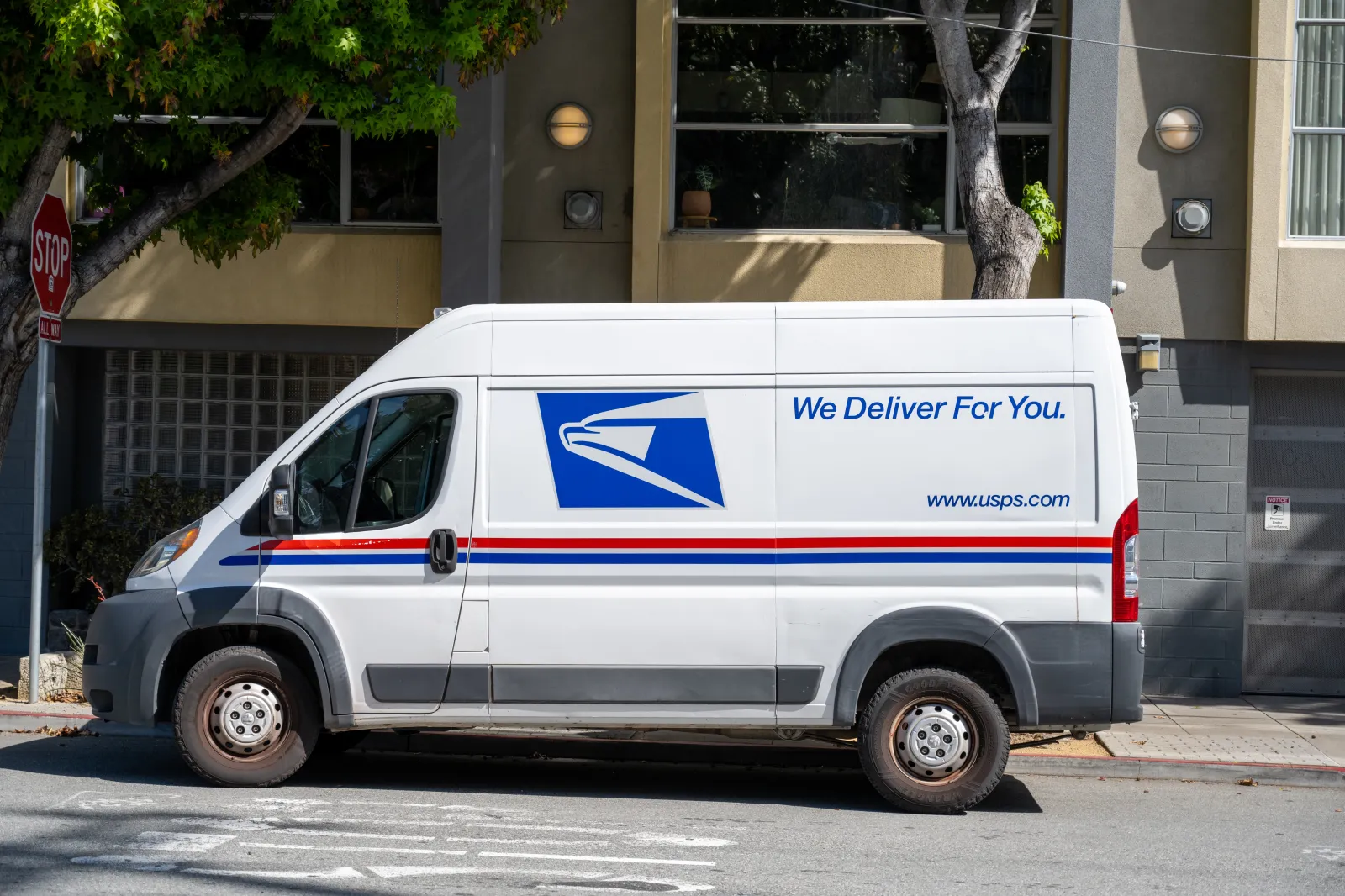
Thousands Rally To Support USPS As Agency Running Out of Cash
Thousands of Post Offices Could Be at Risk
Steiner said the Postal Service's existing model places contradictory demands on the agency.
"The Postal Service is expected to be self-sustaining while, at the same time, fulfilling mandates that are inherently unsustainable and do not cover their costs," he said.
USPS ordinarily has to generate enough revenue to support its nationwide network, while Congress determines many of the public-service requirements and financial rules under which that network operates. Steiner said Congress could choose to preserve those requirements by providing appropriations toward their cost.
Alternatively, lawmakers could leave USPS responsible for making itself financially self-sufficient, in which case the agency would look at reducing service and closing thousands of post offices it considers unprofitable. Steiner's remarks did not identify individual locations that could be affected.
USPS now plans to take a legislative proposal to Congress and the Trump administration that would include an appropriation, changes to its employee benefit arrangements and increased borrowing authority. Steiner argued that federal funding should be viewed as an investment in the wider postal industry rather than simply support for just USPS, instead "as part of a larger ecosystem" that generates $2 trillion in sales and nearly 8 million jobs.
"Given the unfunded mandates we labor under, it is a decision Congress needs to make—whether we adjust service or Congress pays the cost of mandates through policy changes and appropriations," Steiner said.
He also said any appropriation could be revisited over time and potentially reduced as the agency's finances improve.
Last year, Subcommittee on Government Operations Chairman Pete Sessions, a Texas Republican, announced a hearing on USPS's financial future under Steiner. Sessions said members of the subcommittee would assess whether USPS was reliable enough for Congress to allow it to borrow more money from the Treasury Department.
"Americans all over the country rely on the U.S. Postal Service to efficiently deliver packages safely and on time. USPS is rapidly losing money and becoming more unreliable each year and is dire need of a course-correction," Sessions said at the time. "While some progress has been made to improve USPS operations, there is still much more work to be done to reform the agency and make up for the billions it has already lost. The Government Operations Subcommittee remains committed on a bipartisan basis to transform and modernize USPS, and I look forward to hearing from Mr. Steiner on his plans to improve its dependability.”

...
Price Increases May Be Needed
Steiner said higher postage costs are also likely to remain central to USPS's strategy. He said price increases have allowed mail revenue to rise despite declining volumes, with total revenue increasing because of higher prices in 14 of the previous 16 quarters.
Steiner said the agency was seeking authority that would allow it to implement prices increases in January 2027 rather than waiting until July 2027, which could generate between $600 million and $800 million in "desperately needed" cash.
The pressure to raise prices comes even as the agency's most recent quarterly results showed some improvement. USPS reported third-quarter fiscal 2026 operating revenue of $19.9 billion, up 6.1 percent from the same period a year earlier. Its net loss fell from about $3.1 billion to $2.5 billion, while its controllable loss declined from $1.6 billion to roughly $1 billion.
Revenue from shipping and packages rose 7.7 percent despite a 3.4 percent decline in volume, while First-Class Mail revenue increased 4.3 percent even as volume fell 3.5 percent. Marketing Mail performed more strongly, with both revenue and volume increasing.
However, USPS said the better quarter had not resolved what it called a "severe liquidity crisis." Operating expenses reached $22.5 billion during the quarter, up 2 percent, with higher retirement, compensation and transportation costs among the factors contributing to the increase.
Related Story
USPS Proposes Rise in Mail Prices
Financial Losses
The latest results follow years of substantial losses. USPS recorded a $9 billion net loss in fiscal year 2025, although that was an improvement from the $9.5 billion loss recorded a year earlier. Operating revenue increased to $80.5 billion, aided by Ground Advantage growth and price increases, while mail and package volumes continued to decline.
Under the Postal Service's fiscal 2026 financial plan, the agency projected another $8.1 billion net loss for the full year despite forecasting revenue of $83.8 billion. USPS also projected total mail and package volume would fall 6.6 percent from 2025.
View content
https://public.flourish.studio/visualisation/29927312/
Liquidity presents a more immediate concern. USPS entered the fiscal year with $14 billion in total cash and short-term investments but projected that figure could fall to $3.4 billion by year-end if it made approximately $6.3 billion in scheduled retirement-related payments.
USPS has already taken temporary steps to preserve cash. It suspended some employer retirement contributions in April, a step initially expected to conserve around $2.5 billion over the remainder of the fiscal year.
The agency said that those measures only postpone obligations rather than eliminate them. It is asking Congress, among other changes, to increase its $15 billion statutory debt ceiling that has not been changed since 1992, alter pension funding rules and allow greater flexibility over pension investments. Without broader changes, the agency said its financial outlook remains "dire."
Contact Newsweek editors for this story: Ben Kelly and Anthony Murray.
View 0 Comments
Submit Correction
View Editorial & AI Guidelines