...

By Suzanne Blake
Reporter
0
Share
Newsweek is a Trust Project member
See more of our trusted coverage when you search.Prefer Newsweek on Googleto see more of our trusted coverage when you search.
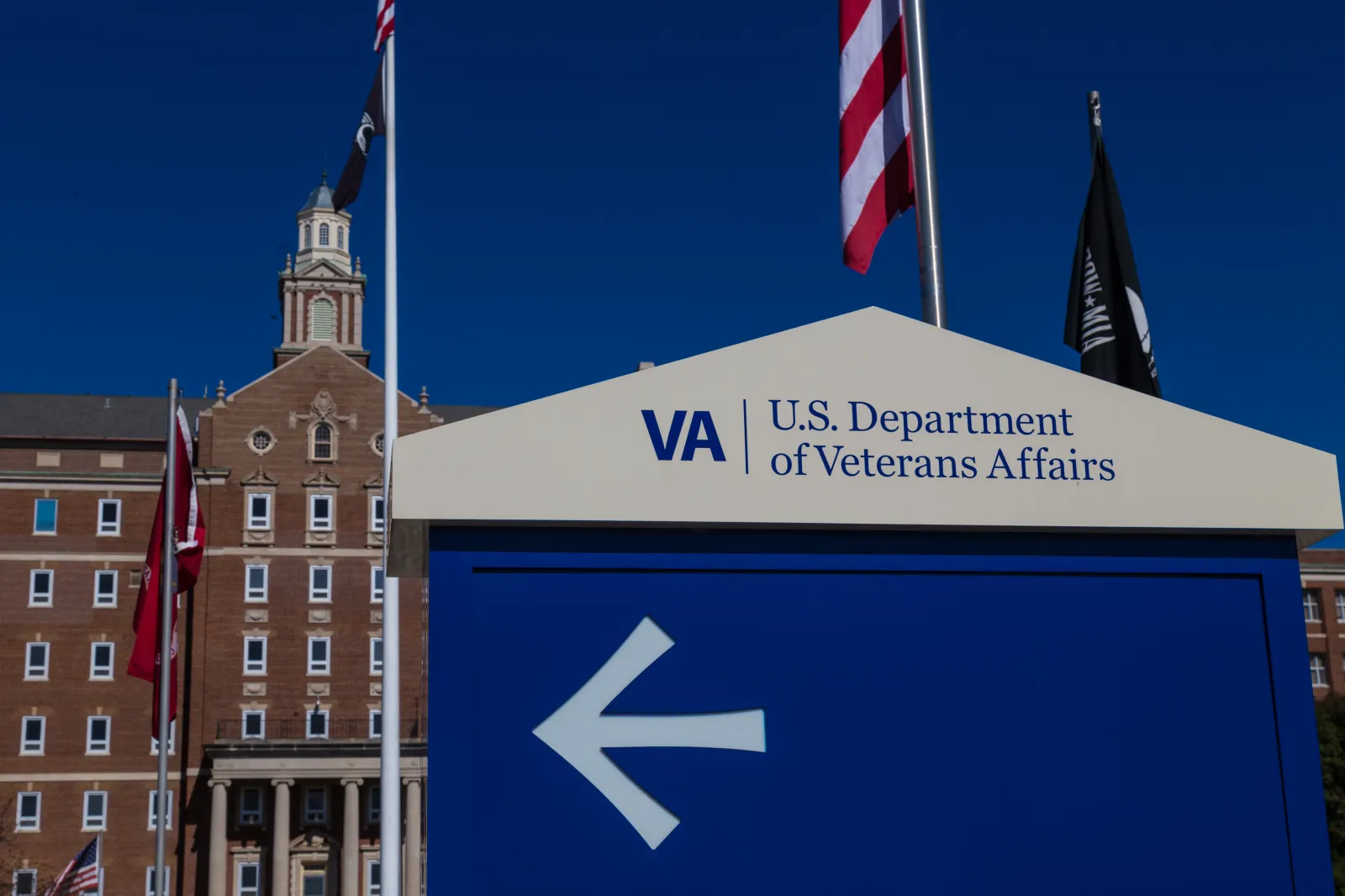
The Department of Veterans Affairs is facing some criticism from housing and civil rights advocates following the announcement of a new partnership with the Department of Justice.
The partnership expands the federal government’s role in appointing legal guardians for some of the nation’s most vulnerable veterans, including those who are homeless or at risk of homelessness.
“Our new partnership with the Justice Department reflects our ongoing commitment to ensuring that every Veteran receives timely, appropriate care, even in complex cases,” VA Secretary Doug Collins said in a statement.
Read More on U.S.
However, the National Homelessness Law Center (NHLC) said in a statement on Wednesday that the plan would “strip homeless veterans of their rights and autonomy.”
Newsweek reached out to the VA and the NHLC for comment.
Why It Matters
Homelessness among veterans remains a persistent national problem.
The most recent count from the Department of Housing and Urban Development estimated that 32,882 veterans were experiencing homelessness on a single night in January 2024.
What To Know
The newly announced agreement allows VA attorneys to be appointed as special assistant U.S. attorneys, giving them authority to initiate or participate in state court guardianship or conservatorship proceedings when veterans are deemed unable to make their own medical decisions and lack family or legal representation.
VA officials say the move is intended to help veterans transition from prolonged hospital stays to appropriate care settings.
“The appointment of a legal guardian or conservator can be a lifeline for Veterans in this situation,” the VA said in its release. “Among other things, a legal guardian or conservator can help Veterans avoid unwarranted continued hospitalization, protect their rights, and promote appropriate transitions of care from VA hospitalization to other forms of VA care or care in the community, if appropriate.”
...
However, homelessness advocates argue the policy could erode veterans’ civil liberties.
Specifically, the National Homelessness Law Center accused the Trump administration of using homeless veterans as “political pawns,” warning that the initiative risks stripping veterans of their rights and autonomy rather than addressing the root causes of homelessness.
“This unprecedented partnership between the Department of Justice and the Department of Veterans Affairs does nothing to address homelessness or to help people access the quality care that all people deserve,” the NHLC said in a statement. “Instead, the Trump Administration is using homeless veterans as their latest political pawn to dehumanize all homeless people while ignoring the real cause of homelessness: the fact that the rent is too high for a growing number of people.”
The group added that “the only real solutions are housing and supportive services.”
The group said the VA-DOJ partnership does nothing to expand rental assistance or supportive services.
But VA officials have said the partnership is narrowly focused on veterans who cannot legally consent to care and who risk being trapped in hospitals because no one is authorized to make decisions on their behalf.
According to the VA, the agreement applies to “hundreds of Veterans who are unable to make their own health care decisions and have no family or legal representation,” including some who are homeless or at risk of homelessness.
Michael Figlioli, the director of the National Veterans Service for the Veterans of Foreign Wars, applauded the move by the VA, according to a New York Times article, saying that "some of our nation’s most vulnerable veterans must be approached through a public health and social services framework.”
Figlioli said guardianships can provide “structured support” for vulnerable veterans, adding that there must be “important considerations regarding veterans’ privacy, potential implementation gaps and the need for sufficient resources.”
Stephen Eide, an expert in homelessness at the Manhattan Institute, also said the change at the VA would lead to positive outcomes.
“More use of involuntary treatment is essential to solving street homelessness,” Eide said, as reported by the New York Times.
But he cautioned that successful implementation could be challenging, since it requires coordinated efforts among police officers, social workers, clinicians and lawyers, often employed by different levels of government. “It’s hard to change big systems,” he said.
“These types of programs are a two-edged sword. On the one side, this memorandum gives vulnerable veterans quicker and easier access to legal counsel acting as guardians or conservators. When this responsibility is upheld with legal vigor and without political bias, the veteran would have their rights upheld and could see far better outcomes than what may have occurred otherwise,” Drew Powers, the founder of Illinois-based Powers Financial Group, told Newsweek.
“On the other side, the number one issue with handing over control to another is always the risk of abuse. If these DOJ-appointed attorneys act with a political bias instead of in the best interest of the veteran, then we might see worse outcomes for this vulnerable population.”
Homelessness among veterans has declined more than 50 percent since 2009, although tens of thousands of veterans still lack stable housing across the country.
The VA has cited significant recent progress as evidence that its overall approach to veteran homelessness is working. In November, the department announced it had permanently housed 51,936 homeless veterans in fiscal year 2025, the highest number in seven years.
That effort includes the VA’s “Getting Veterans Off the Street” initiative, launched last year, which involved outreach events across every VA health care system to locate unsheltered veterans and connect them with housing and health care. According to the VA, the initiative helped move more than 25,000 unsheltered veterans into interim or permanent housing.
What People Are Saying
Attorney General Pam Bondi said in a statement: “The Department of Justice is proud to partner with the Department of Veterans Affairs to support our nation’s brave Veterans by ensuring that they have the best legal resources available when it comes to making medical decisions and receiving timely care. We owe our Veterans a debt we can never fully repay — but we can give them the support they deserve.”
Alex Beene, a financial literacy instructor for the University of Tennessee at Martin, told Newsweek: “The concern many have over this change is that while guardianship can be used as a beneficial way of getting a veteran more care, it is also one of the most restrictive legal tools available. Once a guardian or conservator is appointed to a veteran, that person can gain major authority over a veteran’s medical, housing, and even financial decisions in some situations.”
What Happens Next
For now, the VA-DOJ agreement is moving forward, even as the NHLC suggested that its real‑world impact will depend heavily on how the guardianship powers are used.
“This is all going to come down to oversight and accountability,” Powers said. “Will these government appointed attorneys supersede the VA programs and not-for-profit organizations that already support these veterans? Will the veteran have an opportunity to choose their guardian?”
Update 03/12/2026 12:31 p.m. EST: The headline was adjusted and additional information was added.
Update 03/11/2026 4:07 p.m. EST: This article has been updated with additional commentary from the National Veterans Service for the Veterans of Foreign Wars and Manhattan Institute.
In a polarized era, the center is dismissed as bland. At Newsweek, ours is different: The Courageous Center—it's not "both sides," it's sharp, challenging and alive with ideas. We follow facts, not factions. If that sounds like the kind of journalism you want to see thrive, we need you.
When you become a Newsweek Member, you support a mission to keep the center strong and vibrant. Members enjoy: Ad-free browsing, exclusive content and editor conversations. Help keep the center courageous. Join today.


View 0 Comments
Submit Correction
View Editorial & AI Guidelines