...
0
Share
Newsweek is a Trust Project member
See more of our trusted coverage when you search.Prefer Newsweek on Googleto see more of our trusted coverage when you search.
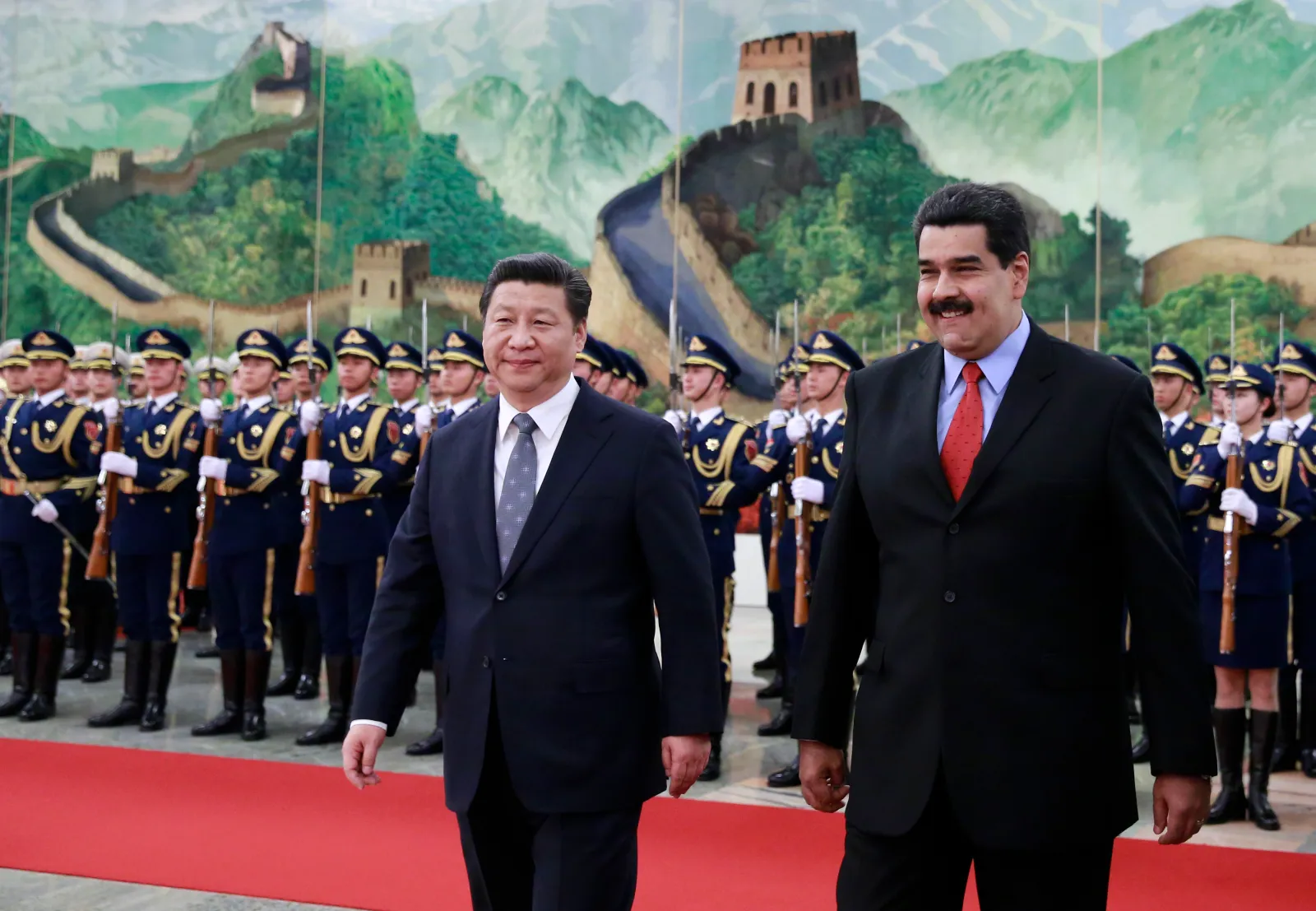
Chinese President Xi Jinping and Russian President Vladimir Putin have voiced support for Venezuelan ally President Nicolás Maduro amid escalating tensions with the United States.
Why It Matters
The backing of diplomatic heavyweights China and Russia comes as tensions continue to spiral, with the administration of Donald Trump appearing to weigh military action against the South American country.
Read More
Trump has accused Maduro’s government of supporting "narco-terrorism." Maduro has dismissed these claims, saying they are a pretext for regime change in the oil-rich nation, which has long been a vocal opponent of Washington's moves in the region.
Newsweek reached out to the White House and the Venezuelan Embassy in China via emailed requests for comment.
What To Know
During an episode of Maduro’s weekly television program, Con Maduro, interviewer Miguel Pérez Pirela presented the president with letters of solidarity on the occasion of his birthday Sunday.
According to Pirela, who presented the letters, Putin expressed "unwavering solidarity with the friendly people of Venezuela." Putin wrote, "I am certain that under his leadership, the Bolivarian Republic of Venezuela will overcome all trials with dignity and defend its legitimate interests in these turbulent times."
...
Xi’s letter was reportedly even more strongly worded. "China reiterates its categorical rejection of external forces interfering in Venezuela’s internal affairs under any pretext and will continue to firmly support, as always, Venezuela in safeguarding its sovereignty, national security, national dignity, and stability."
It is unclear whether Venezuela came up during a phone call between Trump and Xi Sunday. According to a readout from China’s Foreign Ministry, the two leaders praised recent improvements in bilateral ties after meeting in South Korea earlier this month.
Russia and China have maintained close ties with Maduro, whom opposition parties and international observers say stole the 2018 election. The United States and a number of other governments have recognized Maduro’s opponent as Venezuela’s legitimate leader.
President Donald Trump in recent months surged U.S. military power into the Caribbean, including nuclear-powered supercarrier the USS Gerald Ford. The administration has also drawn criticism for carrying out strikes against 21 separate boats in international waters, claiming—without providing evidence—their crews were engaging in drug trafficking.
What People Are Saying
Maduro, on "Con Maduro": "I thank everyone who stands with Venezuela in an authentic and courageous way. I appreciate your good wishes, because they are also the expression of a growing, fervent love that exists in the world for Venezuela."
A White House spokesperson, in a memo shared with Newsweek: "[U.S.] efforts have been unsuccessful in stemming the tide of these ever increasingly addictive and lethal drugs [..]
"In response, based upon the cumulative effects of these hostile acts against the citizens and interests of United States and friendly foreign nations, the President determined that the United States is in a non-international armed conflict with these designated terrorist organizations. The President directed the Department of War to conduct operations against them pursuant to the law of armed conflict."
What Happens Next
Trump has not ruled out the use of force against Venezuela. On Monday, the State Department designated Maduro as the head of the so-called "Cartel de los Soles," a term analysts say refers loosely to corrupt officials rather than a formal criminal organization. The move allows the U.S. to impose additional sanctions on the regime.
Still, Axios cited administration officials as saying Trump plans to speak directly with Maduro, suggesting he may be seeking a diplomatic off-ramp. Maduro has also said he is willing to hold face-to-face discussions with Trump administration representatives.
Update 11/27/2025, 2:25 p.m. ET: This article has been updated with additional information.
View 0 Comments
Submit Correction
View Editorial & AI Guidelines