10
Loading video...

By Isabel van Brugen
News Reporter
0
Share
Newsweek is a Trust Project member
See more of our trusted coverage when you search.Prefer Newsweek on Googleto see more of our trusted coverage when you search.
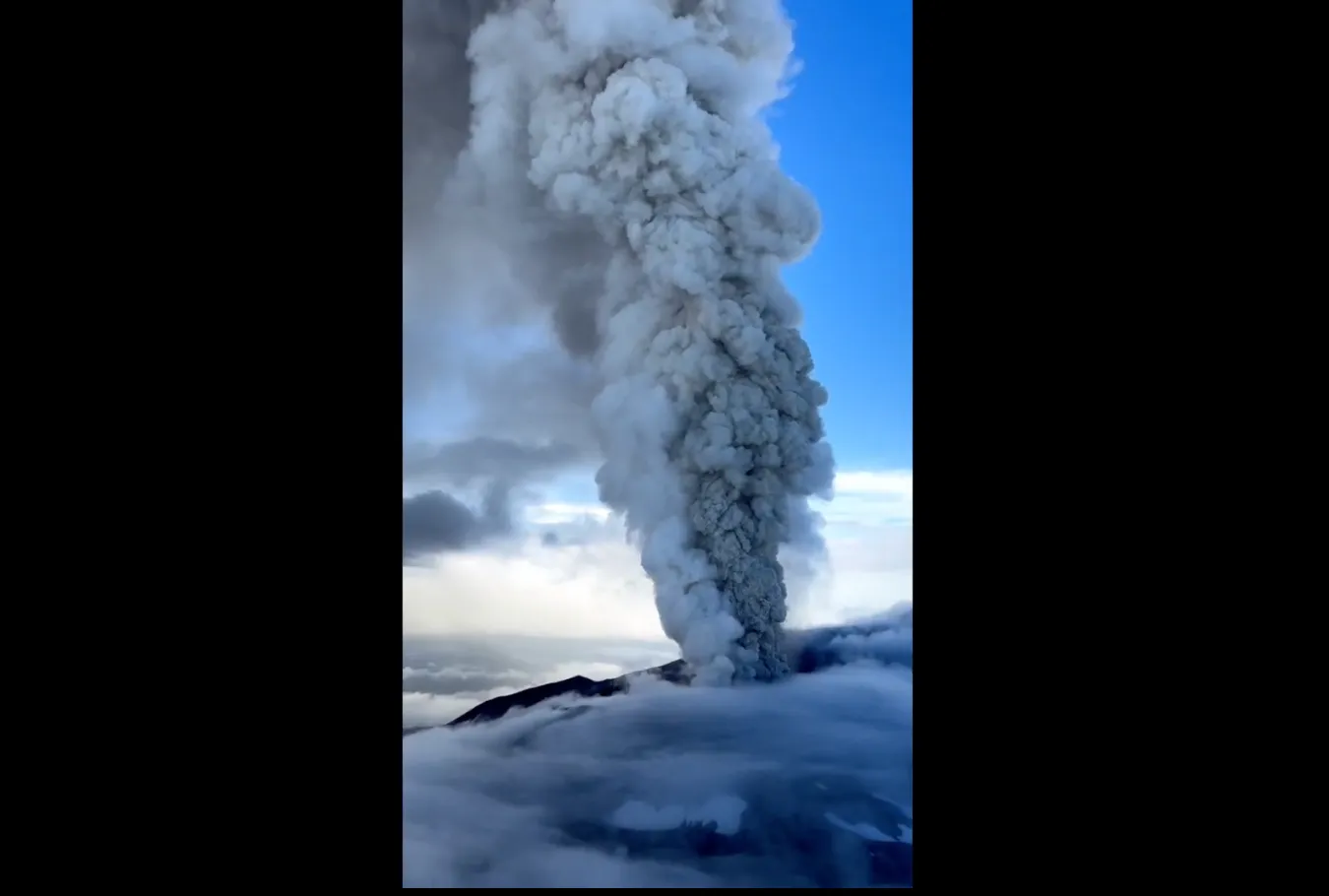
Video footage captured the dramatic eruption of Russia's Krasheninnikov volcano, which erupted for the first time in approximately 600 years on the remote Kamchatka Peninsula in the country's far east.
The eruption produced a plume of ash which rose to a height of 6 kilometers (3.7 miles), drawing the attention of scientists and aviation authorities worldwide.
Why It Matters
The eruption of Krasheninnikov, dormant for centuries, came just days after a powerful 8.8-magnitude earthquake struck the region, the sixth-strongest ever recorded. The eruption highlights the importance of monitoring Russia's volcanically active Kamchatka Peninsula, one of the world's most seismically dynamic zones.
Read More on World
The same earthquake is believed to have triggered the eruption of Klyuchevskoy, Kamchatka's most active volcano, which began on Wednesday.
What To Know
...
Spectacular aerial footage captured plumes of ash and gas towering above the Krasheninnikov volcano, which stands at 1,856 meters.
The eruption began around 6 a.m. local time on Sunday, according to officials from the Kronotsky State Nature Reserve, where the volcano is located. In response, the Kamchatka branch of Russia's Ministry for Emergency Services issued an orange aviation alert, indicating increased risk to aircraft from volcanic ash.
While no ashfall was recorded in populated areas, minor deposits were observed in the remote Kronotsky-Bogachevskaya tundra. Reserve staff and researchers in the vicinity were safely evacuated, and no injuries were reported.
Authorities confirmed that nearby communities and infrastructure were not threatened. Given the surrounding terrain, largely comprising volcanic barrens and lava fields, the risk of wildfire remains low, and no life-threatening impacts have been identified.
Kronotsky Reserve personnel are continuing to monitor the volcano with photo and video surveillance and are collecting ash samples for laboratory analysis. Scientists in the region remain on high alert for signs of further seismic or volcanic activity.
The Kamchatka Peninsula is one of Earth's most active volcanic and seismic zones, home to about 300 volcanoes, of which 29 are currently active.
On Monday, Russia's Emergencies Ministry reported that the volcano had again produced an ash plume which rose to a height of nearly 4,000 meters.
What People Are Saying
Olga Girina, head of the Kamchatka Volcanic Eruption Response Team, cited by Kremlin newswire RIA, per Reuters: "This is the first historical eruption of the Krasheninnikov volcano in 600 years."
Kamchatka's Ministry of Emergency Situations said in a post on Telegram: "The plume is spreading eastward from the volcano toward the Pacific Ocean. There are no populated areas along its path, and no ashfall has been recorded in inhabited localities."
Nikolai Solovyov, head of the security service at Kronotsky State Nature Reserve, said: "At 6 a.m. I received a message about the beginning of the Krasheninnikov eruption from the security service and scientific department of the Kronotsky Reserve, who were conducting research in the area of the volcano.
"Then they reported an increase in the eruption: an increase in the height of the ash column from the crater, the appearance of steam and gas jets from cracks on the slopes of the volcano. At this point, all the reserve employees have left the area around the erupting volcano."
Vsevolod Yakovlev, acting director of Kronotsky State Nature Reserve, said: "Of course, a volcanic eruption is a bright and interesting event, first of all for scientists. But let me remind you that Krasheninnikov is one of the eight active volcanoes of the Kronotsky Nature Reserve. Therefore, its eruption is not something out of the ordinary for a region with high volcanic activity."
What Happens Next
Kamchatka authorities remain on alert, with aviation warnings and additional monitoring still in effect.
View 0 Comments
Submit Correction
View Editorial & AI Guidelines