...

By Eileen Falkenberg-Hull
Senior Editor, Autos, Travel and Lifestyle
0
Share
Newsweek is a Trust Project member
See more of our trusted coverage when you search.Prefer Newsweek on Googleto see more of our trusted coverage when you search.
In a move that was three years in the making, on Thursday Rivian revealed that it has been developing an advanced, self-improving, end-to-end artificial intelligence system for its autonomy platform that can be scaled from first-generation Rivian R1 products to the R2 and R3 models of tomorrow, and beyond.
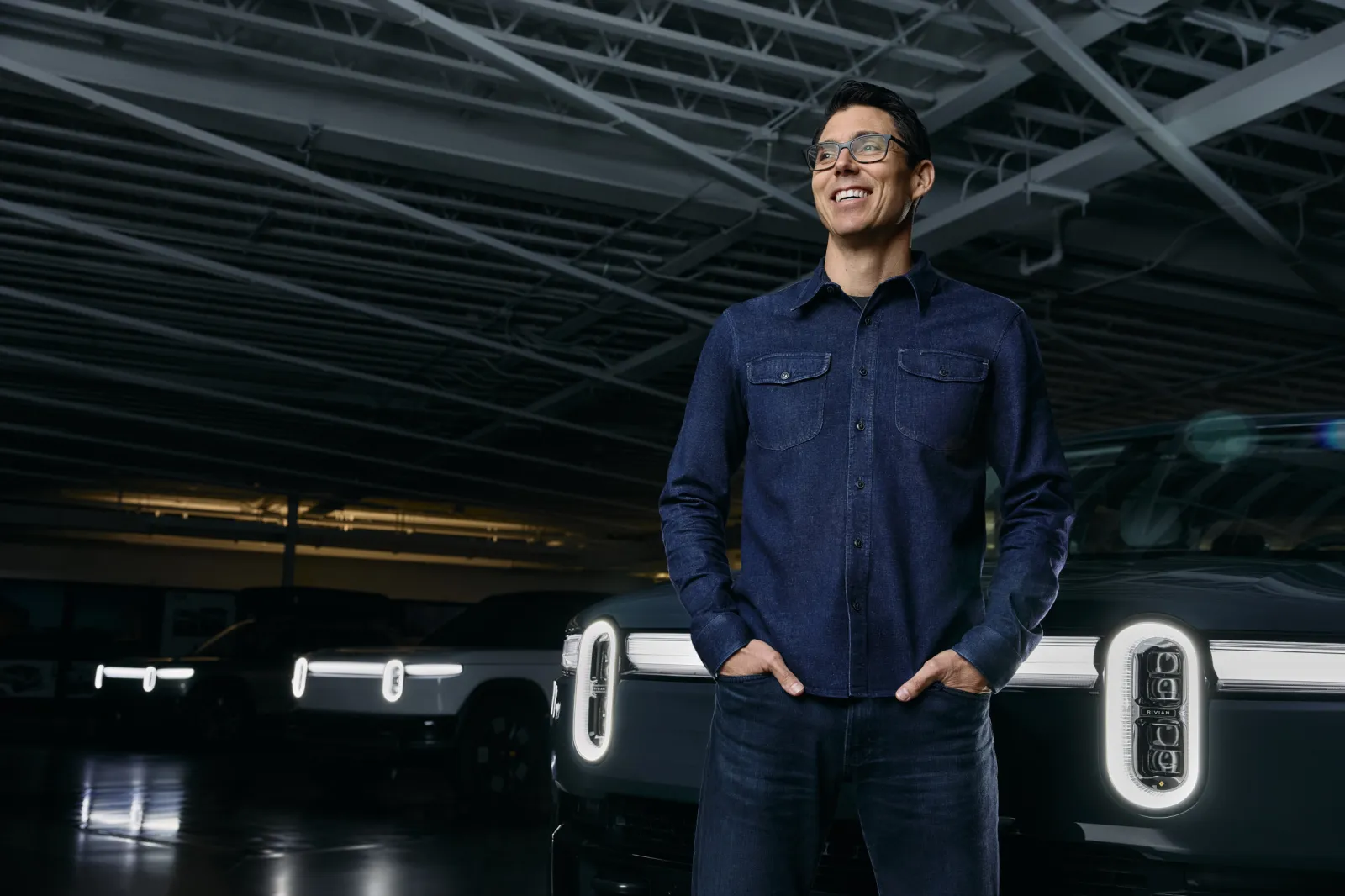
“Today was an incredibly exciting day for us. It was the result of years of time to come together, working on developing hardware platforms, our perception platform, building a large foundation model to control how the vehicles are operated,” Rivian CEO RJ Scaringe told Newsweek.
...
Read More on Autos
The development was done in stealth and not leaked ahead of a scheduled press conference, meaning Thursday was the first time the public heard about Rivian’s plans for point-to-point, hands-free driving developed specifically for personal use.
Notably, the company doubled-down on its commitment to autonomous vehicle technology via the expanded use of lidar, a sensing method that provides three-dimensional spatial data.
Rather than use the technology to create fleets of driverless so-called robotaxis, Rivian is committed to making the technology friendly for personal vehicle owners, with Scaringe explaining that a driverless Rivian could pick up its owner from the airport and then ferry them home.
Expanded hands-free driving capability based on current capability and equipment is the next step for Rivian. That will begin rolling out in R1T truck and R1S SUV models that are already in owners’ hands via an over-the-air update in a few weeks.
Further advanced hands-free driving technology will come to Rivian R2 models that are scheduled to go into production at the end of 2026. Less technologically advanced R2s that are more in line with the capabilities of R1 products, will be first off the line early next year.
The new R2’s advanced technology will make the vehicle capable of being driven without hands on the steering wheel, on over 3.5 million miles of roads in North America, a number that accounts for nearly all marked roads in the U.S. and Canada.
The tech is not part of Rivian’s $5.8 billion technology deal with Volkswagen Group, Scaringe explained saying, “The Volkswagen deal is only for the zonal control and the real-time operating systems along with the infotainment platform, and not the UI, none of the AI that's embedded into UI - that's Rivian, in the same way the self-driving platforms developed, are not part of the joint venture. Now, could those become part of a separate deal with Volkswagen? Perhaps, but that's not what's in our current deal with Volkswagen.”
While Thursday’s news marks a significant jump forward for the automaker, Scaringe merely sees it as another milestone in the company’s high-tech timeline. “This is no means the end,” the CEO he said. “We're continuing to drive forward.”
View 0 Comments
Submit Correction
View Editorial & AI Guidelines