...

By Steve Mollman
News Editor
0
Share
Newsweek is a Trust Project member
See more of our trusted coverage when you search.Prefer Newsweek on Googleto see more of our trusted coverage when you search.
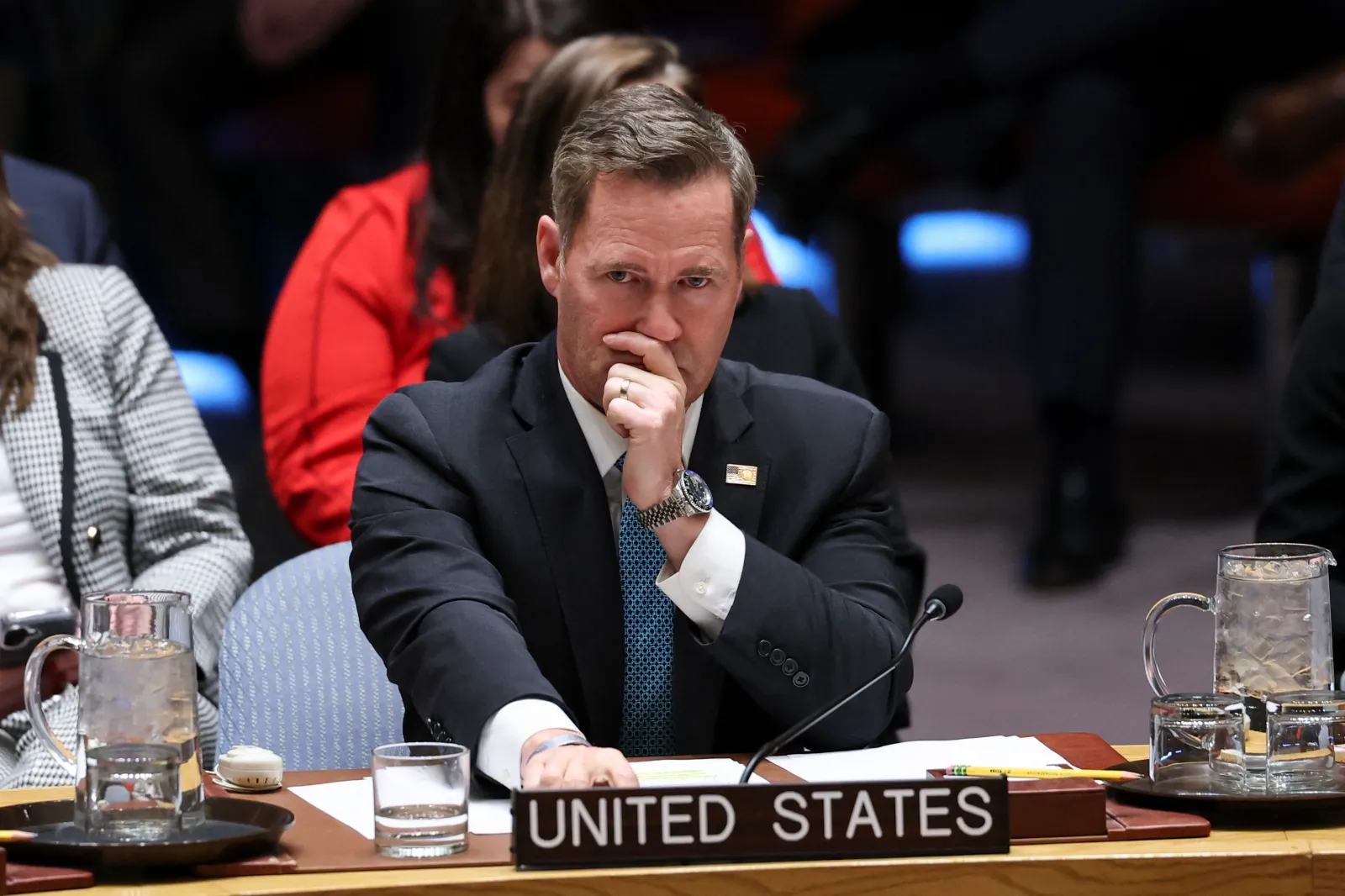
U.S. ambassador to the United Nations (U.N.) Mike Waltz on Sunday forcefully rejected accusations that potential U.S. strikes on Iranian infrastructure would constitute war crimes, defending the targeting of facilities he said are integral to Iran’s military and war economy.
Speaking on NBC News' Meet the Press, Waltz said criticism from Democratic lawmakers, parts of the media, and international voices was “irresponsible,” arguing such strikes are consistent with long‑standing laws of armed conflict.
Waltz pointed specifically to Iranian power plants, bridges, and other infrastructure, saying they are legitimate military targets if they are used to move weapons or support Iran’s armed forces. He accused Tehran of deliberately blurring the line between civilian and military assets, alleging the regime hides weapons and military hardware in residential areas, schools, and hospitals—actions he said themselves amount to war crimes under international law.
Read More on News
Why It Matters
The comments came as President Donald Trump has warned Iran the United States could escalate its response if negotiations over Tehran’s nuclear program fail and a U.S.–Iran ceasefire expires later this week. Asked whether targeting infrastructure would endanger civilians, Waltz insisted U.S. forces would operate within strict rules of engagement, emphasizing Iran’s Islamic Revolutionary Guard Corps (IRGC) controls a significant share of the country’s economy and uses civilian systems to power its military operations. He reiterated Iran “cannot and will not ever have a nuclear weapon.”
Waltz’s remarks underscore the administration’s willingness to defend a more aggressive military posture as pressure on Iran intensifies, even amid growing international concern about civilian harm and legality. By directly confronting war‑crimes allegations, the ambassador signaled the White House is preparing to justify potential strikes not only militarily, but legally and diplomatically, as it seeks to force Iran back to the negotiating table on U.S. terms.
...
What To Know
Amid Iran's decision to reverse course on reopening the Strait of Hormuz and targeting vessels, Trump wrote in a Truth Social post on Sunday that Iran violated the fragile ceasefire between the two countries and pledged to attack Iranian power plants and bridges if Tehran doesn't sign a deal to end the war, warning, "NO MORE MR. NICE GUY!"
The president added: "We’re offering a very fair and reasonable DEAL, and I hope they take it because, if they don’t, the United States is going to knock out every single Power Plant, and every single Bridge, in Iran."
Deliberate attacks on civilian infrastructure are broadly prohibited under the Geneva Conventions and the U.N. Charter, which bar targeting sites "indispensable to the survival of the civilian population."
Meanwhile, the Pentagon's own Law of War Manual states that persons, objects, and locations that are not military objectives "may not be made the object of attack."
Earlier this month, more than 100 international law experts signed an open letter calling the opening U.S. attacks on Iran a "clear violation of the United Nations Charter" and warning that subsequent strikes "raise serious concerns about violations of international humanitarian law, including potential war crimes."
U.N. spokesman Stephane Dujarric previously told reporters any attack on civilian infrastructure is "a violation of international law and a very clear one," adding that whether specific strikes constitute war crimes would ultimately be for a court to decide.
Michael Schmitt, a professor emeritus at the U.S. Naval War College and an international law professor at the University of Reading in Britain, told the Associated Press earlier this month a power facility can be attacked under the laws of armed conflict if it provides electricity to a military base in addition to civilians. However, he added the strike must not “cause disproportionate harm to the civilian population, and you’ve done everything to minimize that harm.”
Trump previously said he was "not at all" concerned about war crimes accusations, suggesting Iranians themselves want the U.S. to follow through because it could lead to the end of their current leadership.
White House press secretary Karoline Leavitt has said U.S. forces and Trump's administration "will always act within the confines of the law," adding that the president will "move forward unabated."
During his interview appearance on Meet the Press on Sunday, Waltz told host Kristen Welker the president "is prepared to escalate to de-escalate this conflict, as he should be."
He added: "But I just want to get ahead of this other ridiculous and frankly irresponsible narrative that this would somehow constitute a, quote, 'war crime' that we’ve heard from Democratic politicians, the media, and others in the international community. That is wrong. It’s irresponsible. And we have a long history of taking down bridges, power plants, and other infrastructure that is powering Iran’s military."
Waltz said Tehran has "a long history of conflating civilian and military assets including hiding weapons caches...rockets and military hardware in schools, hospitals, and other civilian neighborhood, which is a war crime on Iran’s part."
What Happens Next
On Sunday, Trump said U.S. negotiators will head to Pakistan for another round of talks with Iran on Monday as the ceasefire is set to expire on Wednesday.
Update 4/19/26, 1:57 p.m. ET: This article has been updated with additional information.
Update 4/19/26, 12:57 p.m. ET: This article has been updated with additional information.
View 0 Comments
Submit Correction
View Editorial & AI Guidelines