10
Loading video...

By Jordan King
Reporter
0
Share
Newsweek is a Trust Project member
See more of our trusted coverage when you search.Prefer Newsweek on Googleto see more of our trusted coverage when you search.
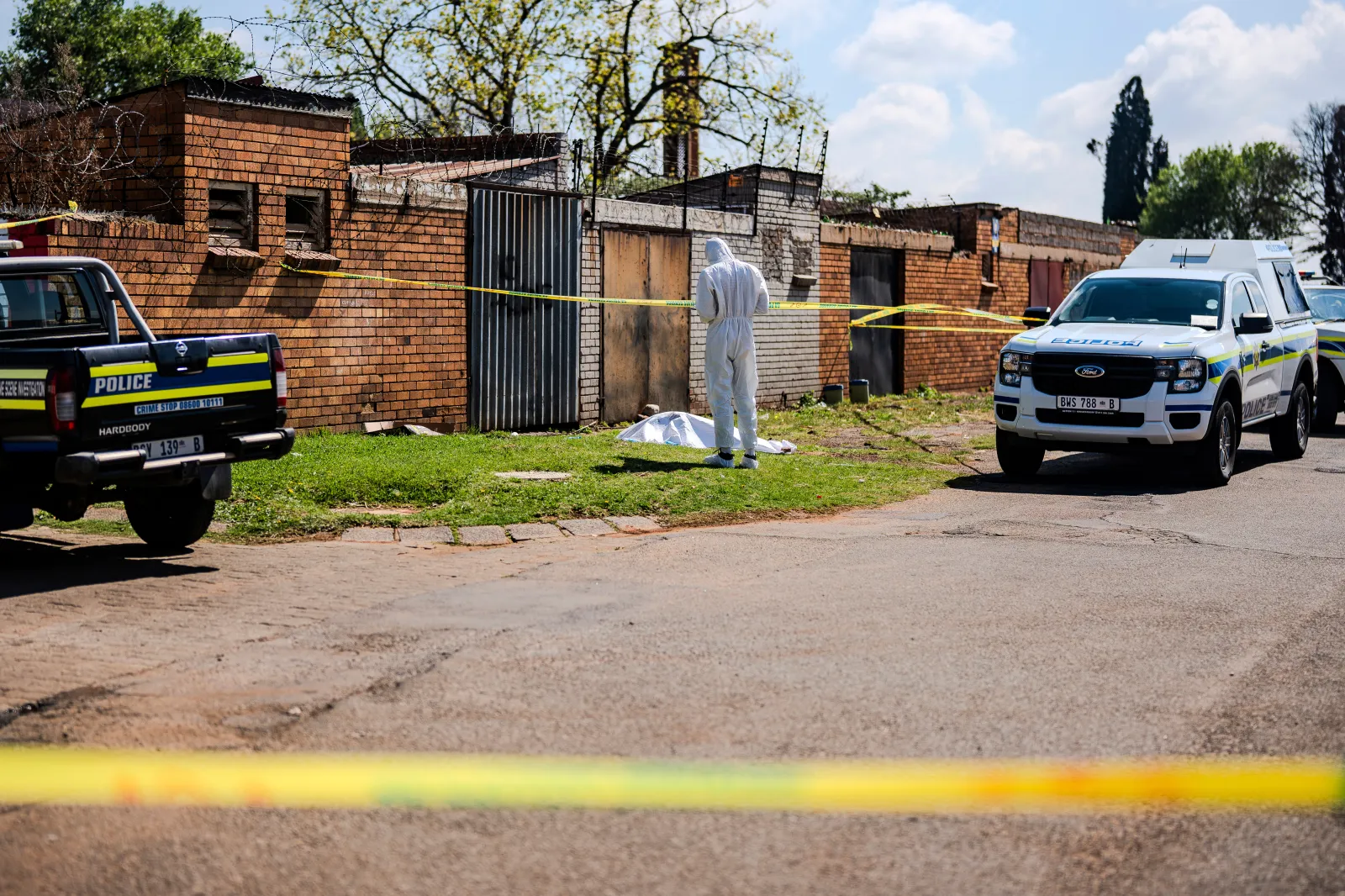
The bodies of eight women have been discovered near an international airport in South Africa, fueling fears that the deaths may be the work of a serial killer.
The South African Police Service (SAPS) warned in a statement on Monday that women in the area should not “walk or run alone, particularly in isolated areas.” It added that women should “avoid secluded spaces, remain vigilant and, where possible, travel or exercise in groups.”
It came after four dead women were discovered across Ekurhuleni, a metropolitan area east of the city of Johannesburg that includes O.R. Tambo International Airport - the region’s main international gateway. The women “were found half-naked and with visible bruising,” police said.
Read More on News
Since then, four more bodies have been uncovered in the area, bringing the total to eight.
...
Police spokesperson Athlenda Mathe said investigators have not “at this stage” concluded the “deaths are linked to a serial killer,” but she added that “the similarities are sufficiently concerning for the police to issue a public warning and intensify investigations.”
Only two of the women have been publicly identified: Elizabeth “Tsontso” Moselakgomo, 38, and Itumeleng Kekana, 32. Police said forensic work to identify the other six remained underway, according to the South African outlet Eyewitness News.
Moselakgomo disappeared after leaving her Rhodesfield home for a run on September 9. Her body was found on September 12 and identified by her family two days later. Kekana, the mother of a 14-year-old daughter, was reported missing on July 17 before her body was discovered with multiple stab wounds near Great North Road in Pomona on August 3—Mathe confirmed that her death was included in the wider investigation.
South Africa has long struggled with high levels of gender-based violence—a crisis the government classified as a national disaster in 2025.
But the discovery of eight bodies in one metropolitan area over just two months has drawn international attention. South African President Cyril Ramaphosa has ordered police to prioritize the investigations.
Newsweek contacted SAPS and the U.S. State Department on Wednesday for comment.
Eight Women Dead: The Cases Under Investigation
Police are investigating five deaths in Kempton Park, two in Olifantsfontein and one in KwaThema. Authorities have not established that all eight cases are connected or that a single perpetrator was responsible.
July 15 — Kempton Park
The body of an unidentified 37-year-old woman was found naked and restrained with cable ties in an open field near the R21 highway. Police arrested a suspect two days later, the South African newspaper the Daily Maverick reported.
August 3 — Pomona, Kempton Park
Itumeleng Kekana, 32, was found near Great North Road after her family spent more than two weeks searching for her. Kekana, who had been missing since July 17, was partially clothed and had suffered multiple stab wounds, local outlet, the Kempton Express, reported. SAPS later added her death to the wider Ekurhuleni investigation.
August 24 — Kempton Park
The body of an unidentified 32-year-old woman was discovered partially clothed near the R21 highway. Police have released few other details about this case.
September 7 — Clayville, Olifantsfontein
A woman believed to be in her late 20s was found in a river near the Mall of Thembisa, wearing only underwear. Police initially omitted the case from their tally but added it after reviewing records from surrounding police stations, according to a police briefing reported by The South African.
September 10 — Kempton Park
An unidentified woman’s body was found near the intersection of Voortrekker Road and the R21 highway. She was naked and in an advanced state of decomposition, Daily Maverick reported.
September 12 — Rhodesfield, Kempton Park
Elizabeth “Tsontso” Moselakgomo, 38, was found partially clothed and bruised on York Street, behind a hotel near O.R. Tambo International Airport. Moselakgomo had disappeared after leaving home for a run on September 9, and her family formally identified her body on September 14.
September 14 — Olifantsfontein
A passerby found an unidentified woman’s partially clothed body on Porcelain Avenue. The victim had visible bruising, and police said they believed her body had been dumped there, Daily Maverick reported.
September 15 — KwaThema, Springs
The body of an unidentified woman believed to be in her 30s was found beside a road behind Club 69. She was naked and in an advanced state of decomposition, eNCA reported.
Why the Cases Have Raised Serial Killer Fears
Although police have not determined that the deaths are connected or the work of a serial killer, South African media have echoed widespread fears on social media about a possible serial offender—based largely on the number of cases, their concentration within a relatively small area, the short period in which they occurred and apparent similarities among the victims and disposal sites.
Dr. Gérard Labuschagne, who led the South African Police Service’s Investigative Psychology Section for 14 years, said the cases should be approached as a potential serial-murder investigation until the evidence indicates otherwise.
“Due to the relatively close geographic proximity and time frame of the murders and the similar victimology, it makes sense to treat this as a serial until information to the contrary comes to light,” Labuschagne told Inside Politics, a Johannesburg-based South African news outlet.
The police response also reflects the possibility that some of the deaths are connected. SAPS assembled a multidisciplinary team that includes murder detectives and members of its Investigative Psychology Unit, while officers began reviewing older cases from surrounding stations to determine whether other deaths should be added to the inquiry, according to an official police statement.
Authorities have nevertheless emphasized that a serial killer has not been confirmed. One man is in custody in connection with the first killing recorded in July, but police have not linked him to the other deaths. Investigators are considering whether the cases involve one offender, multiple perpetrators or unrelated crimes.
South Africa’s Gender-Based Violence Crisis
The deaths have intensified scrutiny of South Africa’s long-running struggle with gender-based violence. More than 35 percent of South African women aged 18 and older have experienced physical or sexual violence during their lifetimes, according to the country’s first national gender-based violence study, conducted by the Human Sciences Research Council.
The figures are even starker for lethal violence. A national femicide study found that 60 percent of women murdered in 2020-21 were killed by an intimate partner, while 1 in 6 women killed showed evidence of sexual violence. Fewer than 1 in 5 intimate-partner femicide cases resulted in a conviction, according to the South African Medical Research Council.
In November 2025, the South African government classified gender-based violence and femicide as a national disaster, a designation intended to accelerate funding and expand access to shelters, counseling and other services for survivors. President Cyril Ramaphosa said the country had “one of the world’s highest levels of violence against women and girls.”
Contact Newsweek editors on this story: Ben Kelly and Gray R. Thomas
View 0 Comments
Submit Correction
View Editorial & AI Guidelines