...

By Micah McCartney
Reporter
0
Share
Newsweek is a Trust Project member
See more of our trusted coverage when you search.Prefer Newsweek on Googleto see more of our trusted coverage when you search.
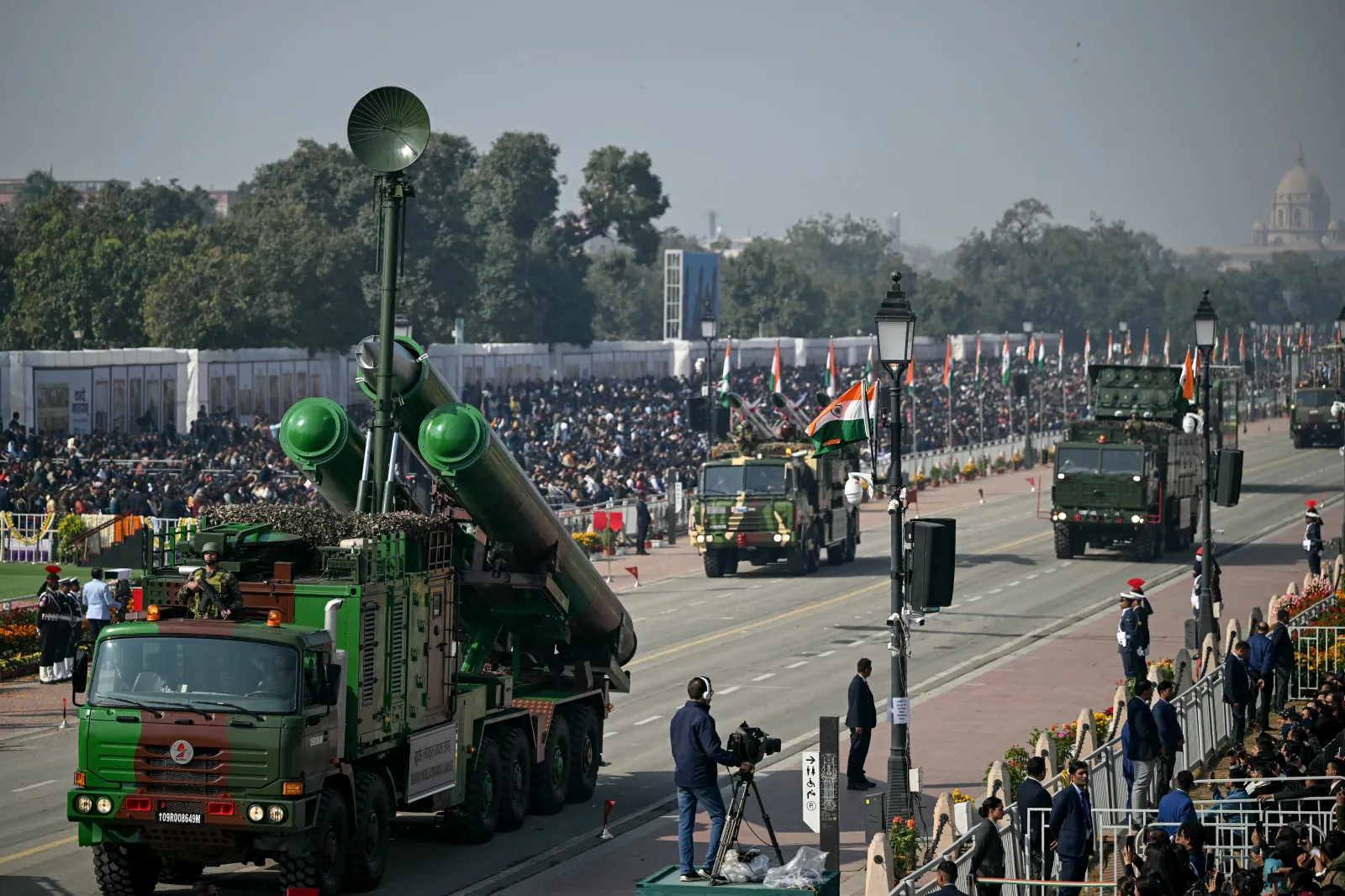
Vietnam is set to become the second foreign buyer of India's BrahMos cruise missile, a move analysts say underscores a reality shaping security calculations across Asia: warmer ties with Beijing have not erased concerns about China's growing military power.
The deal, long rumored but not officially confirmed, was acknowledged by Indian Defense Secretary Rajesh Kumar Singh on May 30 during the Shangri-La Dialogue security summit in Singapore. Singh also said a similar deal with Indonesia is nearing completion.
China is Vietnam's largest trading partner, and the two countries have worked to improve relations in recent years. Yet Hanoi remains wary of Beijing's expanding military capabilities and maritime ambitions, particularly in disputed areas of the South China Sea.
Read More
Why ‘Pacifist’ Japan Has China Worried7 min read

100 Days of Iran War: In Numbers9 min read

India To Join US, Japan and Australia in Maritime Surveillance Watch7 min read

The deal also represents another success for India's efforts to expand its defense partnerships across Southeast Asia as part of its broader "Act East" strategy.
Newsweek reached out to the Chinese Embassy in Hanoi and Vietnam's Foreign Ministry by email with requests for comment.
A Supersonic Upgrade
Co-developed by India and Russia, the BrahMos is widely regarded as one of the world's fastest operational cruise missiles.
The export version has a range of roughly 180 miles and can travel at nearly three times the speed of sound, making it significantly more difficult to intercept than conventional subsonic missiles.
Vietnam is expected to acquire a shore-based version of the system, which would strengthen its ability to target hostile naval vessels operating near its coastline.
"The BrahMos supersonic cruise missile is unparalleled in its segment, be it speed, stealth or accuracy. It is already successfully integrated into the land, ship, air and submarine-based platforms of the Indian armed forces, making it a tried and tested missile," Commodore (Ret.) Seshadri Vasan, director general of the Chennai Centre for China Studies, told Russia's state-owned Sputnik news agency.
The Philippines became the first foreign operator of the BrahMos system after taking delivery of the initial components and the first batch of missiles in 2024.
The U.S. treaty ally is in the midst of a $35 billion military modernization push, driven in large part by a bitter territorial dispute with China in the South China Sea.
...
A Deterrent, Not a Game-Changer
Hanoi also has longstanding territorial disputes with Beijing, including over the Paracel Islands, which Chinese forces seized in 1974 after a bloody battle with then-South Vietnam, and China's move to expand its territorial claims in the Gulf of Tonkin.
Although Vietnam's disputes with Beijing have generally been less public and confrontational than those of the Philippines, they remain a persistent source of friction.
Like many of China's neighbors, Hanoi has sought to balance economic engagement with Beijing against deeper security ties with countries including the United States, India, Japan and Australia.
The BrahMos deal demonstrates that, even as ties with Beijing have warmed in recent years, Vietnam remains committed to diversifying its defense partnerships and military capabilities, Huong Le-Thu, deputy director for Asia at the International Crisis Group, told Newsweek.
"There will always be apprehension about China's hegemonic ambitions and the security challenges it poses to neighboring countries like Vietnam—or should I say, especially Vietnam," Huong said.
China's People's Liberation Army fields a vastly larger and more sophisticated military arsenal, and many of the Russian technologies incorporated into the BrahMos system are already familiar to Chinese defense planners.
The missile, Huong said, is not a "magic bullet" capable of fundamentally shifting the regional balance of power.
A Win for India's Regional Ambitions
The agreement marks another milestone in New Delhi's "Act East" policy, which seeks to deepen diplomatic, economic and security ties with partners across East and Southeast Asia while balancing China's growing influence in the Indo-Pacific.
India has also stepped up its participation in the Quad—a strategic grouping comprising the United States, Japan and Australia.
New Delhi appears a natural partner for Vietnam. Both countries have traditionally avoided formal alliances with major powers and place a premium on strategic autonomy.
Yet Hanoi is under no illusion that closer ties with India could fully replace the security role played by the United States in the region, Huong said.
View 0 Comments
Submit Correction
View Editorial & AI Guidelines