
By Ed Browne
Reporter
0
Share
Newsweek is a Trust Project member
See more of our trusted coverage when you search.Prefer Newsweek on Googleto see more of our trusted coverage when you search.
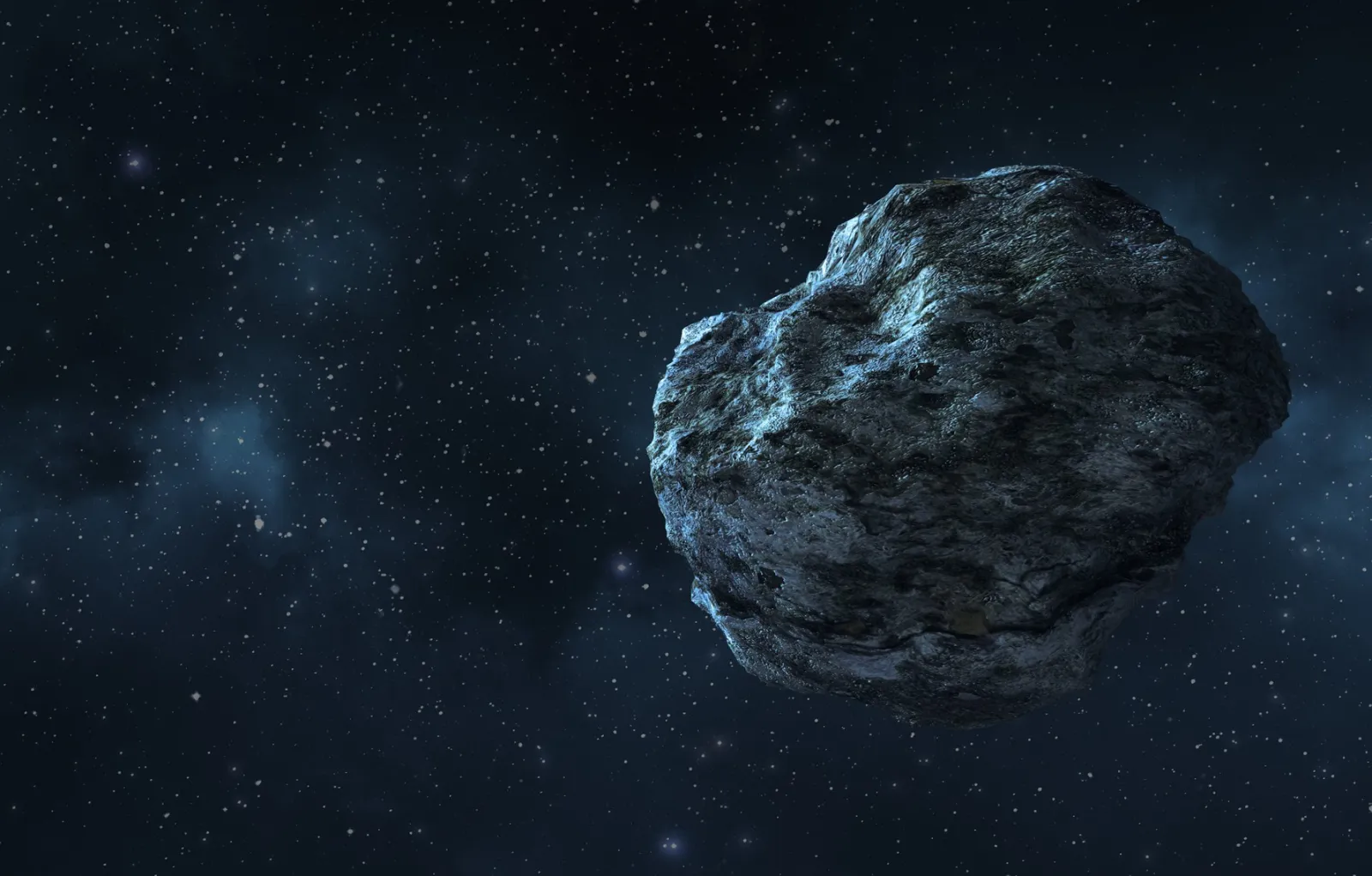
An asteroid is set to zoom past Earth at a relatively close distance this week, and the event can be viewed live.
The asteroid, called 2022 ES3, will be traveling at 41,000 miles per hour when it comes between the moon and the Earth at around 2:18 p.m. ET on Sunday, March 13, according to NASA's Center for Near Earth Object Studies (CNEOS).
The space rock isn't expected to hit Earth. Instead, it will pass by at a distance of about 206,000 miles, which is about 87 percent of the distance between us and the moon.
Read More
Petition Demands U.S. Government Release UFO Videos Amid Changing Attitudes5 min read

Strange Glass Balls Found on Moon Hint at Asteroid Impact3 min read

Six Amazing Facts About Neptune and Its Moons7 min read

The event provides a great viewing opportunity. An Italian astronomy organization called the Virtual Telescope Project, which often tracks asteroids and other space objects through the sky, is due to host a livestream of what it calls 2022 ES3's "very close, but safe, encounter with us" on its WebTV page starting at 18:30 UTC on March 13th.
Asteroid Isn't Considered Hazardous
Astronomers don't consider 2022 ES3 to be potentially hazardous, probably due to its size. The asteroid is predicted to be somewhere between 33 and 72 feet in diameter—about as wide as the length of a bowling lane.
In order for an asteroid to be classed as a potentially hazardous asteroid, or PHA, it must meet certain criteria regarding size and how close it could get to our planet.
Specifically, asteroids that can't get any closer to Earth than around 4,650,000 miles or are smaller than about 500 feet in diameter aren't considered PHAs. 2022 ES3 certainly meets the distance requirement, but it falls short in terms of size.
Still, even relatively small asteroids can have serious consequences. In February 2013, an asteroid that NASA had described as "house-sized" exploded in the skies over the Russian city of Chelyabinsk after entering Earth's atmosphere at around 40,000 miles per hour.
When it exploded, the asteroid released a shock wave that blew out windows over 200 square miles. About 1,600 people were injured, mostly due to broken glass, according to NASA. The agency's planetary defense officer Lindley Johnson called it a "cosmic wake-up call."
Today, scientists track more than 28,000 near-Earth asteroids as they travel through the solar system. Around 900 of these are more than one kilometer, or 3,280 feet, in size.
Scientists are also preparing for a future event in which an asteroid impact on Earth would be imminent. NASA's Double Asteroid Redirection Test (DART), which launched last year, will involve slamming a spacecraft into an asteroid far away from Earth to see whether humans could push a space rock out of the way in future if it seemed like it was going to strike our planet.
The DART mission spacecraft will reach its target in September, 2022.
...
View 0 Comments
Submit Correction
View Editorial & AI Guidelines