...

By Jesus Mesa
Reporter
0
Share
Newsweek is a Trust Project member
See more of our trusted coverage when you search.Prefer Newsweek on Googleto see more of our trusted coverage when you search.
When Pope Francis was elected in 2013, the world watched along on laptops and early-era iPhones, following updates on a growing social media network then known as Twitter. Compared with the death of Pope John Paul II eight years earlier, in 2005, it marked a new era of digital engagement in papal history.
Twelve years after that, as the Catholic Church prepares to choose Francis' successor after his death at 88 this week, the traditional papal viewing, funeral and coming conclave are all being shaped by an even more sophisticated digital age—one where livestreams, AI-generated memes and TikTok content creators are defining how we experience one of the biggest stories of the year.
The conclave—a centuries-old process steeped in secrecy and tradition—has evolved with each papal transition to reflect the communication habits and technologies of its time.
Read More on World
...
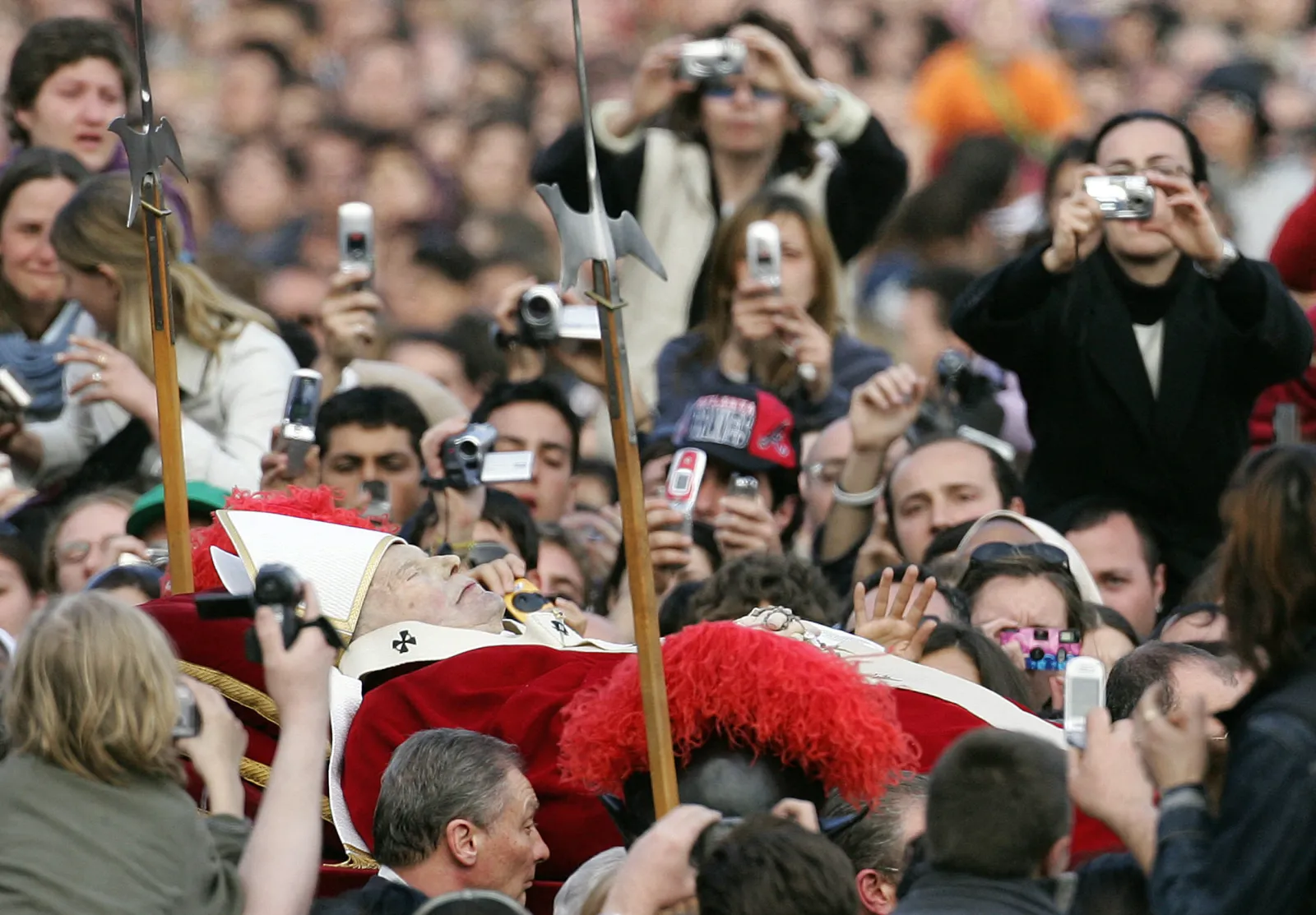
In 2005, when Joseph Ratzinger became Pope Benedict XVI, cable news, newspapers and radio still dominated the media landscape. Tourists in St. Peter's Square carried compact digital cameras with limited storage and flip phones with rudimentary cameras built in, snapping just a few carefully chosen shots — the procession of Pope John Paul II's body through the square, white smoke rising from the Sistine Chapel, and eventually the first look at new pope as he revealed himself to the world from the balcony of St. Peter's Basilica.
Fast forward to 2013: Jorge Mario Bergoglio's election was the first to be followed in real time on social media, with the Vatican engaging online through the brand-new @Pontifex Twitter account that it had launched weeks earlier. St. Peter's filled with pilgrims holding smartphones and iPads aloft to capture the moment.

...
Now, in 2025, the digital landscape around the transition has shifted yet again. The era of social media creators is in full swing, where visitors record TikTok reaction videos or livestream commentary for their followers. The Vatican has taken notice—and issued reminders urging visitors to avoid taking selfies during sacred moments.
Meanwhile, the conclave itself remains a zone of total silence, much as it has been for centuries. The Vatican has deployed an unprecedented array of counter-surveillance measures to prevent leaks and digital breaches.
Signal jammers block all transmissions within voting areas. Privacy film coats every window to obstruct views from drones or satellites. Each room in the Vatican complex is meticulously swept for microphones. AI-powered lip-reading from aerial imagery—once the realm of sci-fi—is now a real concern.

...
"The Vatican faces unprecedented technological challenges," wrote WIRED's Jorge Garay. From drones to misinformation campaigns, the conclave must be sealed off more securely than ever before.
Still, outside the sealed voting areas, the digital world is very much alive. In the days since Pope Francis' death, St. Peter's Basilica has welcomed more than 100,000 visitors paying their respects to the Bishop of Rome who became known as the "People's Pope."
Some mourners have even taken selfies in front of the pope's open casket, sparking backlash from those who see it as a crass breach of solemnity.

...
"The moment, lived with so many people, loses its intimacy; the lines, the haste, blur the experience," said one mourner named Pedro, who drove overnight from Murcia, Spain, to say goodbye to the pontiff. "Many come more to take photos than to pray for the pope," he added bitterly in an interview with EFE.
Pope Francis's Viral Legacy
Francis's body was on display for public viewing in St. Peter's between Wednesday and Friday, ahead of Saturday's funeral Mass to be led by Cardinal Giovanni Battista Re and attended by dignitaries from around the world. After the funeral, Francis will be buried at Rome's Basilica of St. Mary Major, in accordance with his wishes.

...
The funeral will mark the start of the novemdiales, a nine-day mourning period with daily Masses. Once it concludes, the College of Cardinals will begin the conclave, which is expected to be the most closely followed in history given the current digital landscape.
That digital shift was one Francis himself helped accelerate. His rapport with young people—and his active social media presence, especially through @Pontifex—helped define a papacy that embraced new tools to connect with a global audience. While the account was launched under the waning days of Benedict XVI in late 2012, it was Francis who transformed the platform into a new, daily instrument of Vatican outreach.
Francis also found himself the unwitting guinea pig in the nascent era of AI-generated images. One of the first of those images to go viral featured the pope "dripped out" in a white puffer jacket. The picture, created in 2023 by Midjourney, appeared so far advanced from AI imagery up to that point that some online mistook it for being real.

...
While Francis was not above using the tools of modern life, he also saw the pitfalls. In his final public prayer, released in April on his official YouTube channel, Francis warned of the perils of a life lived online: "Something's wrong if we spend more time on our cell phones than with people," the pope said in his final days of life. He urged the faithful to use technology to foster—not replace—human connection and dignity.
Four days after his death and ahead of the expected funeral, tributes to Francis continue flooding digital platforms. TikTok and Instagram users have compiled clips of his most iconic speeches and gestures.
Some even shared AI-generated videos depicting the pope entering Heaven, greeted by predecessors John Paul II and Benedict XVI—or even by Jesus, with whom he's pictured taking a "cloudside" selfie.
In just 24 hours after the announcement of his death, more than 9.7 million pieces of online content referencing the pope were generated, resulting in nearly 200 million interactions globally, according to SocialCom data analyzed by Adnkronos. That digital reaction surpassed even the volume of content that flooded the internet after the assassination attempt on President Donald Trump last summer.
By that measure, Pope Francis leaves behind another kind of legacy, having become the first pontiff to preside over the truly digital age.

...
View 0 Comments
Submit Correction
View Editorial & AI Guidelines