...

By Daniel Orton
News Editor
0
Share
Newsweek is a Trust Project member
See more of our trusted coverage when you search.Prefer Newsweek on Googleto see more of our trusted coverage when you search.
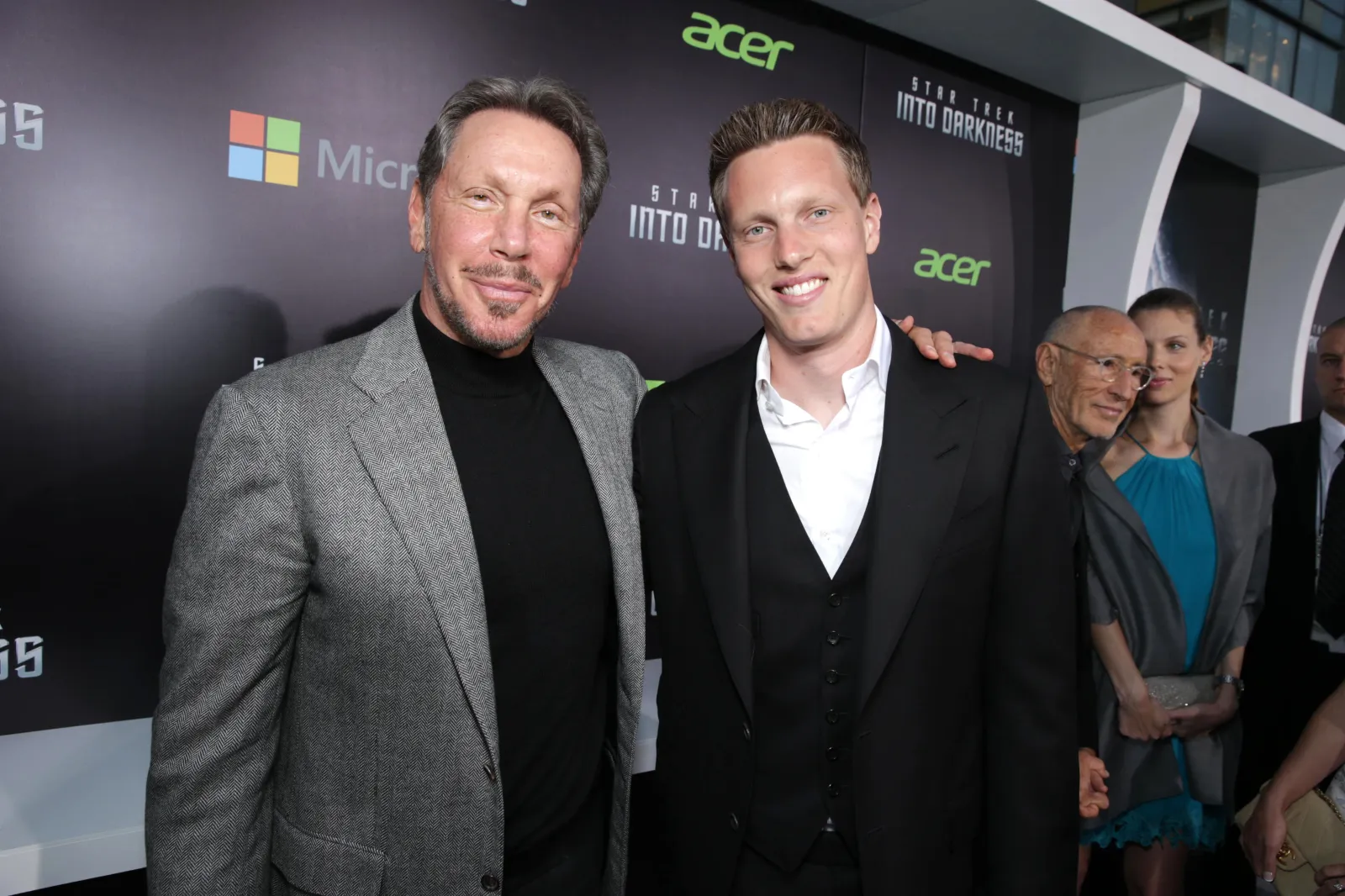
If Paramount Skydance succeeds in its $108.4 billion hostile bid for Warner Bros. Discovery, the Ellison family—led operationally by CEO David Ellison and backed by the immense financial power of his father, Oracle co-founder Larry Ellison—would become the dominant force in American entertainment.
The takeover would fuse Paramount’s assets with Warner Bros.’ storied studios, cable networks and streaming platforms, creating a media conglomerate unmatched in modern U.S. history and intensifying scrutiny over how much control a single family should wield over the country’s news and entertainment pipelines.
"A Paramount-Warner Bros. merger would be a five-alarm antitrust fire," Senator Elizabeth Warren wrote on X on Monday. "Not to mention it's backed by a who's who of Trump buddies and foreign money," the Massachusetts Democrat added.
Read More on News
Why It Matters
The battle for control of WBD between Paramount Skydance and Netflix stands to reshape the American and global media landscape. The outcome will influence not only Hollywood’s power dynamics but also the future of news, entertainment and media consolidation in the U.S.—a point raising significant scrutiny from lawmakers, regulators and industry voices.
...
What To Know
Paramount Skydance was formed in August 2025 through the merger of Paramount Global, Skydance Media, and National Amusements. Under the new structure, David Ellison became CEO and control was largely privatized via equity and financing from Larry Ellison and others.
On December 8, Paramount launched an all-cash, $30-per-share hostile offer for WBD—valuing the entire company at roughly $108.4 billion. This came in direct competition with Netflix, which had already offered to acquire a portion of WBD’s assets in a deal worth $83 billion.
Netflix’s bid would mark the first time a streaming giant absorbs a major legacy studio. Such a move could accelerate Hollywood’s shift from theatrical-first to streaming-dominant economics, reshape talent compensation and potentially splinter WBD’s existing structure.
Paramount’s bid is for the entire WBD operation: studios, streaming, cable, news and more. That difference—between “part buyout” and “full takeover”—is what makes the Ellisons’ offer so potentially transformative.
Paramount said the offer is backed by substantial financing, including equity from the Ellison family and private-equity firm RedBird Capital, along with $54 billion in debt commitments from Bank of America, Citi and Apollo Global Management.
Part of the equity funding comes from outside Middle Eastern partners as well as from Jared Kushner’s Affinity Partners, according to CNBC. Kushner, who leads Affinity, is a son-in-law of President Donald Trump.
Trump on Sunday said Netflix's bid "could be a problem" due to the combined market share of the streamer and WBD, if that deal went through. The president has not commented publicly on Paramount's bid, though both Ellisons have had his ear in recent days, according to The Wall Street Journal. Larry Ellison, an ally of the president, told Trump the Netflix deal wouldn't be good for competition, the WSJ reported, while David Ellison signaled he would make changes at CNN during a visit to the White House.
Newsweek emailed Oracle's public relations team, and a Paramount spokesperson for comment on the WSJ's report.

...
What the Ellisons Could Control—If the Deal Succeeds
Should Paramount complete the takeover, the Ellison-led entity could have control of:
Major film studios and production arms
- Paramount Pictures
- Skydance/Paramount film divisions
- Warner Bros. Pictures and Television
- New Line Cinema
- DC Studios
- Castle Rock Entertainment
- Warner Bros. Animation and legacy libraries
TV networks and cable channels
- Paramount-owned networks (CBS, Nickelodeon, MTV, etc.)
- WBD networks including HBO, CNN, TBS, TNT, Cartoon Network, Discovery, HGTV, Food Network, and more
Streaming and direct-to-consumer services
- Paramount+
- Pluto TV
- Showtime
- HBO Max
- Potentially Discovery+ or its legacy assets
Games, interactive, and franchise IP
- WBD’s gaming division (including major studios)
- Huge libraries of film, TV, and game IP: from DC and Harry Potter to classic Looney Tunes, as well as legacy Paramount franchises
Infrastructure and production assets
- Hollywood and global studio lots (Paramount, Warner Bros.)
- Distribution, licensing, and content-delivery infrastructure
News and journalism
- Previously separate news operations under WBD (e.g., CNN)
- Paramount’s legacy broadcasting and news connections
In short, one of the largest, most diverse media empires ever assembled.
What People Are Saying
David Ellison, chairman and CEO of Paramount, told CNBC on Monday: "We’re sitting on Wall Street, where cash is still king. We are offering shareholders $17.6 billion more cash than the deal they currently have signed up with Netflix, and we believe when they see what it is currently in our offer that that’s what they’ll vote for."
Connecticut Democratic Senator Chris Murphy said in a post on X on Tuesday: "Neither Netflix nor the Paramount/Trump/Saudi Arabia group should own Warner Bros. Both deals are absurd - terrible for consumers and democracy. This is a story about corruption - Trump using government power to screw consumers and gain control of the media. A red alert moment."
Massachusetts Democratic Senator Elizabeth Warren said in a post on X on Monday: "The government's review of any deal needs to be based on the law and facts — not who sucked up the most to Donald Trump."
Oscar-winning producer Matthew A. Cherry said in a post on X on Monday: "I'm not a fan of either the Netflix or Paramount owning Warner Bros., but if you think Trump and his allies controlling yet another legacy media company is a good thing long term I don't know what else to tell you."
What Happens Next
Paramount’s offer is set to expire on January 8, 2026 at 5 p.m., as reported by the Guardian. However, that deadline may shift if talks, shareholder votes or regulatory reviews take longer. WBD’s board has acknowledged receipt and said it will “carefully review” the bid, but has not yet committed to changing its prior recommendation in favor of Netflix’s offer.
Whether Netflix or Paramount prevails, the outcome promises to remake Hollywood. A Netflix victory would likely produce a leaner, streaming-optimized version of Warner Bros., accelerating the industry’s shift away from theatrical windows, cable networks, and traditional TV models. By contrast, an Ellison takeover could create one of the most vertically integrated media conglomerates in U.S. history—but even then, regulators would almost certainly require divestitures, restructurings or spin-offs before approving such a sweeping consolidation.
What ultimately emerges from this battle is far from certain. What is clear is that either path would mark a profound realignment of the entertainment landscape, reshaping how films are made, distributed, and consumed for years to come.
View 0 Comments
Submit Correction
View Editorial & AI Guidelines